
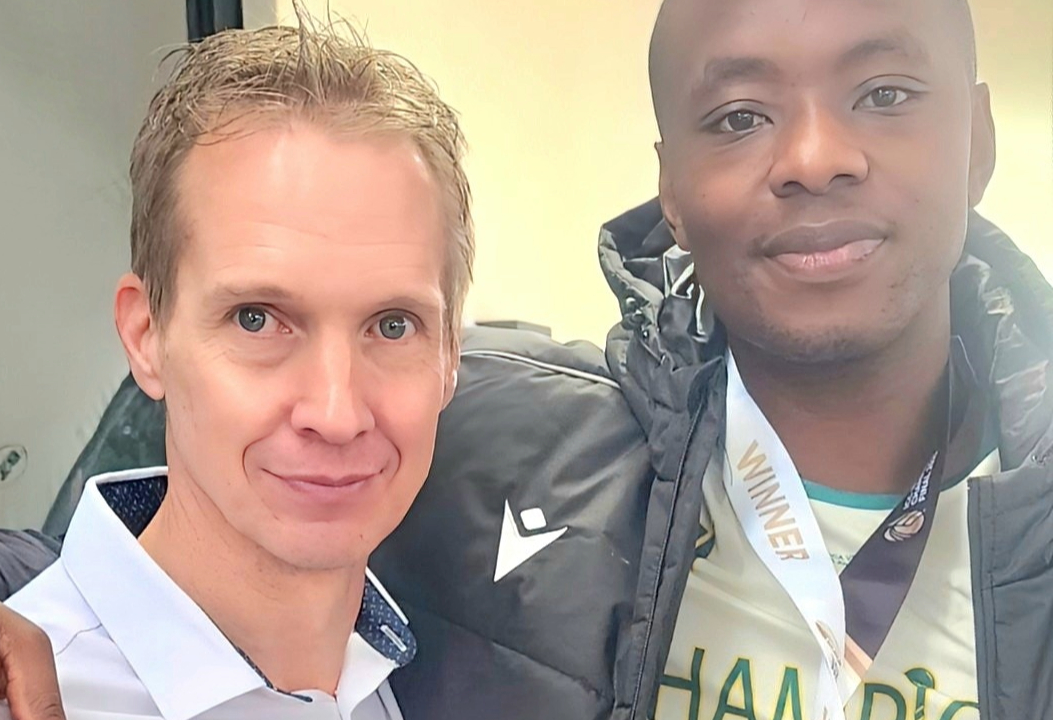
By Kevin Rademeyer, Sports Journalist.
At times, Kagiso Rabada looks almost untouchable.
A batsman is beaten for pace, a wicket falls, and suddenly the game belongs to him. He celebrates with an intensity that seems to come from somewhere deep within. There is fire in his eyes, defiance in his body language and an unmistakable desire to dominate.
Then he sits down to speak, and another man emerges.
Measured. Thoughtful. Articulate.
He considers questions carefully, looks directly into your eyes and gives answers that go well beyond the usual sporting clichés. Sometimes, it feels as though he is looking straight through you.
The contrast is striking. The aggression of the fast bowler. The composure of the individual. The confidence of a champion, alongside the self- awareness of someone who knows he is still a work in progress.
Rabada is not an easy man to reduce to a collection of statistics or a highlight reel. His career has been filled with extraordinary achievements, but also controversy, disappointment, physical setbacks and moments that have tested his judgement.
He has experienced the exhilaration of sporting immortality and the discomfort of public scrutiny. What makes him compelling is not that he has avoided the difficult moments. It is that he has had to confront them and repeatedly find a way forward.
To understand the man, it helps to go back to the beginning.
Born in1995, Rabada spent his earliest childhood years living with his grandparents in Mamelodi, Pretoria, and later on Johannesburg’s West Rand while his parents completed their university studies.
His father, Dr Mpho Rabada, became a medical doctor and accomplished musician. His mother, Florence, built a career in law and asset management.
The family eventually settled in Bryanston, Johannesburg, His father’s book, which will be released next month, Raising Kagiso Rabada: The Moving Horizon, offers a different perspective on the making of an elite athlete.
It is not simply a story of wickets, records and international recognition. It explores the quieter responsibilities of parenting a gifted child: school choices, homework, encouragement, difficult conversations and the challenge of knowing when to step back.
At St Stithians College, Rabada was a gifted all round sportsman. Rugby, tennis, sprinting and jumping were among his pursuits before fast bowling became his passion. Inspired by Allan Donald, he began shaping his natural athleticism into something more formidable.
The rise was rapid. He led South Africa to victory at the 2014 Under 19 World Cup and made an extraordinary impression on the international stage. On his ODI debut against Bangladesh in July 2015, he took six wickets for 16 runs, including a hat trick. It was a statement that announced the arrival of a special talent.
By the age of 22, he was the world’s leading bowler in both Test and ODI cricket. In 2024, he became the fastest bowler in Test history to reach 300 wickets by balls delivered, breaking a record held by Pakistan great Waqar Younis.
The numbers are exceptional. The influence has been even greater.
For South Africa, Rabada has become the spearhead of an attack that needs more than skill. It needs personality, conviction and the willingness to take responsibility when a match begins to slip away.
But the same intensity that makes him so dangerous has, at times, brought him into conflict with the game.
In 2018, during a fiery Test series against Australia, his shoulder made contact with Steve Smith as he celebrated a dismissal. He was initially handed a two Test suspension after accumulating demerit points. An appeal saw the charge downgraded, allowing him to continue playing in the series.
It was an uncomfortable episode. The aggression that fuels Rabada’s cricket had spilled into a disciplinary controversy, and one of the game’s most promising young fast bowlers was again under scrutiny.
Then came April 2025.
An adverse analytical finding for a cocaine metabolite, following a test conducted during the SA20 tournament, brought his IPL campaign with Gujarat Titans to an abrupt halt. Rabada accepted the provisional suspension and issued a public apology.
The sanction was reduced to one month after the matter was treated under the provisions for an out of competition substance of abuse and he completed an education programme.
For a player accustomed to being celebrated for his discipline and professionalism, it was a deeply uncomfortable moment. The headlines were no longer about wickets or records. His judgement was being questioned, and the consequences were unavoidable.
Sport has a way of exposing people at their most vulnerable. It also offers the possibility of a response.
Six weeks later, Rabada walked out at the Home of Cricket, for the World Test Championship final against Australia.
South Africa were carrying the weight of a nation’s long wait for a major ICC men’s trophy. He responded with five wickets for 51 runs in the first innings, followed by four for 59 in the second.
Nine wickets. A historic victory. A career defining performance.
The timing was extraordinary. It would be tempting to package the story as a perfect redemption, but real life is rarely that neat.
The controversy remained part of his journey. What could not be disputed was his contribution when South Africa needed him most. He returned, delivered and helped his country achieve something that had eluded generations of players.
That is where Rabada’s character becomes most visible. Not in the absence of mistakes, but in the response to adversity. His influence extends beyond his own figures.
Rabada understands that responsibility. He describes representing South Africa as a privilege and a gift, something not everyone gets to experience. His focus, he says, is on being true to himself, giving his best and upholding the standards expected of the team.
This week, at the Wanderers against Bangladesh, that competitive instinct was on full display. South Africa had allowed the visitors to recover from a difficult position in their first innings, and Rabada made no secret of the fact that the team had not enjoyed watching their opponents strut around. “We just wanted to stop that,” he explained.
He did more than talk. Rabada took eight wickets in the match, scored a career best 72 and was named Player of the Match. His aggressive celebration after dismissing Towhid Hridoy was a reminder of the emotional force he brings to the contest.
Yet, when the conversation turned to his batting, the confidence gave way to refreshing honesty. “I find batting to be incredibly hard,” he admitted. He explained that so much of his energy goes into improving his bowling that batting often takes a back seat.
He wants to win matches with the ball. That is where his greatest responsibility lies. But when the game is on the line, he tries to make his contribution count.
There is something revealing in that answer. Here is one of the finest cricketers in the world, still prepared to acknowledge what he finds difficult.
He does not pretend to have mastered everything. He knows where his strengths lie, understands the demands of his craft and accepts that improvement never really ends.
He is equally generous when discussing those around him. Speaking about Simon Harmer, whose second innings performance against Bangladesh helped secure victory, Rabada called him a veteran and an ultimate warrior.
Rather than use his Man of the Match award to celebrate his own performance, Rabada chose to highlight the contribution of a team-mate. Asked to identify the defining moment of the match, he did not point to one of his eight wickets or his career best score with the bat. He went straight to Marcus Ackerman’s innings, and the belief it gave the team when it needed it most.
“I would say it was when Marcus scored his 150. You know, we had our backs against the wall. Early wickets had fallen, and then Marcus and Zubi applied themselves really well, and gave the change room a lot of belief”
That response says much about Rabada. He may be South Africa’s leading fast bowler, but his measure of success is not confined to his own figures or individual accolades.
He sees the game through the collective, understanding that a match is rarely won by one player alone.
He describes a team without the biggest names or the grandest reputations, but with something just as valuable: a shared belief and a willingness to take responsibility.
When one player falters, another steps forward. When the pressure rises, someone finds a way to contribute. For Rabada, that is the strength of this South African side, and a source of pride that runs deeper than any personal award.
That belief has become central to South Africa’s identity.
There is, however, a price to the relentless demands of international cricket. After a demanding run of Tests, played in difficult heat and often stretching into the fifth day, Rabada admitted that the team had been running on reserve energy at the Wanderers.
Even while batting alongside Ryan Rickelton, he could sense how flat they had become. He also spoke about the importance of supporters, admitting that a sparse crowd made it difficult to generate the same atmosphere and energy.
He also recognises that motivation cannot always be manufactured. Sometimes the body is tired. Sometimes the mind needs distance from the game. Sometimes the most important preparation is knowing when to stop.
That self-awareness is another part of the man behind the fast bowler.
There are similarities between Rabada and other exceptional sportsmen who resist easy explanation. Bryson DeChambeau and Novak Djokovic, for example, share a willingness to think deeply about their craft, engage with difficult questions and explain more than the obvious.
They are competitors consumed by their pursuit of excellence, but also individuals who reveal something of themselves when given the space to speak. They have a huge appetite to win, and continue winning.
Rabada belongs in that conversation. He is not defined by his bowling ability alone. He is complex, direct and occasionally controversial.
He can be fiercely aggressive on the field and remarkably measured away from it. He carries the expectations of a country that has waited a long time to see its cricket team turn potential into major international success. Yet he continues to speak about representing South Africa with genuine gratitude.
He plays best when he plays alongside his friends. This is the current state within the Proteas team. He proves that it is still important at the highest level to have fun.
The pressure is considerable. The scrutiny is unavoidable. His career has already contained extraordinary highs and difficult lows. There will be more.
But perhaps that is what makes his story so compelling. Rabada is not a finished product, nor does he present himself as one. He is still working, still learning and still trying to improve.
His father’s book speaks of a moving horizon, of the challenge of guiding someone towards independence while allowing them to discover their own limits.
It is an idea that feels remarkably appropriate for his son.
Every record creates another target. Every victory brings another expectation. Every setback demands a response. The horizon keeps moving, and Rabada keeps chasing it.
There have been moments when the public has seen the champion, and others when it has seen the fallible human being. There have been occasions when his aggression has threatened to overwhelm him, and others when that same fire has carried South Africa to victory.
Perhaps the mistake is to expect one version of Rabada to exist without the other.
Champions are not made by perfection. They are made through talent, discipline, mistakes, difficult decisions and the courage to return when the world is watching.
Rabada has given South African cricket some of its most important moments of the modern era. He has also given us something more valuable than a collection of records: a reminder that greatness and vulnerability can exist in the same person.
The boy who once dreamed of following Allan Donald has become one of the defining fast bowlers of his generation. He has known the exhilaration of standing on top of the world and the discomfort of being judged by it. He has stumbled, been questioned, returned and delivered.
And he is still moving. That is the story of Kagiso Rabada.
Not simply a champion because of what he can do with a cricket ball, but because of the person he continues to become.
His career has never been a straight line, nor has it been without its difficult moments. There have been extraordinary highs, painful setbacks and decisions that have brought scrutiny.
Yet he keeps finding a way to respond, to compete and to rise again. His greatness lies not in being untouchable, but in showing what is possible when immense talent is matched by the courage to keep moving forward.
His father’s book may be published next month, but Kagiso’s story is far from its final chapter. There is still so much to come on the field and beyond it.
The boy whose journey began with the hopes of a family has become one of the defining figures of South African cricket. Yet, for all he has achieved, Rabada remains a work in progress: still learning, still pushing, still driven by the belief that there is more to give. His story is not one of perfection, but of talent tested, mistakes confronted and character revealed in the moments that matter most.
His father’s book may soon add another chapter to the story, but Rabada’s own is far from finished. The horizon that once seemed so distant continues to move, and he continues to chase it. For all the wickets, records and accolades, perhaps that is what makes his journey so compelling. Not simply where he has been, but the determination to discover how much further he can go.