
By Kevin Rademeyer, Sports Journalist.
Photo Credit: Riaan de Bruyn // RDB Photography.
Bangladesh arrived on South Africa shores with ambitions of making life uncomfortable for the World Test Championship holders.
A few months ago, they beat Australia down under for the first time and were in the top four of the World Test Championship table. It seemed they were ready to unsettle the World Champions on their home turf, in the two match series.
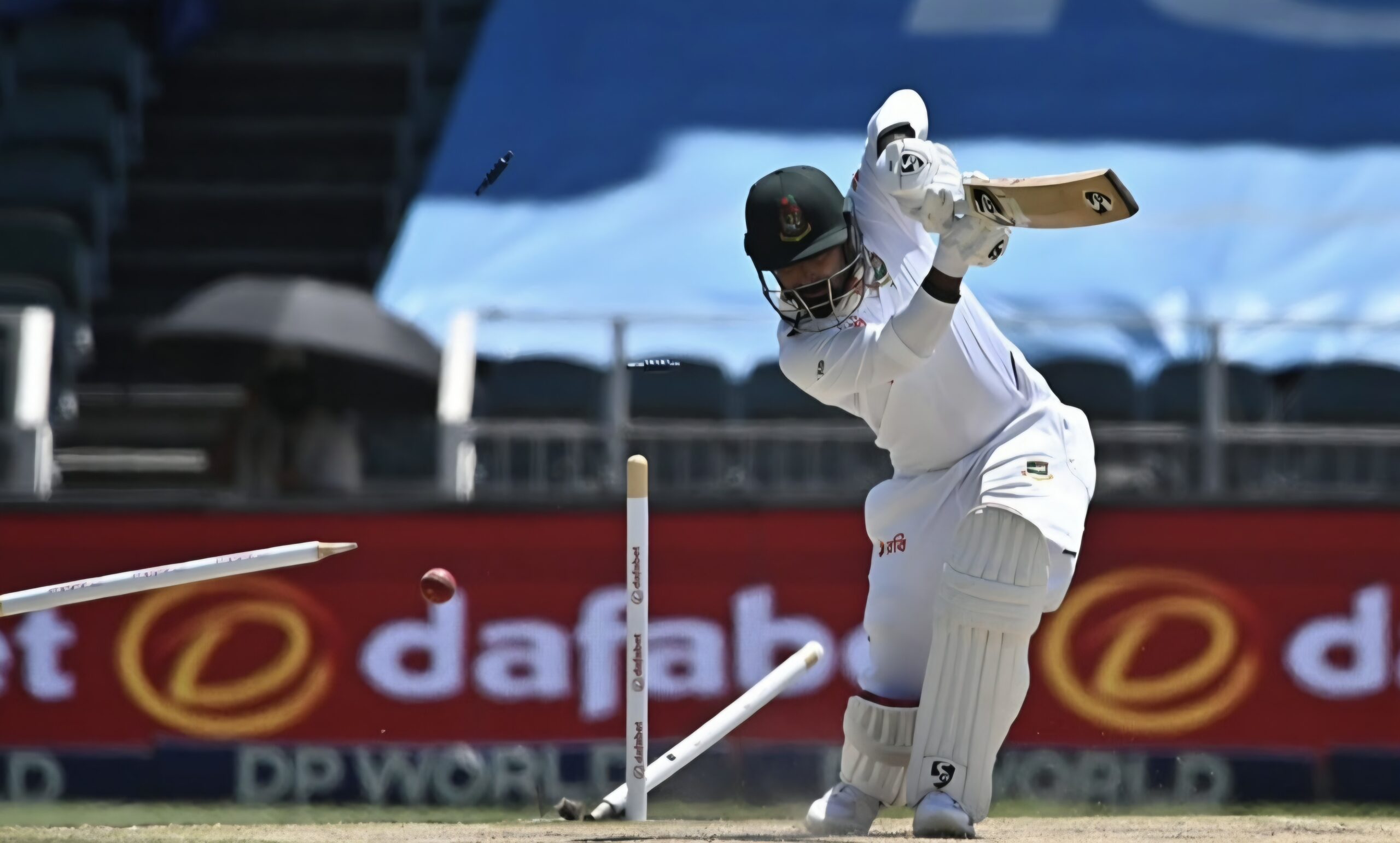
They certainly had their moments in Johannesburg, scoring 400 in their first innings, but by the time Kagiso Rabada and Simon Harmer had finished their work, the visitors were left with a nine -wicket defeat and a considerably more difficult assignment in Centurion.
The second Test, beginning on Monday at SuperSport Park, offers South Africa an opportunity to complete a series whitewash, strengthen their position at the top of the World Test Championship table and maintain a formidable home record.
Both teams must find a way to compete without some of their most important players.
The Proteas must not take their foot of the accelerator. Bangladesh showed enough in the first Test to suggest that this contest should not be dismissed as a foregone conclusion.
Bangladesh batted brilliantly in their first innings at the Wanderers, with Towhid Hridoy and Litton Das producing a remarkable 206 run partnership for the sixth wicket after the visitors had slipped to 122 for five. Hridoy made 137 and Litton 120, demonstrating that Bangladesh have the batting quality to trouble South Africa when they settle.
South Africa’s response was emphatic. Newcomer Marques Ackerman announced himself with a maiden Test century, scoring 157, while Ryan Rickelton continued his outstanding form with 102. Rabada then contributed a valuable 72 from No 10 as the Proteas pushed their total beyond 550, establishing a commanding 157 run first innings lead.
It was only the third time in South African Test history that the team had won after conceding 400 in the opposition’s first innings.
Rabada finished with eight wickets in the match, while Harmer took six for 51 in Bangladesh’s second innings as the visitors collapsed to 168. The hosts needed just 12 runs in their second innings to secure victory.
That is the difference between the sides at present. Bangladesh have shown they can produce substantial batting partnerships, but South Africa have the bowling resources to turn a competitive match into a one -sided affair.
The personnel, though, will look slightly different on Monday.
Captain Temba Bavuma has been ruled out with a right calf strain aggravated during the first Test. Aiden Markram takes over the captaincy, with Tony de Zorzi coming into the side at No 4. Anrich Nortje also returns from his groin injury, replacing Dane Paterson, who contributed four wickets in Johannesburg.
It is a significant addition. Nortje’s express pace, alongside Rabada and Marco Jansen, gives South Africa a formidable seam attack on a ground traditionally associated with bounce and movement.
Markram has captained South Africa in four previous Tests, all in Asia, winning three. He also knows Bangladesh well, having led the Proteas to victories in Dhaka and Chattogram in 2024.
His immediate challenge, however, is to convert his own promising starts into substantial scores. Markram was candid about the demands of opening in Test cricket and the importance of making hundreds rather than being satisfied with getting established.
“It doesn’t matter how you feel, you need to score hundreds, and hundreds is what contributes and wins games,” he said.
It is a telling observation, particularly at Centurion, where the first hour can be an examination of technique and patience before conditions become more accommodating for batting.
Bangladesh have their own problems. The experienced Mushfiqur Rahim has been ruled out after an MRI scan confirmed inflammation and irritation around the pelvic bone following a groin injury sustained in Johannesburg. The 39-year-old has played 108 Tests and his absence removes a considerable amount of experience from the middle order.
Worse still, Hasan Mahmud, their most effective fast bowler in the first Test, has been ruled out of the remainder of the tour with an elbow injury. He claimed four for 118 in Johannesburg but was unable to bowl in the second innings after struggling with his right arm.
Shoriful Islam and Khaled Ahmed are expected to strengthen the pace attack, while Jaker Ali is among those in contention to replace Mushfiqur. Bangladesh coach Phil Simmons has made it clear that the remaining bowlers must absorb the workload rather than dwell on those unavailable.
“Whoever comes in for [Mushfiqur] will step up and do what we ask them to do. That’s why they’re here. Hassan is gone but we have four other fast bowlers, so somebody has to take his workload.”
For captain Najmul Hossain Shanto, the challenge is considerable. His side have never beaten South Africa in a Test match and must now find a way to compete at one of the home team’s most successful venues without two senior contributors.
SuperSport Park has hosted 30 South African Tests, with the home side winning 24, drawing three and losing three. It is a ground where pace remains the principal currency.
Rabada’s record here is particularly impressive: 59 wickets at an average of 17.96, making it his most successful home Test venue by wickets, average and strike rate.
The pitch looked particularly green in the build up to the match, although Markram expects it to start relatively slowly before quickening and offering steeper bounce. He believes there will be opportunities for both batters and bowlers, but warned that wickets can arrive in clusters.
Spin has played a surprisingly limited role in recent Tests at the venue, accounting for only two wickets across the last three matches. That will be encouraging for Nortje and Rabada, although Bangladesh’s batters will know that surviving the new ball is only the beginning.
South Africa have won 13 of their last 15 home Tests and sit in a strong position in the World Test Championship standings, currently boasting a 75% points percentage according to the supplied tournament figures. A second victory would further consolidate their position as they continue their title defence.
Bangladesh, on the other hand, need their first innings batting to resemble the determined effort at the Wanderers, rather than the collapse that followed.
The Proteas have the advantage in experience, pace and home conditions. But the first Test also demonstrated that Bangladesh can make runs when their senior batters stand together.
For Markram, this is an opportunity to lead from the front in Bavuma’s absence. For Nortje, it is a chance to remind everyone what his pace brings to this attack. And for Rabada, Centurion offers a familiar hunting ground.
The Proteas have the series in their hands. They will want to make sure Bangladesh never get close enough to take it away.
Proteas team : Aiden Markram (capt), Marques Ackerman, Zubayr Hamza, Tony de Zorzi, Matthew Breetzke, Ryan Rickelton, Wiaan Mulder, Marco Jansen, Simon Harmer, Kagiso Rabada, Anrich Nortjé.