
By Kevin Rademeyer, Sports Journalist.
Photo Credit: Springboks Rugby.
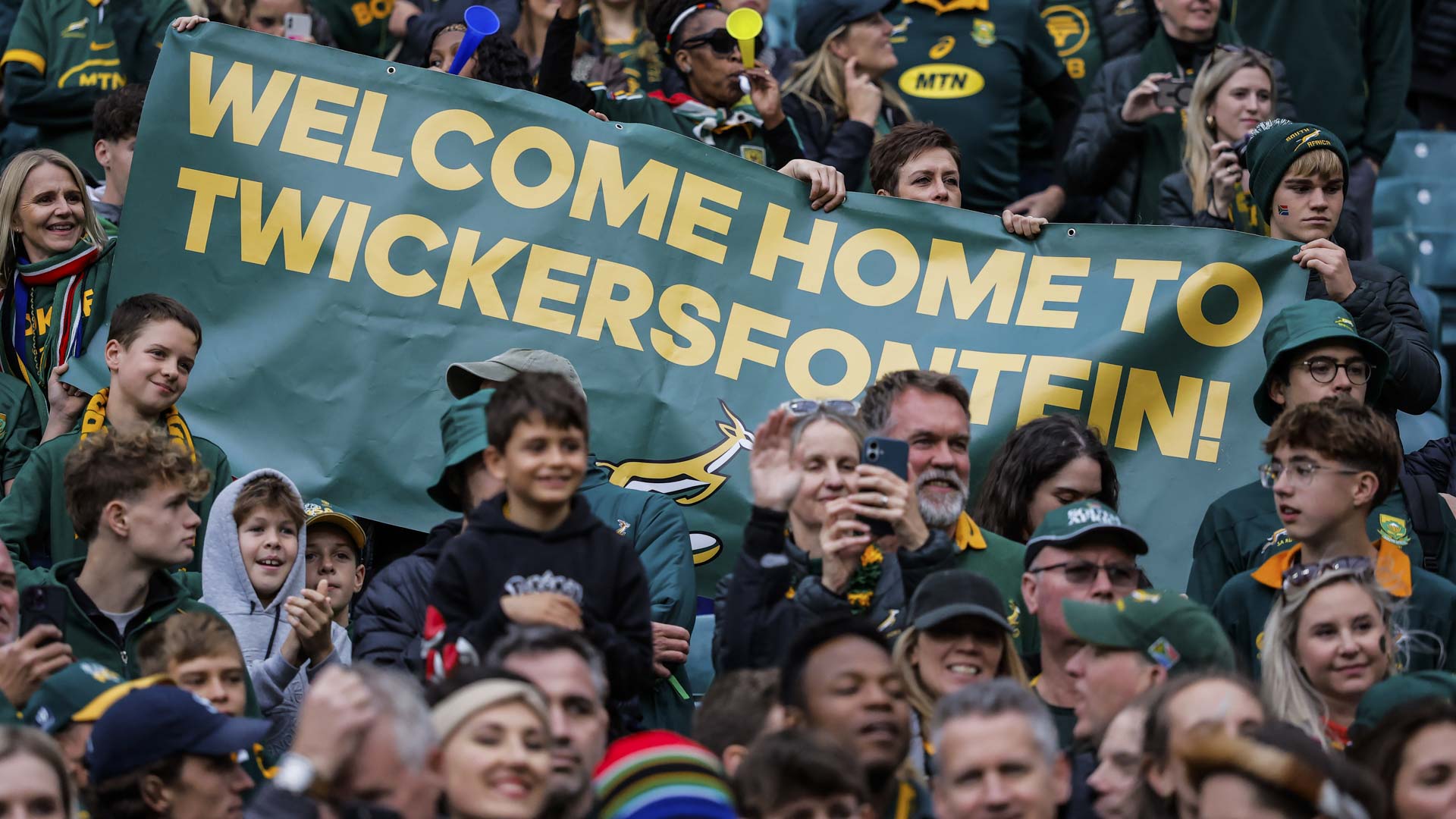
The Northern Hemisphere has seized the early advantage at the Nations Championship Finals Weekend, Ireland have provisionally taken the world number one ranking from South Africa, and the Springboks now face the prospect of possibly being the last Southern Hemisphere side standing between their rivals and a clean sweep at Twickenham.
Friday’s opening two matches delivered victories for Italy and Ireland, giving the North a 2–0 lead in the Hemisphere Challenge. With Wales and England both expected to have strong chances of adding to that advantage on Saturday, and Scotland favoured to overcome an out of form Argentina on Sunday, the pressure is building on South Africa ahead of the final against France.
The Springboks cannot influence the results of the other fixtures, but they can still make sure the weekend does not end with six Northern Hemisphere victories. More importantly, they have the opportunity to finish the inaugural Nations Championship as champions, even if the Hemisphere Shield has already been decided.
That is the unusual tension at the heart of this final weekend. The tournament has created two connected competitions: a series of North against South contests, and a showpiece final between the two highest ranked teams from each hemisphere.
Every match matter, but Sunday’s meeting between France and South Africa carries the greatest prize.
Ireland’s 38–14 victory over Australia on Friday was particularly significant. The five try performance at Twickenham not only secured a convincing win in the fifth place final, but also lifted Ireland above the Springboks in the World Rugby rankings. They now sit on 90.43 points, just ahead of South Africa on 90.25.
The result means the winner of Sunday’s final will end the year as the world’s number one ranked side. For the Springboks, that gives the match an added dimension.
They are defending their position as the leading team in international rugby, while France have the chance to claim the inaugural Nations Championship title and underline their own standing among the world’s elite.
The North has made its move
Italy provided the opening statement on Friday, edging Fiji 23–21 in a match that was far more competitive than the early scoreline suggested.
The Azzurri raced into a 17–0 lead, only for Fiji to respond with three tries and take the lead at 21–20. Tommaso Allan’s accurate goal kicking ultimately proved decisive, his penalty with 13 minutes remaining restoring Italy’s advantage before a determined defensive effort protected the result.
It was an important result for Italy, offering a measure of redemption after Fiji had beaten them 21–16 in their previous meeting. It also gave the Northern Hemisphere its first point in the wider contest.
Ireland followed with a much more emphatic result. Australia had begun positively and led 7–0 through Jeremy Williams, but Ireland’s set piece and attacking organisation gradually took control. Robbie Henshaw and Nick Timoney scored before half time, and Robert Baloucoune extended the advantage early in the second period.
Australia briefly threatened a response through Kalani Thomas, but Ireland finished strongly. Replacement James McNabney crossed twice late on, with Sam Prendergast converting all five tries as Ireland secured a 38–14 victory.
The win also extended Ireland’s run against Australia to seven consecutive Test victories. It was a sharp response after their narrow defeat of the Springboks earlier in the tournament and another reminder that the Irish remain a serious force, even without captain Dan Sheehan, who was serving a suspension.
The wider significance was impossible to ignore. Ireland had already beaten South Africa 20–17, and Friday’s result confirmed their rise to the top of the world rankings. The Springboks now have to beat France if they are to reclaim that position before the end of the year.
Wales and Japan: a chance to finish with momentum
Saturday’s opening match sees Wales face Japan in the ninth place final, with both teams looking for a positive end to a difficult campaign.
Wales arrive after a narrow 29–26 defeat to Australia, while Japan have endured a challenging November, conceding 78 points to England and 67 to Scotland in successive matches. Their defensive problems will be a concern against a Welsh side that has the attacking ability to exploit space, particularly if it can establish a platform through its forwards.
Wales coach Steve Tandy has made five changes to his starting side. Dafydd Jenkins takes over the captaincy, with regular skipper Dewi Lake named among the replacements. Jac Morgan is also on the bench, while Rhys Carre, Ryan Elias, James Botham and Adam Beard come into the starting pack. Reuben Morgan-Williams makes his first start at scrum-half.
Tandy has made it clear that he wants an improved performance, saying: “We were frustrated and disappointed with losing last weekend. We probably weren’t as accurate as we could have been.”
Japan, coached by Eddie Jones, have also made significant changes after their heavy defeat to Scotland. The challenge for them is to rediscover the organisation and attacking ambition that have made them dangerous opponents in previous seasons.
Wales will start as favourites, but Japan have enough attacking instinct to make the contest uncomfortable if they can keep the scoreboard close. For the Northern Hemisphere, it is an opportunity to move one step closer to an early grip on the Hemisphere Shield.
England and New Zealand: a response required
The second match on Saturday is the most compelling of the day. England meet New Zealand in the third place final, just seven days after inflicting a historic 37–12 defeat on the All Blacks.
New Zealand’s performance last weekend was a serious concern. They struggled to retain possession, spent long periods defending and were unable to impose themselves physically. England, by contrast, were disciplined, confident and clinical, producing one of their most impressive performances of the year.
The All Blacks have made six changes to their starting team, with Jordie Barrett appointed captain for the first time. Richie Mo’unga returns at fly-half, Damian McKenzie moves to full-back, and Rieko Ioane and Leicester Fainga’anuku come into the backline. Will Jordan, Codie Taylor, Tupou Vaa’i and Anton Lienert-Brown are unavailable through injury.
Head coach Dave Rennie acknowledged the disappointment of the previous match, saying: “Last weekend hurt. We own that performance. We’ve been really honest with ourselves about where we fell short and now we have an awesome opportunity to go again against a quality England side.”
England will be confident of repeating their performance, but New Zealand’s changes bring experience and attacking quality into the contest. The return of Mo’unga is particularly important, while Jordie Barrett’s leadership will be tested in a match that carries considerable significance for a team trying to avoid a third consecutive tour defeat.
The All Blacks have too much quality to be dismissed, but England have earned the right to be regarded as favourites. Another victory would confirm the scale of their progress and give the Northern Hemisphere a significant advantage before Sunday’s fixtures.
Scotland against Argentina: Finn Russell returns
Sunday begins with Scotland facing Argentina in the seventh place final. Scotland have enjoyed a strong finish to their campaign, highlighted by a 67–5 demolition of Japan last weekend. Argentina, meanwhile, have struggled to find consistency and were beaten 45–17 by France.
Gregor Townsend has made 11 changes to his starting side, bringing back several of his leading players. Finn Russell returns at fly-half, Blair Kinghorn is restored at full-back, Huw Jones comes into the midfield and Rory Darge resumes the captaincy. Darcy Graham, who has scored 41 Test tries for Scotland, also retains his place.
Argentina have made six changes of their own and will need a significant improvement in their defensive organisation after conceding heavily against France. Their attacking threat remains substantial, but Scotland will look to control the match through Russell’s distribution and the pace of Graham and Kinghorn out wide.
The two sides recent meetings have produced some entertaining rugby. Scotland won a high scoring encounter in Córdoba in July, but Argentina will be determined to avoid another defeat on this tour.
Scotland should start with confidence and have the personnel to win, although Argentina are capable of making the contest difficult if they can improve their discipline and limit the space available to the Scottish backs.
A Scottish victory would strengthen the Northern Hemisphere’s position in the wider contest and leave the Springboks with an even greater responsibility to prevent a complete sweep of the weekend’s matches.
France and South Africa: the final word
The main event brings together the two strongest sides in the tournament. France finished top of the Northern Hemisphere standings, South Africa topped the Southern Hemisphere group, and Sunday’s final will decide the first Nations Championship champions.
There is already a recent history between the teams. France beat the Springboks 21–19 in Paris earlier this month, a result that contributed to the pressure surrounding South Africa’s preparations.
The teams have also had contrasting fortunes since that meeting. France secured their place in the final with a convincing 45–17 victory over Argentina, while South Africa suffered a narrow 20–17 defeat to Ireland.
France will be encouraged by the return of Thomas Ramos at full-back. The experienced goal kicker has been sidelined with a thigh injury and will take over the kicking duties, while Matthieu Jalibert partners captain Antoine Dupont in the half-backs. Louis Bielle-Biarrey remains a major threat on the wing, and Anthony Jelonch starts in the back row at number eight after Gregory Alldritt suffered a calf injury.
Coach Fabien Galthié has made five changes to the side that beat South Africa in Paris. The return of Ramos is particularly important, not only for his goal kicking but also for the way he influences France’s attacking shape. Galthié has emphasised his value, saying: “In our rugby, he matters. In our organisation, he matters. Because he’s a player we use in several areas, especially offensively.”
South Africa have their own selection concerns. Damian Willemse and Ruan Nortje are among the players unavailable, while Pieter-Steph du Toit has also been ruled out with an injury. Du Toit’s absence is a major setback given his work rate and influence at the breakdown. Emmanuel Tshituka has been identified as a possible replacement and is in line for a Test debut.
The Springboks have made eight changes to the starting side that faced Ireland, with Manie Libbok at fly-half and Sacha Feinberg-Mngomezulu moving to full-back. Cobus Reinach returns at scrum-half, while Salmaan Moerat and Lood de Jager form a new lock partnership. Loose forward Paul de Villiers will start at No 8, with Cameron Hanekom switching to flanker in place of Pieter-Steph du Toit, who was forced to withdraw from the match due to a niggle, whilst Malcolm Marx, Ox Nché, Wilco Louw and Eben Etzebeth among the replacements.
The forward battle will be central. South Africa will want to impose their physical approach through the scrum, maul and collisions, while France will look to use the mobility of Dupont and Jalibert to move the Springbok defence around. The return of Ramos adds another dimension to that attacking threat, particularly with his ability to manage territory and punish defensive errors.
The contest between the half-back combinations could be equally important. Reinach and Libbok offer South Africa pace and attacking ambition, but they will be challenged by Dupont’s ability to create opportunities from seemingly ordinary situations. If France can secure quick ball and give their captain room to operate, the Springboks will have to defend with exceptional discipline.
South Africa’s forward replacements also underline the importance they place on the closing stages. The likes of Marx, Nché and Etzebeth could have a significant influence if the match develops into the physical contest expected.
There is also the unusual absence of Erasmus from the touchline. The Springbok coach is serving a six match suspension imposed by World Rugby following his comments about match officials after the earlier defeat to France. Captain Siya Kolisi has acknowledged that the ban is difficult for the squad, but insisted it would not be used as an excuse.
The Springboks have lost their last two Tests, and another defeat would make it three consecutive losses for the first time in the Erasmus era. That is not a position this group will accept lightly. They have the experience, depth and tournament pedigree to respond, but France have shown they can match them physically and punish lapses in concentration.
A tournament with a significant final test
The inaugural Nations Championship has delivered what its organisers set out to create on the field: meaningful cross hemisphere fixtures, a clear end of season climax and a final weekend in which every nation has something to play for.
The format has given the lower ranked teams a final opportunity to finish their campaigns positively, while the Hemisphere Challenge has added another layer of competition beyond the individual results. Italy’s win over Fiji and Ireland’s performance against Australia showed that the placement matches are not simply formalities.
There have, however, been questions about the atmosphere and attendance. Friday’s opening double header at Twickenham attracted a crowd well below the stadium’s full capacity, a concern for a tournament designed to make its finals weekend a major international rugby occasion. The quality of the rugby has been encouraging, but the organisers will want stronger public engagement as the competition develops.
The final should provide the strongest possible advertisement for the concept. France and South Africa are two of the leading teams in world rugby, both have powerful reasons to win, and the contest offers a genuine test of their depth and tactical adaptability.
The Northern Hemisphere has made the better start to the weekend. Wales and England have the opportunity to extend that advantage on Saturday, while Scotland will fancy their chances against Argentina on Sunday afternoon. If those results follow the expected pattern, the North could have the Hemisphere Shield secured before the final day begins.
But the Springboks still have a chance to shape the story of the tournament. A victory over France would prevent a Northern Hemisphere clean sweep of the six fixtures, secure the inaugural title for South Africa and restore the Springboks to the top of the world rankings.
For all the talk of a northern surge, the final judgement will come down to 80 minutes on Sunday. South Africa have the experience to respond, France have the form and confidence to finish the job, and neither side can expect an easy afternoon at Twickenham
Springbok team to face France:
15 Sacha Feinberg-Mngomezulu (DHL Stormers) – 28 caps, 232 pts (10t, 63c, 16p)
14 Kurt-Lee Arendse (Mitsubishi Dynaboars) – 38 caps, 135 pts (27t)
13 Jesse Kriel (Canon Eagles) – 97 caps, 125 pts (25t)
12 Damian de Allende (Wild Knights) – 106 caps, 65 pts (13t)
11 Ethan Hooker (Hollywoodbets Sharks) – 17 caps, 15 pts (3t)
10 Manie Libbok (Kintetsu Liners) – 36 caps, 149 pts (2t, 50c, 13p)
9 Cobus Reinach (DHL Stormers) – 58 caps, 105 pts (20t)
8 Paul de Villiers (DHL Stormers) – 8 caps, 10 pts (2t)
7 Cameron Hanekom (Vodacom Bulls) – 9 caps, 10 pts (2t)
6 Siya Kolisi (captain, DHL Stormers) – 110 caps, 80 pts (16t)
5 Lood de Jager (Wild Knights) – 81 caps, 25 pts (5t)
4 Salmaan Moerat (Stade Rochelais) – 11 caps, 0 pts
3 Thomas du Toit (Hollywoodbets Sharks) – 40 caps, 10 pts (2t)
2 Jan-Hendrik Wessels (Vodacom Bulls) – 18 caps, 15 pts (3t)
1 Gerhard Steenekamp (Vodacom Bulls) – 26 caps, 10 pts (2t)
Replacements:
16 Malcolm Marx (Kubota Spears) – 97 caps, 165 pts (33t)
17 Ox Nche (Hollywoodbets Sharks) – 56 caps, 5 pts (1t)
18 Wilco Louw (DHL Stormers) – 39 caps, 15 pts (3t)
19 Eben Etzebeth (Hollywoodbets Sharks) – 148 caps, 45 pts (9t)
20 Franco Mostert (Honda Heat) – 88 caps, 20 pts (4t)
21 Emmanuel Tshituka (Hollywoodbets Sharks) – uncapped
22 Morne van den Berg (10bet Lions) – 14 caps, 47 pts (9t, 1c)
23 Canan Moodie (Vodacom Bulls) – 27 caps, 45 pts (9t).