
By Lehlohonolo Lehana.
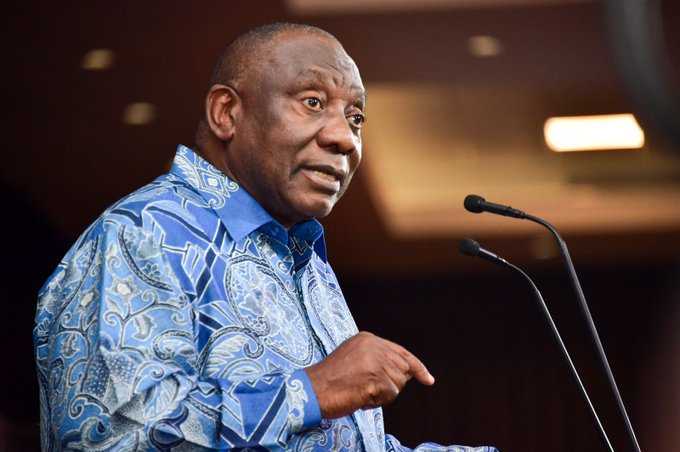
President Cyril Ramaphosa hosted the Sudanese leader of the Rapid Support Forces (RSF), General Mohamed Dagalo, at the Mahlamba Ndlopfu official residence in Pretoria on Thursday.
In a statement from the Presidency, General Dagalo, who was the deputy chairperson of the Transitional Sovereignty Council of Sudan as part of a military ruling coalition, gave Ramaphosa the context of the ongoing civil war that began in April last year.
“I provided a comprehensive explanation to his excellency [Ramaphosa] about the reasons for the outbreak of war in the country, the parties behind it that support its continuation, the extent of the destruction and deliberate sabotage that affected basic infrastructure, and the killing and displacement of thousands of civilian victims due to aircraft bombing,” he said.
Dagalo is at war with the Sudanese Armed Forces (SAF) under Abdel Fattah al-Burhan who is the de facto head of state.
More than 9,000 civilians have been killed and 5.6 million forced to flee their homes, while the capital, Khartoum, continues to be ravaged by savage internecine warfare.
Ramaphosa welcomed a briefing from General Dagalo, acknowledging the crucial role played by the African Union and IGAD (Intergovernmental Authority on Development), chaired by Djibouti, in mediating the situation.
The President highlighted the significance of engaging in diplomatic efforts to achieve lasting peace in the region.
Ramaphosa expressed South Africa’s support for the imminent face-to-face dialogue between General Dagalo and General Burhan.
In recent years, South Africa has played a central role in mediating conflicts on the continent, the highlight being ending the civil war in Ethiopia’s Tigray region in November 2022.
The Sudanese people are hardwired for freedom. A call for elections will resonate with many. Sudan is not new to multiparty elections which were held even during Omar al-Bashir’s regime. In 2010, the polls that were convened at the end of the transition period following the second Sudanese civil war were monitored by the Carter Center and were seen as highly credible.