
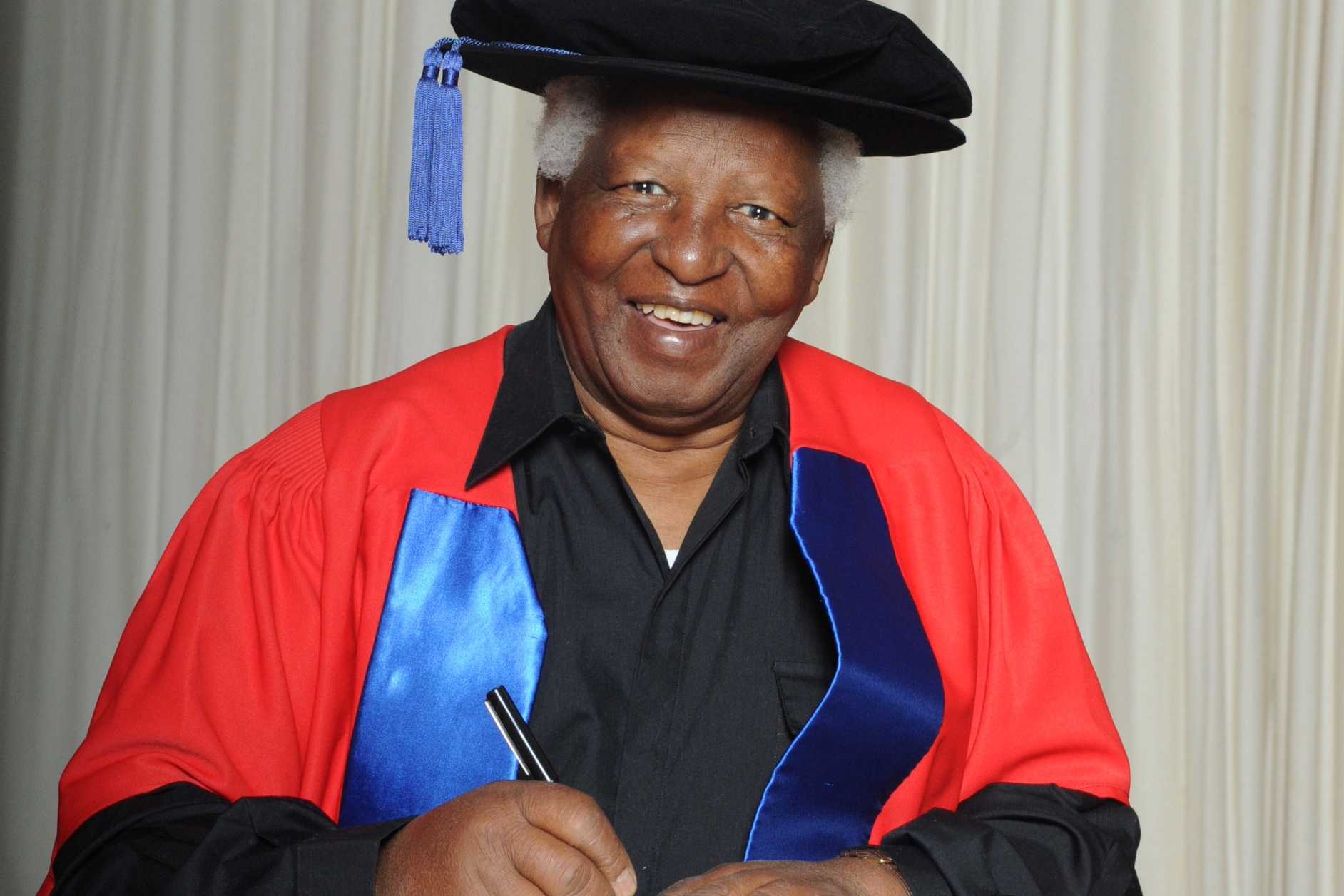
By Lehlohonolo Lehana.
Friends, family and veteran photographers gathered at the Regina Mundi Church in Soweto for the memorial service of the late veteran photographer Dr Peter Magubane who died at his home on Monday, 1 January.
His art, which portrays the struggle of the black majority under the harsh apartheid regime, has won him recognition on a global scale. Through his lens, the experienced photographer vividly captured the spirit of the people during the historic 1976 Soweto uprising that defined our nation’s history.
Last week, President Cyril Ramaphosa expressed his condolences following the passing of the 91-year-old icon.
“I have learned with great sadness of the passing of… Peter Magubane. On behalf of government and the nation, I offer my deep condolences to the Magubane family, our veteran’s friends and his countless associates around the country and globally, “said Ramaphosa.
Pearl Luthuli and Gabu Tugwanana said the struggle for Magubane was over, he finished his race and had fought a good fight as a legend and freedom fighter who used his camera as his AK47.
For Pearl, Magubane was more than just a colleague from a different publication.
For her, they were brother and sister in arms.
“He was never the kind of journalist who waited in the newsroom to be sent out on a story but instead had a drive and an initiative to go out and find the front page with pictures,” she said.
Pearl stood firm in the idea that while Magubane never said much, but he made sure he stood out in every room he entered.
A close friend and veteran videographer Spokes Mashiane whose known Magubane for more than 15 years said his bravery to capture the most heartbreaking and emotional scenes made him the person he is today.
These were the same sentiments shared by Ruth Motau, a veteran photographer who worked at the Mail and Guardian.
She said Magubane looked out for her on the field, and she always felt comfortable positioning herself next to him because he had order and was very proactive.
Magubane in his life had serial encounters with different people on the field particularly journalists and photographers.
Also present at the memorial was Minister of International Relations and Cooperation, Dr Naledi Pandor alongside Joburg Mayor Kabelo Gwamanda and Deputy Minister of Sport, Arts and Culture Nocawe Mafu who regarded the late photojournalist as a legend.
Magubane was born on 18 January 1932 Vrededorp (now Pageview, a suburb of Johannesburg), and grew up in Sophiatown.
In 1954, he read a copy of Drum magazine, which detailed the effects of apartheid. He decided he wanted to be part of the magazine.
Magubane started employment at Drum as a driver. After six months of odd jobs, he was given a photography assignment under the mentorship of Jürgen Schadeberg, the chief photographer. He covered the 1955 African National Congress (ANC) convention.
Magubane photographed most of South Africa’s historic moments, such as Sharpeville in 1960 and Nelson Mandela’s Rivonia trial in 1964.
He was arrested in June 1969 while photographing protesters outside Pretoria Central Prison, where Winnie Madikizela Mandela was jailed. Magubane was later held in solitary confinement for 586 days.
Magubane has worked for Rand Daily Mail and has worked on assignments for Time magazine, the United Nations and Sports Illustrated photographing a series about the South African teenage runner, Zola Budd.
Following Mandela’s release from prison, Magubane became his official photographer in 1990, until he became the country’s President.
Magubane received several prestigious awards and honours throughout his illustrious career. Some of the notable recognitions he received include the Lifetime Achievement Award from the National Press Photographers’ Association (NPPA).
Watch Live in the video below:
Video Courtesy of SABC.