
By Lehlohonolo Lehana.
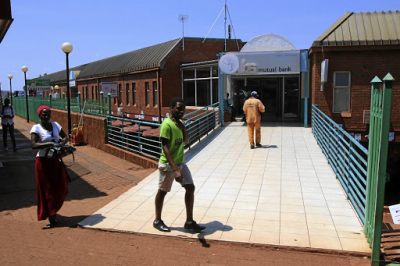
Minister in the Presidency Khumbudzo Ntshavheni says government wants those responsible for the collapse of the VBS Mutual Bank to be held accountable and jailed.
Tshifhiwa Matodzi, the former chair of the VBS Mutual Bank board, compiled an explosive affidavit as part of a plea agreement he entered into with the National Prosecuting Authority (NPA) with regards to the charges he was facing in connection with the collapse of the VBS.
Matodzi’s leaked affidavit implicates leaders of the Economic Freedom Fighters (EFF), a former director-general in the National Treasury and the South African Communist Party (SACP).
The leaked 70-page witness statement went viral on social media on Thursday, just a day after the Gauteng High Court in Pretoria sentenced the 47-year-old Matodzi (47) to an effective 15 years in prison.
Speaking on the sidelines of the Cabinet lekgotla in Pretoria on Saturday, Ntshavheni said the government hopes Matodzi’s guilty plea will allow law enforcement to move with speed to catch the other perpetrators.
She assured the public that law enforcement agencies were diligently working to hold those involved accountable.
“Remember Matodzi is not the first one to do a confession; there was Philip Truter who did his confession.”
“We hope this affidavit will allow law enforcement agencies to move with speed to bring to book everybody who has swindled the money of our people because now you know the scale of the looting… and disregard of laws.”
The minister revealed that the impact of the VBS saga to “ordinary people”, particularly to those who live in the Vhembe district, was yet to be quantified.
Ntshavheni emphasised that justice must be served for the victims who lost their pension, stokvel or burial society money as a result of VBS scandal, which saw nearly R2.3 billion looted.
SACP chairperson Blade Nzimande said, they were not aware that there was money that came in for the SACP from VBS.
If we were aware, we would’ve acted or taken that money back.”
“When this matter first arose, we addressed it. We can’t be taking money from the poor, it’s against our basic communist principles, said Nzimande.
Former President Jacob Zuma’s daughter Dudu Zuma-Sambudla has expressed distrust in the NPA to investigate the leaking of Matodzi’s affidavit.
Zuma was given a R7,8-million bond by VBS on extremely favourable terms in September 2016.
Former ANC treasurer-general Dr Zweli Mkhize allegedly requested R2 million from VBS, a payment made via a third party purportedly for an ANC supplier.
Matodzi’s affidavit states: “I recall an amount of R2 million, which was paid via Joseph Nkadimeng or Tseke Nkadimeng, which was requested by Mkhize. The request was that the payment was for an ANC supplier. No further engagements were held with Mkhize after this meeting.”
Meanwhile South Africa’s energy security, reducing poverty, and creating jobs took centre stage at the first Cabinet Lekgotla of the Government of National Unity (GNU).
The lekgotla is expected to set out the programme of action government will undertake during the seventh administration.
The set of actions are being guided by the priorities agreed by the parties to the GNU. In short, include:
• Economic growth, job creation and transformation
• Creating a more just society
• Stabilising local government,
• Investing in people through education, skills development and healthcare
• Building state capacity
• Strengthening law enforcement agencies
• Strengthening the effectiveness of Parliament
• Strengthening social cohesion, nation-building and democratic participation, and undertaking common programmes against racism, sexism, tribalism and other forms of intolerance
• Foreign policy based on human rights, constitutionalism, the national interest, solidarity and peaceful resolution of conflicts
Eleven parties joined the GNU: the ANC, DA, Patriotic Alliance, Inkatha Freedom Party, Good Party, Pan Africanist Congress of Azania, Freedom Front Plus, United Democratic Movement, Al Jama-ah, Rise Mzansi and the United Africans Transformation, which announced it had withdrawn this week.
Before the elections, Ramaphosa’s Cabinet consisted of 30 ministers. It has now grown to 32 to accommodate all GNU partners.
The ministries of Electricity and Energy have been merged, while there is a separate ministry of mineral and petroleum resources.
The Ministry of Agriculture has been separated from the Ministry of Land Reform and Rural Development. The Ministry of Higher Education no longer includes the science, technology and innovation portfolios.
The Ministry of Justice and Constitutional Development is no longer merged with the Ministry of Correctional Services, and the Ministry of Public Enterprises has been scrapped.