
By Lehlohonolo Lehana.
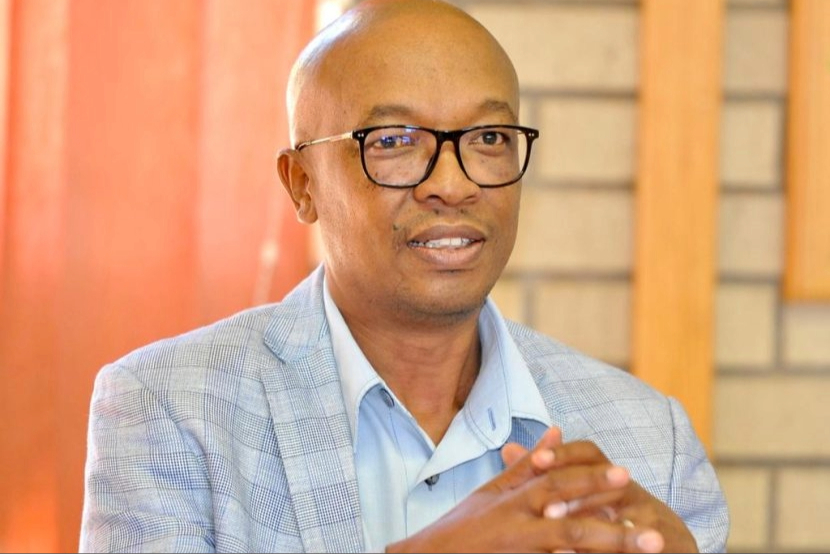
Trade,Industry and Competition Minister Parks Tau has indicated in his maiden budget vote that he would be leaning on local procurement to create early-stage demand in targeted sectors.
His maiden Budget Vote address to Parliament was attended by his predecessor Ebrahim Patel.
Tau said industrial policy was the anchor around which the Department of Trade, Industry and Competition (dtic) would deploy trade instruments, incentives, tools and regulation, including any support for new energy vehicle production and green industrialisation.
Over the coming three years, R30.1-billion had been allocated to the dtic, of which 48.7% had been allocated to its incentive schemes.
The department would also seek to build on the sector partnerships in already identified prioritised sectors, including those eight sectors where masterplans had been negotiated.
“These masterplans have supported localisation, increased investment, exports and job retention. This administration will focus on integrated implementation mechanisms, deploying a government-wide set of tools,” he said.
This, despite African National Congress (ANC) Member of Parliament Mzwandile Masina, himself a former Trade, Industry and Competition Deputy Minister, appealing in his response to the Budget Vote that it no longer be business as usual at the dtic, given ongoing deindustrialisation.
For his part, Tau underlined the importance of manufacturing-led growth, arguing that jobs were created both upstream and downstream of such sectors and that manufacturing-linked jobs were also more resilient and higher paying than those in other sectors.
He also linked localisation directly to employment, stating: “We have industrial capabilities as a country. We must stop exporting jobs.”
To leverage local procurement, however, the dtic would need to play a more active role in “identifying procurement opportunities, advocating for local-content requirements, monitoring implementation and evaluating impact”.
“In identified industries, including infrastructure build programmes, we will work with relevant State-owned enterprises and industry to support local manufacturing of our key products and create jobs,” Tau added.
That said, he also underlined the importance of growing exports in a context where the domestic market was too small and growing too slowly to sustain manufacturing-led growth and where a weak fiscal outlook was limiting infratructure investment.
He said the dtic urged that South Africa find a common wavelength with trade partners in the Brazil, Russia, India, China, South Africa (BRICS), African Continental Free Trade Area (AfCFTA), the African Growth and Opportunity Act (AGOA), and the Economic Partnership Agreement (EPA) with the European Union (EU).
Democratic Alliance (DA) MP Toby Chance said at the dawn of democracy, SA’s entrepreneurial class was co-opted into a “flawed deal” for SA’s economic development. He said this new deal added barriers to SMME development and locked black entrepreneurs out of the prospects of generational wealth.
MK Party MP Mnqobi Msezane said the third-largest party in parliament rejected the budget vote, saying it fell short of assisting the economy and uplifting the landless and unemployed masses of the country.
Tau also used the speech to underline the new administration’s commitment to racial inclusivity and transformation, while lamenting that, despite 21 years of implementation, broad-based black economic empowerment (B-BBEE) legislation had failed to “fully achieve its intended outcomes”.
“in the short term, the dtic and the B-BBEE Commission will engage organised business, labour and other stakeholders to encourage firms to comply.
Meanwhile delivering the department’s budget vote speech in Cape Town on Wednesday, Justice & Constitutional Development Nkadimeng said the R25.1bn budget would support critical operations across the department, including court services, state legal services, the National Prosecuting Authority (NPA) and auxiliary and associated services.
Of the budget, R628m is earmarked for implementing the crucial recommendations of the Financial Action Task Force (FATF).
The National Treasury has said SA is on track to exit the FATF greylist by June 2025 as the country has addressed or “largely addressed” eight of the 22 action items in line with specified deadlines. This is after the FATF, which sets global standards for the combating of money-laundering and terrorism financing, found SA deficient and placed it on the greylist in February 2023.
Nkadimeng added a budget reduction of R1.586bn was implemented as part of National Treasury’s drive to manage state debt.
The budget cut was criticised by opposition parties who argued it would hamper the dispensation of justice in the sector.
In her speech Nkadimeng said the department would continue to redouble efforts in the fight against corruption.
“Thus, we have established a permanent prosecution-led unit within the NPA, the Investigating Directorate Against Corruption, with criminal investigative powers through newly enacted legislation to address complex corruption and state capture-related crimes.”