
By Lehlohonolo Lehana.
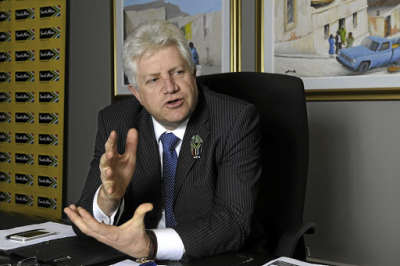
Premier Alan Winde delivered his State of the Province Address (Sopa) in the Western Cape Provincial Parliament on Wednesday, He called on National Treasury to change its formula for fund allocations.
“Last year, we were placed in an unacceptable position amid the 2023 Medium Term Expenditure Framework (MTEF) due to the centrally agreed public sector wage bill, well in excess of inflation and way over what was budgeted for,” said Winde.
“Our residents were forced to endure unprecedented in-year cuts, compromising budgets. These budget cuts are hitting frontline government services such as education, health care, and social development the hardest. It is the most vulnerable in society who are feeling the impact most acutely.”
The premier’s office declared an intergovernmental dispute (IGD) with the national government last year. The dispute was resolved.
“While we pioneered the IGD process, I have given our newly appointed provincial minister of finance very clear instructions to work with the National Treasury to ensure that we get our fair share of national funding,” said Winde.
“We have committed to work with National Treasury and Minister Enoch Gondongwana. However, we will not hesitate to act if we feel that that the spirit of cooperation, we achieved in resolving this dispute is broken or compromised.”
The Western Cape has the third highest population – the fastest-growing population in the country, said Winde.
However, the province only received the fifth largest budgetary allocation.
“This is not right, and we are going to fight for what our residents justly deserve.”
While we mark the start of the 7th administration, Winde said they will continue to focus on our priorities of:
– Building a growing, inclusive infrastructure-led economy that creates jobs;
– Building our energy and water security;
– Creating safer communities and devolving law enforcement resources and decisions; and
– Further improving the province’s education and healthcare systems.
Since the elections, we have met as a Cabinet and with Provincial Top Management to set our priorities for this term as a team, added Winde.
Meanwhile Winde said the Public Procurement Act signed into law last week by President Cyril Ramaphosa is unconstitutional, and has urged that consultations take place to address his concerns.
The act imposes a single procurement framework on all organs of state and includes preferential procurement provisions such as set-asides for the historically disadvantaged, mandatory subcontracting and local procurement in designated sectors if feasible.
Winde and provincial finance minister Deidre Baartman have written to Ramaphosa raising their serious concerns over the constitutionality of the act.
“We firmly believe that the act in its current form does not pass constitutional muster as it usurps the autonomy of provinces and municipalities in adopting their own preferential procurement policies,” Winde said.
He and Baartman point out in their letter to Ramaphosa that the constitution “envisages that organs of state have a discretion to decide whether to adopt a preferential procurement policy. This act is the national government drafting policy, and usurping the autonomy of organs of state, instead of providing a framework.”
The Western Cape government has requested that consultations be held urgently with provinces and municipalities to address the concerns about the act and that it not be brought into operation until the concerns have been resolved.
“The act will impose significant costs on the procurement process as well add to the administrative burden involved in procurement — it will be a handbrake on all systems and processes. This in turn will affect service delivery at a time when we as the provincial government are doing everything, we can to improve services for our residents,” Winde said.
Baartman noted that the process followed in drafting the legislation was “woefully inadequate”. Not all public input was considered nor was the public given all relevant information on which to engage.
The Western Cape government is of the view that the National Assembly and National Council of Provinces (NCOP) failed to comply with their constitutionally imposed duties in several respects.