
By Lehlohonolo Lehana.
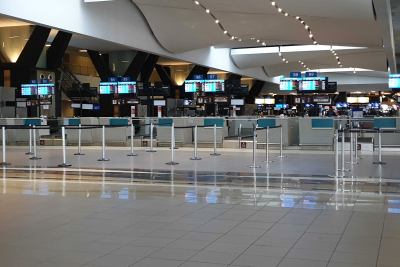
Airports Company South Africa (ACSA) says delays in processing passengers at King Shaka International Airport, north of Durban are linked to biometric and digital identity technology.
The Department of Home Affairs and the Border Management Authority are implementing a Biometric Movement Control System at the immigration and emigration areas in three of the company’s airports.
ACSA’s spokesperson Ernest Mulibana says the system went live at the OR Tambo International Airport and the Cape Town International Airport two years ago.
“We can confirm that the BMCS, which was introduced at King Shaka International Airport in the last few weeks, has been experiencing post-implementation challenges, causing long queues in the immigration areas.
“The BMA’s technical team is working on improving the situation by, among other things, increasing the bandwidth to ensure the system remains online and reducing the manual processing of passengers.”
Meanwhile ACSA has denied any wrongdoing in awarding a tender for its biometric system to French/South African firm IDEMIA.
This follows legal challenge by local BEE firm, InfoVerge, which has taken ACSA and IDEMIA to court to halt the contract. InfoVerge claims it was left out by IDEMIA once the tender had been awarded.
However, ACSA says its procurement processes are clear and this dispute is between the two contracted companies and not ACSA.
“A year prior to the publishing of the Request For Proposals, ACSA engaged in industry research to develop specifications. This is a normal and acceptable practice, especially when an organisation intends to procure a system of this magnitude and technical complexity,” ACSA said.
“Having followed a prudent procurement process, the contract to the value of R115-million was awarded to IDEMIA. It required that at least 30% of the contract value be subcontracted to a South African, black-owned Exempted Micro Enterprise (EME) and/or Qualified Small Enterprise (QSE). As such, the winning bidder had a teaming agreement with a local company called InfoVerge as its black-owned partner.
“However, ACSA became aware of an impasse between the two business partner IDEMIA and InfoVerge and engaged both companies with a view to foster an amicable resolution and in the interest of delivering on the contract.
“Despite ACSA’s efforts, the two business partners could not reach an amicable resolution. This resulted in InfoVerge approaching the High Court seeking relief to set aside ACSA’s decision to award the tender.