
By Lehlohonolo Lehana.
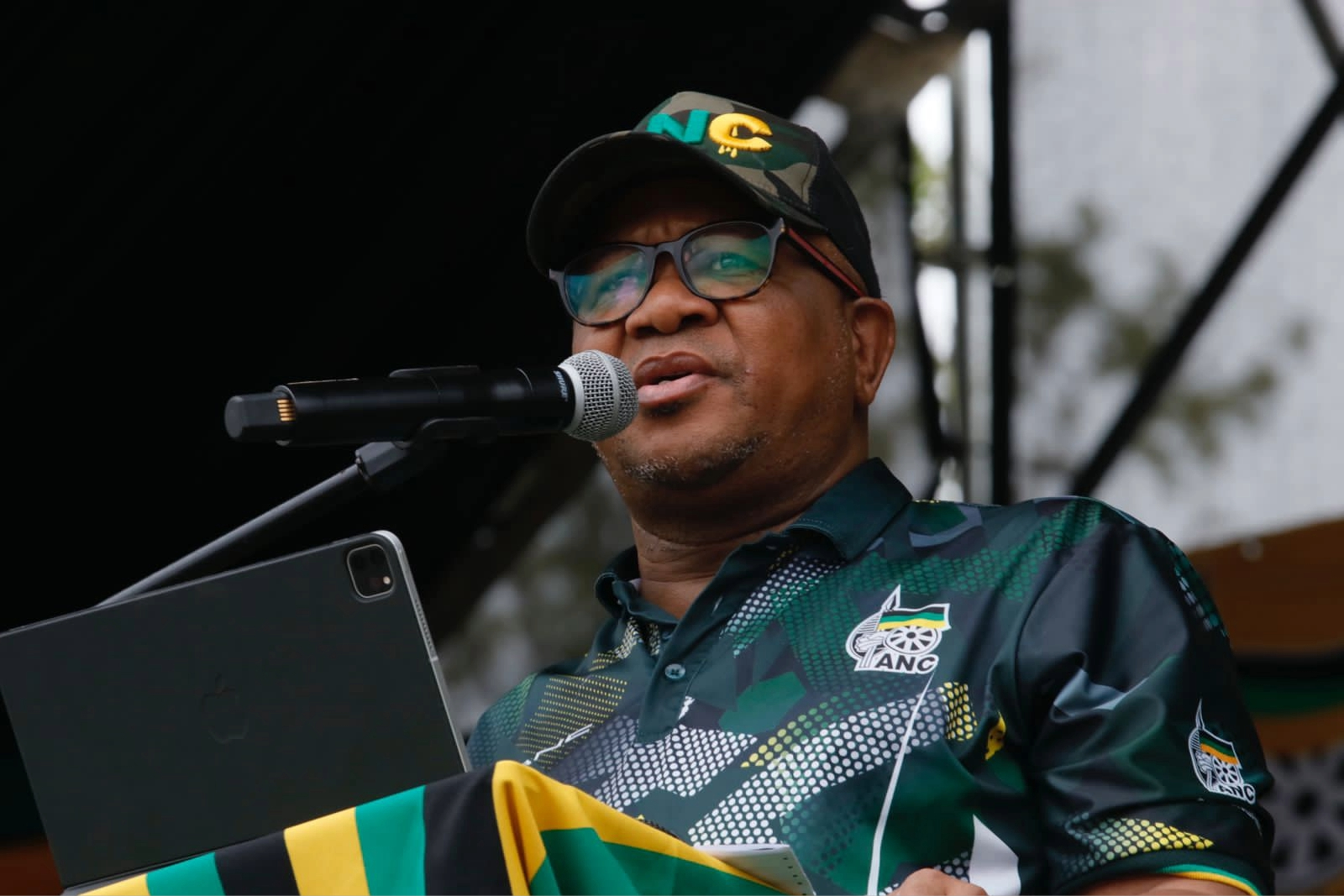
The African National Congress (ANC) Secretary General Fikile Mbalula says the party is going to probe all its branches to check whether or not they are in good standing as this could help the party better understand the state of its organisation.
He was briefing the media on the decisions made by the ANC leadership during the National Executive Committee (NEC) Lekgotla.
Mbalula said the party’s national executive committee (NEC) and the NEC lekgotla, which lasted for six days, have identified several ways of winning back the trust of the nation.
He said the first step was for the party to address the challenges of membership because there were ghost members and weak branches.
There are bogus branches, Mbalula said, which were constituted ahead of the 2022 national conference which remained in place even during the party’s elections campaign. The ANC would have to probe all its branches to check whether or not they are in good standing as this could help the party better understand the state of its organisation instead of rushing to disband provincial executive committees (PECs).
Mbalula’s comments come ahead of the ANC’s fourth national executive committee (NEC) scheduled for end of August, which is expected to take a closer look into why the party performed poorly in the May general election, and who has to take the rap for the decline.
The party’s top brass is expected to zoom into KZN, Gauteng, Northern Cape and Mpumalanga, the provinces that saw a significant decline in the elections.
He said the party was inundated with complaints from its members who were questioning the legitimacy of the branch general meetings (BGMs) that sat to select public representatives. Because of factionalism and gatekeeping ahead of the national conference, BGMs were held without the knowledge of the full membership.
The ripple effect of this bogus process is now reflected in how the party performed in the elections, argued Mbalula.
If the branches were in good standing, with enough active members, the ANC would have performed better in the polls as these members would have hit the ground running during the campaign season. “Now, where is the reflection of that? Because if a branch is meeting every day and does its job, it knows what it is doing. It will not lead to political obliteration of the ANC on the ground.”
The ANC will now go on a countrywide tour to comb through each branch to ascertain its standing. A branch in good standing is described as one which has no less than 100 members.
There are proposals within the NEC that its description of a branch in good standing should be reviewed. NEC members have argued that the R10 membership fee and a minimum of 100 members cannot constitute a branch.
Mbalula also announced that the party had resolved that it would back the resuscitation of the VBS bank and return the money the party may have benefited from.
Last month, former VBS board chair, Tshifhiwa Matodzi, revealed that ANC’s former treasurer-general in 2016, Zweli Mkhize, had requested R2 million from the bank to pay an ANC service provider.
The bank was looted of over R2.3 billion by officials and politicians, leaving scores of individuals, mostly the elderly, counting their losses.
Mbalula further conceded that the party had defaulted in service delivery in the last 30 years of governance.
“In diagnosing the moment, the ANC NEC agrees that the national fault-lines of unemployment, inequality and poverty have persisted despite progress over the past 30 years, with serious negative impacts on all segments of the motive forces,” he said.
He emphasised the need for the Government of National Unity (GNU) to root out complacency and arrogance and adopting a zero-tolerance stance on corruption and incompetence.
“By working together, political parties can pool their resources and expertise to create an inclusive, viable, and stable government that truly serves the people’s needs and advances the transformation agenda.”
He said the ANC’s initiative marked a significant shift towards a more collaborative approach to governance, recognising that the country’s complex challenges required a united response.
By putting aside partisan interests and working towards a common goal, the GNU aims to make meaningful progress on the socio-economic front and improve the lives of all South Africans.