
By Lehlohonolo Lehana.
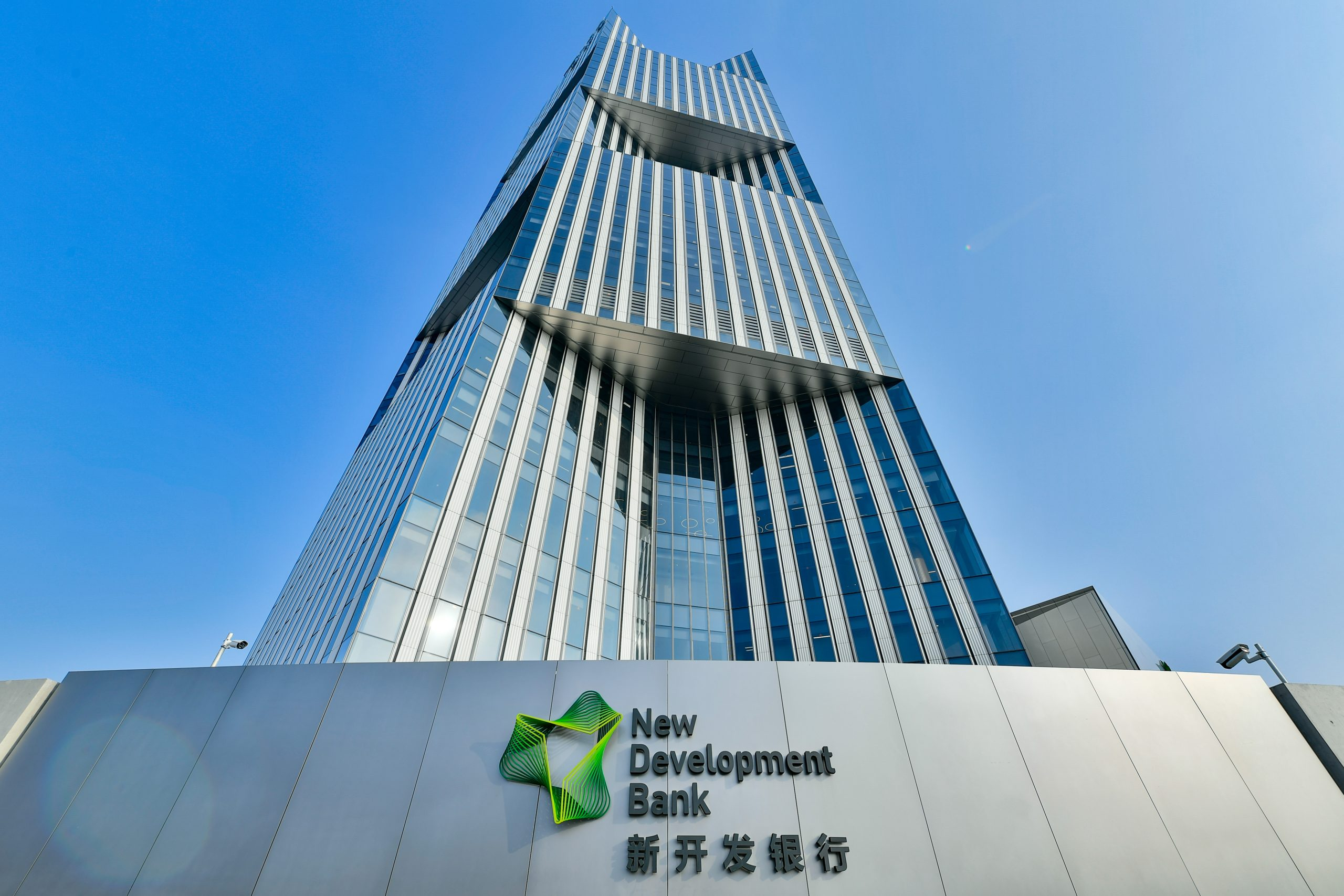
Deputy President Paul Mashatile has expressed his gratitude to the BRICS New Development Bank (NDB) for its backing of South African infrastructure investment.
The NDB was created in 2015 by Brazil, Russia, India, China and South Africa (Brics) to mobilise resources for infrastructure and development projects in Brics and other emerging market economies and developing countries.
Mashatile was addressing the Energy Seminar convened by the BRICS New Development Bank at the Cape Town International Convention Centre on Saturday.
The NDB has approved $2.3 billion for 10 renewable energy projects, including solar PV, wind, hydropower, biomass, and hybrid systems with storage. These projects aim to install a 2.8GW generation capacity, reducing over 4 million tonnes of CO2 emissions annually.
“We also appreciate the bank’s plans to assist Transnet in resolving the deficiencies in freight rail infrastructure. The Transnet project in particular is of utmost importance in guaranteeing a goods system that is internationally competitive, allowing for the continuous expansion and diversification of the country’s economy,” Mashatile said.
He highlighted that during their discussions they had agreed that a challenge was the sluggish payment of authorised projects in South Africa. He discussed the matter with the Minister of Finance Enoch Godongwana and his team at National Treasury, who have promised to attend to it.
“We are also impressed that the bank has appointed former National Treasury official Monale Ratsoma as its Chief Financial Officer and Vice-President. We will work with you to ensure that the pledge that the bank made of US$3 billion at the BRICS Summit comes to reality because it is focused on supporting our energy strategy,” he said.
Mashatile told the NDP President that the government is especially eager to learn from China’s experience in rapidly scaling up renewable energy capacity and modernising its grid infrastructure; India’s successes in promoting rural electrification and integrating large-scale renewable energy projects; Brazil’s expertise in hydroelectric power and bioenergy and Russia’s strategies for managing a vast transmission network and its progress in nuclear energy.
“We hope to gain insights into effective models for private sector participation in transmission infrastructure development; strategies for balancing grid stability with the integration of variable renewable energy sources; innovative financing mechanisms for large-scale energy projects and best practices in managing the socio-economic aspects of energy transitions.
“Specifically, one of the lessons we are learning from one of the BRICS Member Nations is that they have invested in the creation of new cities as a method to eradicate poverty. We are of the same opinion that it is imperative to allocate resources towards the construction of new cities in Africa in order to alter the spatial perspective of our cities,” he said.
“As we collaborate with the NDB, we will invest in new cities in response to today’s realities, which are growing urbanisation, migration, climate change, poverty, unemployment, and pandemic management. The future is in the cities.”
The Deputy President told delegates that if South Africa accelerates the construction of these cities, it will address the large influx of people from rural areas moving to urban areas, which has put tremendous strain on cities, causing traffic congestion, housing infrastructure backlogs, and, to some extent, an increase in crime rates.
“However, as we develop these cities, we must remember that sustainable cities require dependable, inexpensive, and renewable energy to operate. High-energy consumption patterns, rising energy costs, and environmental deterioration caused by the use of fossil fuels render cities vulnerable and inefficient,” he said.
Meanwhile New Development Bank (NDB) president Dilma Rousseff, who is also the former President of Brazil said, “it is necessary to channel the international liquidity to developing countries and reduce the burden of high interest rates; and, secondly, develop alternatives like financing in local currency to widen the fiscal space to invest.”
“New financial solutions are needed for EMDCs,” emphasised Rousseff.
Diversifying funding sources and using a broader currency basket improves economic resilience against shocks associated with monetary policy decisions.
This is the reason why expanding the use of local currencies is one of the NDB’s strategic objectives for the 2022 to 2026 period, said Rousseff.
The bank is putting in place local currency sustainable development-oriented platforms and recognises the urgency of making green financing available to the member-countries.