
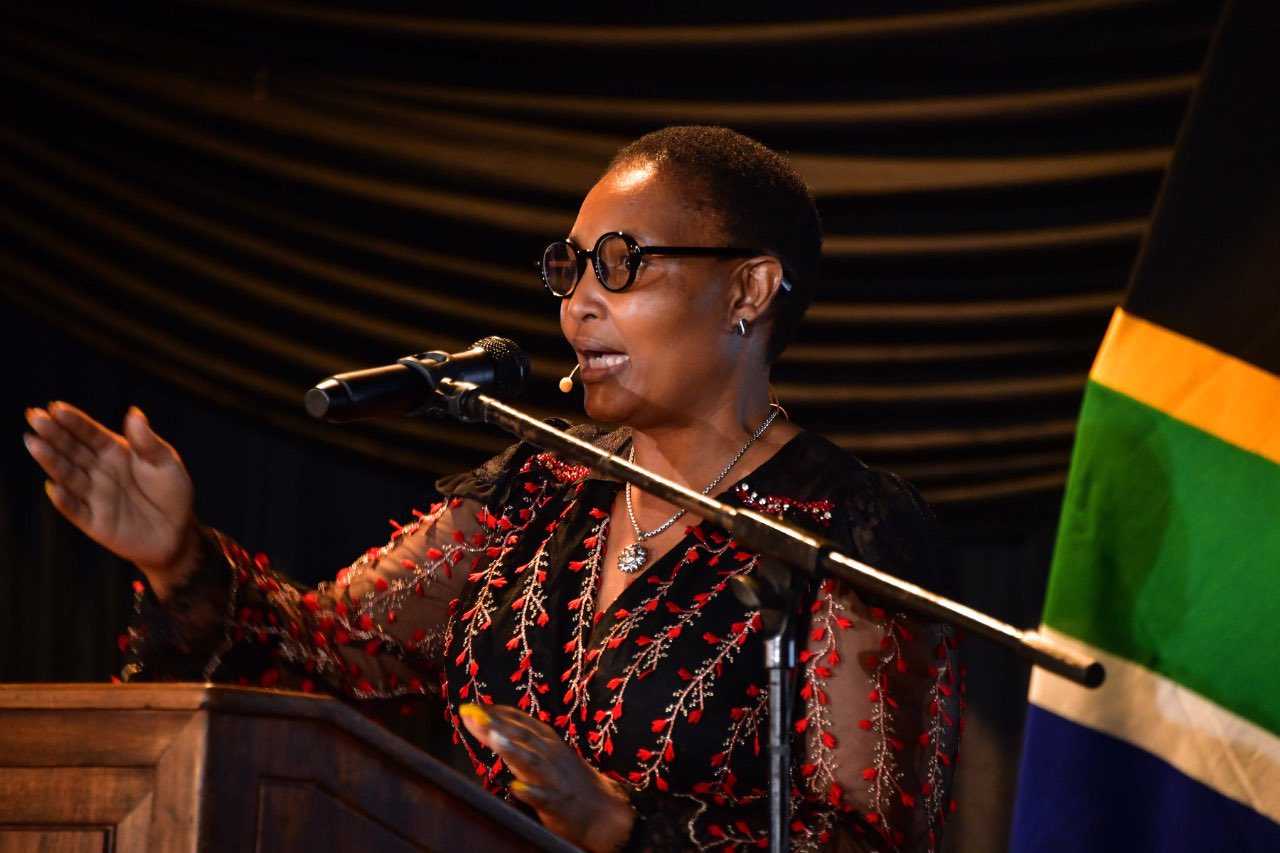
By Lehlohonolo Lehana.
Co-operative governance and traditional affairs (Cogta) minister Thembi Nkadimeng says a number of municipalities hard hit by devastating floods in KwaZulu-Natal have been classified as disaster areas.
This comes after Cogta revealed preliminary assessment reports indicate that the province has suffered billions of rand in damage to infrastructure due to heavy rains.
Municipalities including Uthukela, Illembe, Ugu, Umzinyathi, and eThekwini metro, have been classified as disaster areas.
Nkadimeng said at this stage, over R 2 billion worth of infrastructure damage has been recorded in the Uthukela District including roads, bridges, schools and households.
She says more funds are needed to repair damaged roads and infrastructure in other parts. “We believe the president will give guidance concerning the disaster as he is supposed to.
Currently, as Cogta at the national and provincial level, we have not necessarily declared the province but the areas according to what the law allows us to do to be able to release a budget.”
According to the Disaster Act, this classification will enable municipalities to re-prioritise their budgets and focus on repair projects. It will also facilitate access to additional funding from provincial and national departments for infrastructure repair, such as roads, bridges, and households.
The minister was in KZN alongside Deputy Minister Parks Tau, KZN Cogta MEC Bongiwe Sithole-Moloi, district and local leadership where they surveyed areas affected by floods in Ladysmith under the Uthukela District on Friday.
Sithole-Moloi expressed her appreciation for the active response from the national government and stressed that the province is committed to swift action.
“We have been collaborating with visible national teams and have received support from the nation, including search and rescue assistance. We would appreciate it if the president can declare a state of disaster in the affected municipalities because the costs are already in excess of billions which these municipalities cannot afford,” said the MEC.
KwaZulu-Natal has been pummelled by relentless, torrential rain since the devastating downpours of mid-April 2022, which surpassed the levels and scale of catastrophe caused by the last major flood in the province in 1987.
In the past two years, hundreds of people have been killed and billions’ worth of private and public property and infrastructure have been damaged.
Nkadimeng said the government was warned about these events a long time ago.
In a voice note distributed by her publicity team, she said:
Honestly, we were warned about seven years ago.
“We should have expanded our dams. We should have expanded our bridges.”
The only silver lining has been improved response times to the disasters, which reduced the number of fatalities.
The minister said they were hoping to bring president Cyril Ramaphosa to witness the devastation in KwaZulu-Natal in person soon.