
By Lehlohonolo Lehana.
Various political parties have reacted to President Cyril Ramaphosa’s State of the Nation Address (Sona), saying he is disconnected from reality if he truly believes that South African children have thrived since the inception of democracy 30 years ago.
Painting a picture of a child born in 1994, the President told a story of Tintswalo who grew up in a society that was worlds apart from the South Africa of her parents, grandparents and great-grandparents.
“The story of the first 30 years of our democracy can be best told through the life of a child called Tintswalo born at the dawn of freedom in 1994. She grew up in a society governed by a constitution rooted in equality, the rule of law, and affirmation of the inherent dignity of every citizen.
“Tintswalo, and many others born at the same time as her, were beneficiaries of the first policies of the democratic state to provide free health care for pregnant women and children under the age of six. Tintswalo’s formative years were spent in a house provided by the state, one of millions of houses built to shelter the poor, “Ramaphosa said.
He described her upbringing as being in a household provided with basic water and electricity, in a house where her parents were likely to have lived without electricity before 1994.
“Tintswalo was enrolled in a school in which her parents did not have to pay school fees, and each school day she received a nutritious meal as part of a programme that today supports nine million learners from poor families.
“The democratic state provided a child support grant to meet her basic needs. This grant, together with other forms of social assistance, continues to be a lifeline for more than 26 million South Africans every month.
“With this support, Tintswalo – democracy’s child – was able to complete high school. Through the assistance of the National Student Financial Aid Scheme, Tintswalo attended one of our Technical Vocational Education and Training (TVET) colleges and obtained a qualification,” the President said.
When Tintswalo entered the world of work, she was able to progress and thrive with the support of the state’s employment equity and black economic empowerment policies.
“With the income she earned, she was able to save, to start a family, to move into a better house, and to live a better life. This is the story of millions of people who have been born since the dawn of our democracy, “Ramaphosa said.
Lifting millions out of poverty
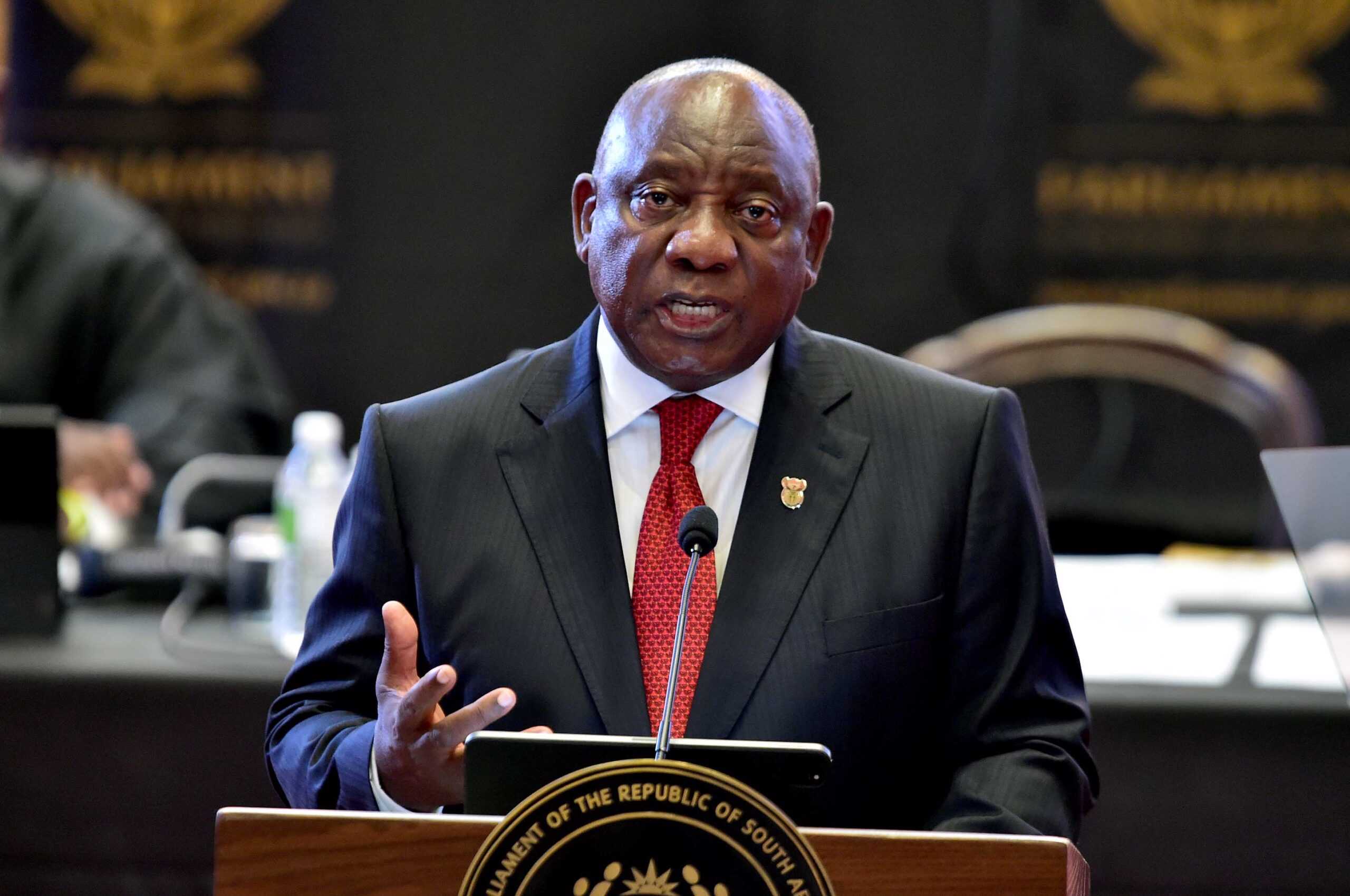
Delivering the last SONA for the sixth administration at the Cape Town City Hall, the President said government’s policies and programmes have lifted millions out of dire poverty.
“Today, fewer South Africans go hungry and fewer live in poverty. In 1993, South Africa faced a significant poverty challenge, with 71.1 percent of its population living in poverty. However, under the democratic government, there has been a consistent decline in these numbers.
“By 2010, the poverty rate had dropped to 60.9 percent, and it continued to decrease, reaching 55.5 percent in 2020, as reported by the World Bank. This progress has been made possible by extensive support to those in society who need it most, “the President said.
Five years ago, government introduced a further measure to tackle poverty by introducing the National Minimum Wage as envisaged in the Freedom Charter.
“The decision by key role players, being business and labour and communities, to introduce the minimum wage immediately raised the wages of over 6 million workers,” the President said.
He said today, nearly nine out of every ten households live in a formal dwelling.
“One of the most visible, impactful and meaningful achievements in the first three decades of freedom has been in providing homes to the people. Today, nearly nine out of every ten households live in a formal dwelling.
“Where there were once shacks and mud houses, there are now homes of brick and mortar. These are homes with water to drink and to wash with, homes with electricity for lighting and cooking.
“At the end of apartheid, only 6 out of 10 people had access to clean drinking water. Today, that figure has increased to nearly 9 out of 10 South Africans,” the President said.
South Africans living longer than ever before
“Life expectancy has increased from 54 years in 2003 to 65 years in 2023. Maternal and infant deaths have declined dramatically. We have built more hospitals and clinics, especially in poor areas, providing better quality care to more South Africans.
“Today, 95% of persons diagnosed with HIV know their status, 79% of those receive antiretroviral treatment, and 93% of those are virally suppressed. New HIV infections among young people have declined significantly,” the President said.
Tintswalo analogy reactions
RISE Mzansi
RISE Mzansi National Leader national leader, Songezo Zibi, said that Ramaphosa failed to rise to the occasion by not speaking to the issues that face the people today, and the kind of future they deserve.
“While Ramaphosa tried to draw parallels between himself and the founding President of our Democracy, Ramaphosa is in fact closer to President Jacob Zuma. It was 9 wasted years, followed by 6 more wasted years.
Democratic Alliance
Democratic Alliance (DA) leader, John Steenhuisen said that none of the promises made by Ramaphosa in his last five SONA speeches have ever been kept, and that “not a single piece of pragmatic, workable legislation has been tabled at the National Assembly to realise Ramaphosa’s ‘New Dawn’.”
“Ramaphosa’s recital of the story of Tintswalo, the child of democracy, makes glaring omissions of the ANC-created struggles that many in her generation now face.”
“In South Africa today, there is a 70% chance that Tintswalo will be unemployed. There is a 50% chance that she is one of the 30 million people who live below the poverty line.
ActionSA
President of ActionSA, Herman Mashaba, said that listening to tonight’s Sona, South Africans could be forgiven for thinking they live in a different country.
“The Sona was a political sleight of hand, where Ramaphosa appropriated the progress of the ruling party made under Presidents Mandela and Mbeki while distancing himself from its failures and corruption during Zuma’s State Capture era, “Mashaba said.
Cosatu
Meanwhile, the Congress of South African Trade Unions championed Ramaphosa’s address, stating that Ramaphosa’s tasks have been the most difficult of any President since our democratic state was born in 1994.
The union said that Ramaphosa inherited a state devastated by a decade of state capture and corruption.
Cosatu said it believes that Ramaphosa has since tackled significant challenges, including state capture and the Covid-19 pandemic, by effectively removing corrupt officials, managing the pandemic with labour and business cooperation, and implementing measures such as releasing funds from the Unemployment Insurance Fund, reducing load shedding, and addressing unemployment through programs like the Presidential Employment Stimulus.
Inkatha Freedom Party
IFP President Velenkosini Hlabisa said the address fell flat and was not inspiring, as it was repetition of what has been said over the past five years.
“In its entirety, it was an admission of failure. At some stage, the president himself gave up when he saw the whole house laughing to show that what he was saying is not true, particularly around the potholes and roads he claimed were being fixed.
“It’s a joke. We all know that potholes are a common problem in our country. He spoke of state capture, that they are doing all they can to deal with, but we have not seen a single senior leader of the ANC implicated being taken to task. He avoided Phala-Phala completely.”
United Democratic Movement
UDM deputy president Nqabayomzi Nkwankwa said this was a failed campaign speech that was indicative of the ANC’s fate post-elections.
“We are glad it was his last one. This was a campaign speech that went completely wrong. Firstly it was extremely long — and to put it mildly, it was idea-rich but lacked coherence and detail. He speaks of random bridges and random infrastructure that is going to be built but doesn’t tell us how and where the money is going to come from, considering that we are broke. He doesn’t even frame it in a way that one would understand that this is part of their growth strategy of some kind, and how the nuts and bolts of that strategy can be put together.”
“The president made yet another long list of promises, but the ANC government has failed to take responsibility for the mess it has created for the country. All indicators point downward, there is no growth. They are refusing to take responsibility for their actions and what they are not doing is explaining in detail how, if they were to come back, how they would rescue the country from this quagmire. Thankfully they are not going to come back.”
Watch Live in the video below:
Video Courtesy of GCIS.