
By Lehlohonolo Lehana.
Cooperative Governance and Traditional Affairs (CoGTA) Minister, Thembi Nkadimeng has lamented the failure of municipalities to provide basic services.
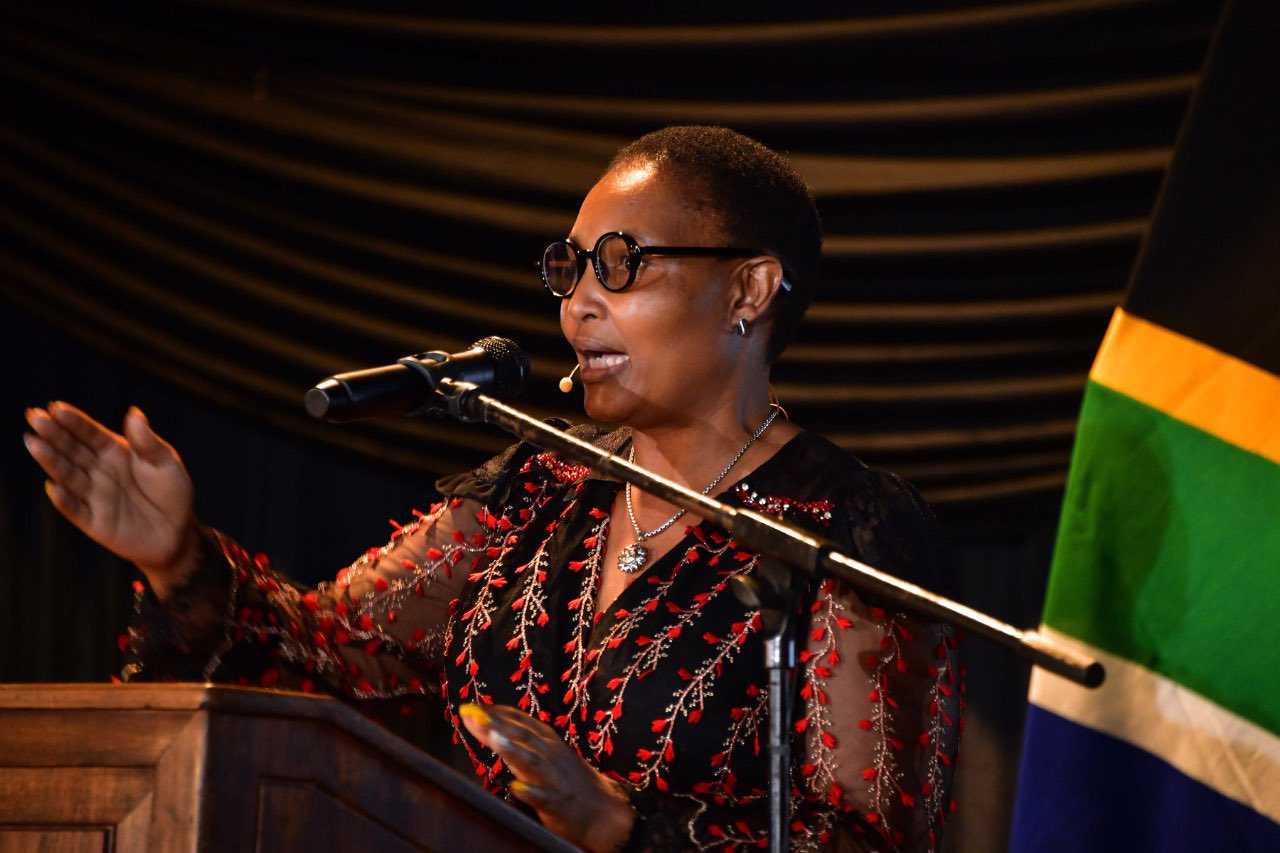
Nkadimeng was addressing the Summit on Ethical Leadership in Local Government currently in Johannesburg.
She said ethical leadership embodies integrity, accountability and a commitment to serving the people who have entrusted government with their well-being.
“It means, for example, acknowledging the injustices of the past, addressing the present challenges, and ensuring that every citizen has access to the basic services they need to thrive.”
According to the Minister, ethical leadership entails a deep-rooted understanding of the importance to provide clean, running water to the elderly, as this will enable them to take their medication on time and maintain their health and dignity.
“It could also mean having a holistic comprehension of the intricacies of Local Economic Development (LED), recognising its role in developing sustainable growth, empowering local businesses, and catalysing socio-economic progress.
“…[Ethical leadership] could mean no corruption… in the delivery of services to our people and adhering to the principle of treating others as we wish to be treated ourselves.
“Our democracy has matured, with each election strengthening the voice of the people. We have seen landmark legislation enacted by the current government to safeguard human rights and promote equality,” Nkadimeng said.
LED is an approach towards economic development that allows and encourages local people to work together to achieve sustainable economic growth and development, thereby bringing economic benefits and improved quality of life for all residents in a local municipal area.
As a CoGTA programme, LED is intended to maximise the economic potential of all municipal localities throughout the country and to enhance the resilience of macro-economic growth through increased local economic growth, employment creation and development initiatives within the context of sustainable development.
Nkadimeng said government has made tangible improvements in expanding access to essential services, as reported by Statistics South Africa’s Census 2022.
“Yet, despite our achievements, our journey towards a truly just and equitable society is far from complete. We still face deep-rooted inequalities, systemic injustices and pervasive poverty that continue to marginalise millions of our fellow citizens.
“As leaders and stakeholders in local government, it is our duty to confront these challenges head-on, to prioritise the needs of the most vulnerable members of our society, and to work tirelessly to build a future where every person, regardless of their background, can thrive.
“We should, as a collective, ask ourselves, for example, if the people residing in the 66 dysfunctional municipalities are content with the current state of their municipalities and the limitations they face in accessing basic services,” the Minister said.
Nkadimeng said the Constitution of South Africa requires a high standard of professional ethics in the public service.
“This therefore means that public administration must be governed by the democratic values and principles, as well as the standards for professional ethics enshrined in the Constitution,” she said.