
By Lehlohonolo Lehana.
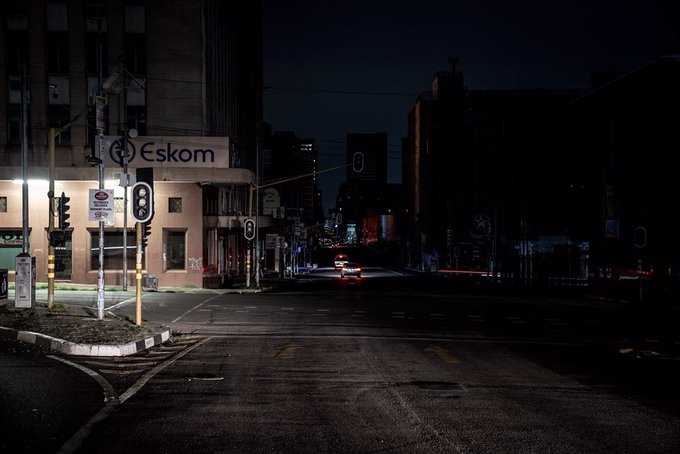
Due to the return of generating units and sufficient emergency reserves, Eskom has announced that load shedding will be suspended until Monday afternoon at 16:00.
Stage 2 load shedding will then resume until 05:00 on Tuesday morning.
The power utility said,”The alternating pattern of suspending load shedding from 05:00 until 16:00 and implementing Stage 2 load shedding from 16:00 until 05:00 will be repeated daily until further notice.”
2 200 MW of generating capacity is also expected to return on Wednesday.
Meanwhile the long-awaited report commissioned by the National Treasury and conducted by the German VGBE consortium has found that the underperfomance of Eskom’s coal-fired power stations is primarily attributable to the “dysfunctional and overly complex” management system within the organisation.
The 600-page report reveals that addressing the plants’ defects and implementing “prudent operation and maintenance practices” could prevent up to six stages of load-shedding.
“Eskom generation has been trapped within this complex management system for so long that it is no longer able to maintain or improve the technical performance of the coal-fired power plants,” the report said.
The report said the country was at risk of losing 13 000 megawatts of generation capacity which is equal to 13 stages of load-shedding – from Matimba, Kendal and Medupi power stations.
“The raw water treatment plant of the Medupi and Matimba power plant – both sites share this plant – urgently requires maintenance and upgrading. A second independent water treatment plant additionally would be even a better solution. If the existing plant fails, 12 units – 9 800 MW – would go off the grid, “the report stated.
“The water treatment plant at Kendal is in a very poor condition and needs urgent maintenance and refurbishment. If the existing plant fails, six units with 3 840 MW would be off the grid. A temporary unit is urgently required to enable this refurbishment work, “it added.
The report said that although Eskom’s problems and its solutions are known, the utility’s management has not been able to implement appropriate measures sustainably and successfully.
It said a lack of authority and transparency by decision-makers and meddling at Megawatt Park are believed to be among the root causes of the crisis at the power utility. This has also added to low staff morale, a shortage of technical skills and poor financial management.
The report noted that removing red tape should be a top priority, particularly with staffing and procurement processes.
“The current electricity crisis can only be overcome in the power plants, which is why it is imperative that they are empowered right away to manage the technical turnaround, without being hampered by lengthy company procedures,” the report added.
“The EAF of Eskom’s coal fleet, which has installed capacity of around 35 550 megawatts, is at about 51% compared with international benchmarks at around 78%,” the report said.
In a statement, Eskom welcomed the recommendations of the report and said it is thankful to the treasury for commissioning it and for the debt relief given to the utility.
As a result of these two things, Eskom said, it had achieved many positive results in the nine months since the report’s assessment period. This included having addressed design-related issues at Medupi and Kusile power stations through modifications, which Eskom said had significantly improved plant availability.