
By Lehlohonolo Lehana.
The Office of the Chief Justice has mooted a constitutional amendment to ease the case flow at the apex court after deciding not to continue the use of retired justices to help consider new applications to the court.
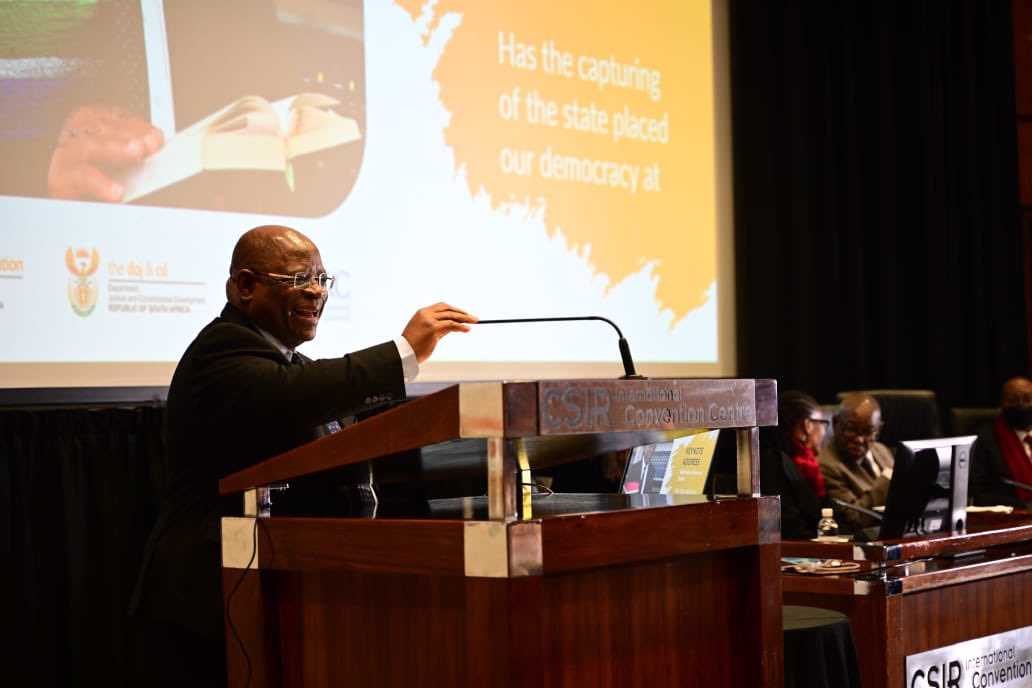
This comes after a media report which stated that retired Justices Zak Yacoob and Johan Froneman had been appointed to the Constitutional Court.
In a statement on Friday, the judiciary said the programme was at a trial stage and was to be reviewed in order to determine whether it was working and effective in addressing the backlog.
“The programme had been introduced to deal with the backlog of new applications which results in delays in disposing of new applications.”
“The programme was aimed at improving the quality of the service that the Constitutional Court renders to the public. The backlogs of new applications came about as a result of huge increase in matters that are brought to the Constitutional Court since the expansion of the Court’s jurisdiction about 10 years ago,” the Judiciary said.
It added that the idea was that the preparation of memoranda by retired Justices of the Constitutional Court in new applications would enable the serving Justices to devote more of their time to the preparation of judgments.
“In his response, the Chief Justice indicated that, if it was found during the review that the programme did not work or was not effective, it would be discontinued, in which case the concerns expressed or questions raised by some of the organisations about the programme would fall away,” the Judiciary said.
Chief Justice Raymond Zondo said he and his colleagues believed that two alternative measures now needed to be pursued.
The one was to make use of experienced lawyers, in addition to law clerks, to help to prepare new memoranda on new applications to the court.
“There are many apex courts around the world who have this arrangement. They include the US supreme court, the supreme court of Canada and the supreme court of Kenya.”
The other was to amend the Constitution to the effect that the 11 members of the court would no longer sit when deciding new applications but do so in panels of three.
An amendment was necessary because section 167(2) of the Constitution prescribes that a matter that serves before the court must be heard by at least eight judges, and this included new applications.
“Accordingly, a constitutional amendment is needed to make it possible for the justices of the constitutional court to dispose of new applications in panels rather than sitting en banc.
If new applications could be considered by panels of three judges, it would mean a two-thirds reduction in the amount of time each member of the court spent in this manner, the chief justice said in a supplementary 15-page memorandum on the decision.
The court would still sit when hearing and deciding cases which, Zondo stressed, is its core function.
“Time spent weeding out unmeritorious new applications is time taken away from that core function and so it is time that is spent at a serious cost to the South African legal system.”
Zondo said he and his colleagues at the court had always considered a constitutional amendment a last resort and had hoped that the use of retired justices could prove a viable alternative.