
By Lehlohonolo Lehana.
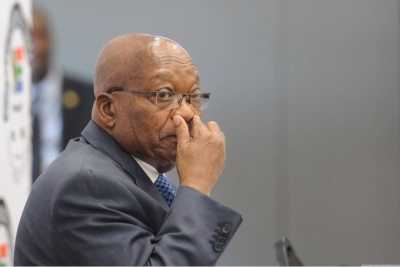
Umkhonto weSizwe party (MKP) leader Jacob Zuma’s bid to privately prosecute President Cyril Ramaphosa was postponed to August 6 to allow the appeal processes to be completed.
During the proceedings, Zuma’s lawyer Dali Mpofu said, “In this matter, which is a private prosecution in terms of section 7, what we have been doing because there are appeals in respect following a review appeal in this court which is being appealed in the SCA – and we always postpone to update the court. So the latest status of the matter is that on the 4th of April, the counsel for Ramaphosa filed an answering affidavit opposing the application for reconsideration in terms of section 17(2) f in the SCA, which means we are now due to do a reply.
The implications of that are that the matter will have to be postponed once again. The reason why is unlike a criminal matter where you can withdraw charges and reinstate them. In terms of section 11 of the Criminal Procedure Act, if the private prosecutor does not appear on a set date the matter is permanently dismissed and therefore the arrangement we have had with this court… is that we will have these. As a result, to avoid coming every month, we have traditionally agreed on a longer-than-normal postponement… so that it allows for the appeals to be finalised.”
Zuma is accusing Ramaphosa of committing a criminal offence by not acting against State advocate Billy Downer and News24 Journalist Karyn Maughan in 2021 regarding a leaking of the former president’s medical records.
Previously the Johannesburg High Court ruled that Zuma’s case hinged on an ulterior motive.
In July 2023, the Supreme Court of Appeal ordered that Zuma’s private prosecution of Ramaphosa was unlawful and unconstitutional, and it was set aside.
It also interdicted the private prosecution and declared the summons issued against the President to be unlawful and invalid. The matter was dismissed with costs, including those of two counsels, to be paid on the attorney and client scale.
But Zuma took the rulings on appeal, resulting in the ongoing private prosecution bid.
On Thursday, the private prosecution bid case was being heard three weeks after Zuma failed to remove Downer, whom he accused of prosecutorial bias in his arms deal corruption case heard in Pietermaritzburg High Court in KwaZulu-Natal. The case has since been adjourned for a pre-trial hearing on 17 May.
Zuma addressed MK Party supporters outside the High Court in Johannesburg, where he attended his private prosecution case against Ramaphosa.
He said his former party, the African National Congress, made him resign.
“Even if I had completed the two terms, there is no law that says if you have a new party that has never contested elections, you can’t contest. The MK party has never stood for elections, and Jacob Zuma has never led the MK party in elections. Without considering that, they already say, his face will not appear on the ballot.”
The former president lambasted the Electoral Commission’s (IEC) decision to exclude him from the ballot after an Electoral Court order cleared to contest the upcoming national elections under the MK party banner.
The IEC’s decision was based on Section 47 of the Constitution, which stipulates that a candidate cannot be elected to Parliament or legislature if they have been convicted of a crime and sentenced without an option for a fine.
In its reaction statement, the IEC said they had requested the Electoral Court to hand down reasons for the orders issued by the court.
Zuma questioned Ramaphosa’s absence from court in the private prosecution matter against him, implying that the law is not applied equally.