
By Lehlohonolo Lehana.
The National Prosecuting Authority (NPA) urged the presidency to help resolve an impasse with the United Arab Emirates over what it described as the Gulf nation’s lack of “willingness” to help extradite Atul and Rajesh Gupta, who are wanted on charges of money laundering and fraud.
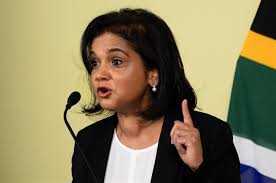
This was confirmed by the National Director of Public Prosecutions, Shamila Batohi, during a media engagement in Pretoria on Wednesday.
Deputy President Paul Mashatile and Justice Minister Ronald Lamola traveled to the UAE this week to secure its cooperation in the matter, Batohi said.
The case has dragged on for years and dented public confidence in the authority’s ability to prosecute individuals involved in state corruption.
The two Gupta brothers, were arrested in Dubai in 2022, accused of involvement in state capture during former president Jacob Zuma’s term in office.
The bid to extradite the Gupta brothers to South Africa was foiled last year when a UAE court denied the request based on a technicality.
However, Lamola denied that the National Prosecuting Authority had botched the paperwork related to the extradition request.
The two countries then agreed to set up a joint task team of prosecutors to assist with the extradition process.
But Batohi said the UAE authorities are still not cooperating.
“We have not had a satisfactory response from the UAE, we have been trying to set up a meeting with the UAE Prosecutor General Hamad Saif Al Shamsi for them to understand this.”
“We have not been able to set up that meeting for months. We have now decided, as the National Prosecuting Authority executive, that we needed the president [Cyril Ramaphosa] to intervene.
“We have realised that unless there isn’t that strong political push in the UAE, we are going to struggle with this case,” explained Batohi.
The Interpol Red Notices that led to the Gupta brothers’ arrest are no longer valid, so South Africa would need to seek new ones. This would make the fugitive’s ability to travel to other countries very difficult.
Nosiviwe Mapisa-Nqakula arrest
Batohi had defended the National Prosecuting Authority (NPA) over its handling of the case involving former National Assembly Speaker Nosiviwe Mapisa-Nqakula.
The NPA met with Mapisa-Nqakula’s lawyers earlier this month before her appearance in court.
Mapisa-Nqakula subsequently resigned as speaker and MP before appearing in the Pretoria Magistrate’s Court.
She was granted bail of R50,000.
The ANC heavyweight faces 12 counts of corruption and one of money laundering.
She is accused of soliciting bribes from Nombasa Ntsondwa-Ndhlovu, the sole director of logistics company Umkhombe, Marine, which did business with the South African National Defence Force (SANDF) during Mapisa-Nqakula’s term as defence minister.
The money laundering charge against the former speaker concerns her allegedly receiving various amounts of cash totalling R2,550,000 from Ntsondwa-Ndhlovu.
Batohi said there was nothing out of the ordinary about the meeting with Nqakula’s lawyers.
“The IE has also enrolled the case of the former speaker of Parliament, and in this regard, I want to deal with some of the criticism we’ve faced in the media where it’s been reported that the speaker received a five-star treatment in the way we tried to secure her appearance in court.
“This is completely wrong.
“In many of these cases involving white collar criminals, as prosecutors, we make arrangements with the lawyers, acting for the suspect to bring them to court. So, this is not unusual, and we will continue to do it.”
Matshela Koko Fraud Case.
Batohi said the decision by a Middelburg regional court magistrate to strike the fraud and money-laundering case against former Eskom chief executive Matshela Koko off the roll was questionable.
She said magistrate Stanley Jacobs’ decision to strike the case off the roll for unreasonable delays was the harshest option he had at his disposal.
“In that particular case, the magistrate could have made one of several orders. Several. He took the most drastic order of striking off and we must ask the question why,” she said.
She added that the National Prosecuting Authority (NPA) was, as a rule, cautious not to openly criticise court rulings.
“But in this case, it is a fact that various orders could have been made. The most drastic one was made and now there may be an understanding of why that was the case.”
Batohi was referring to the fact that since Jacobs made the ruling in November last year, it has emerged that he failed to disclose his history of business dealings with Eskom.
Koko was arrested at dawn on 27 October 2022 for seeking to derive personal benefit from contracts at Kusile power plant awarded to the local affiliate of Swiss engineering firm Asea Brown Boveri (ABB).
The head of the Investigating Directorate (ID) in the National Prosecuting Andrea Johnson said the directorate was still severely understaffed, with only 20 members, and that it was waiting for Ramaphosa to promulgate the National Prosecuting Authority Amendment Bill which conferred permanency on the entity to enable it to recruit more staff.
The bill was sent to the president for assent last month after it was approved by the National Council of Provinces.
Observers have cautioned that the Investigating Directorate’s challenge was not simply to recruit more staff but to find people with the skill to prosecute complex financial crimes.