
By Lehlohonolo Lehana.
Freedom Day serves as a reminder of South Africa’s very first democratic elections held on 27 April 1994. The historic first free and fair election of 1994 resulted in Nelson Mandela becoming the first black president and he declared that “to be free is not merely to cast off one’s chains, but to live in a way that respects and enhances the freedom of others”.
The democratic values of equality, freedom and human dignity is the foundation upon which the South African constitution has been built and this year we commemorate the 28th anniversary of the enactment of the constitution as the supreme law of our country.
The South African constitution has not only been instrumental in protecting our constitutional rights but has also played a vital role in forging a new national identity that protects our rich cultural heritage and diversity. It has also been influential in allowing for the redress of past imbalances.
Transformation through laws, such as Broad-Based Black Economic Empowerment, Affirmative Action, Preferential Procurement, and plans such as the Reconstruction and Development Plan, were government’s initial attempts to reduce socio-economic disparities.
Over the years, there have been significant improvements to citizens’ lives as much work has been done to advance basic services.
From 1994 to date, approximately 12 million households have electricity, which is seven million more households than in 1994. Approximately 93 percent of South Africans now have access to potable water compared to 62 percent in 1994. Eighty percent of households now have access to decent sanitation compared to 50 percent in 1994.
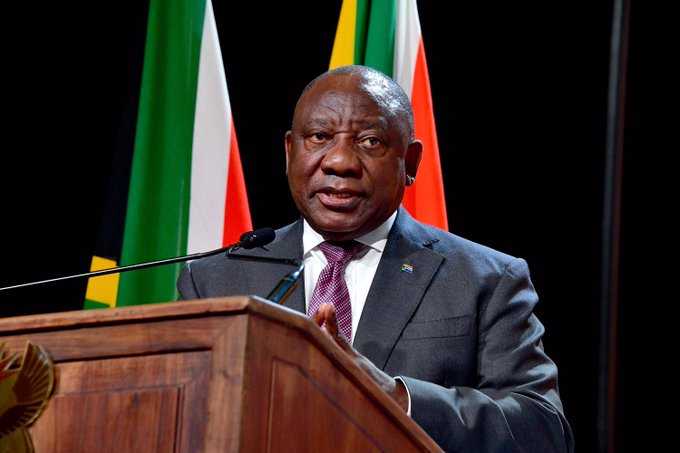
President Cyril Ramaphosa led the Freedom Day national celebrations at the Union Buildings in Pretoria, marking the 30th anniversary of South Africa’s democratic dispensation.
Justice and Correctional Services Minister Ronald Lamola joined Gauteng Panyaza Lesufi in delivering messages of support at the event, which is themed 30 Years of democracy, partnership, and growth.
Ramaphosa delivered the keynote address at the national official event to commemorate Freedom Day at the Union Buildings, in Tshwane.
He has acknowledged that while there have been setbacks, South Africa has made strides in reversing the effects of apartheid in the past 30 years of democracy.
While there have been calls for government to address challenges that discourage investment, like loadshedding and corruption, Ramaphosa said despite local and international factors the South African economy had tripled in size since 1994.
He admitted that unemployment remained a major challenge, but added that the number of people with jobs in South Africa today had doubled from 8 million in 1994 to 16.7 million.
“Our task over the last 30 years has been to bridge the huge divides of wealth and opportunity in our country – between black and white, between men and women, between urban and rural dwellers.
“We have done so not only to correct the injustices of the past, but also so that we may realise the full potential of an economy in which every person has a stake and in which every person has the opportunity to make a meaningful contribution,” he said.
He said it was only those who refused to see progress that would not recognise the progress that government has made.
“It is only those who willfully will not see, who shut their eyes to progress, who will deny that South Africa today is an infinitely better place than it was 30 years ago.
“We have established a society founded on the rule of law, and the premise of equality before the law.”
Ramaphosa said while there had been gains made in the social development and education sectors, there were still divides in access to healthcare, safe transport, and proximity to services and workplaces, between the rich and the poor.
With less than a month to go before what has been dubbed the most historical election since 1994, Ramaphosa urged South Africans to harness the same spirit of unity and working together to overcome the challenges facing the country today.