
By Lehlohonolo Lehana.
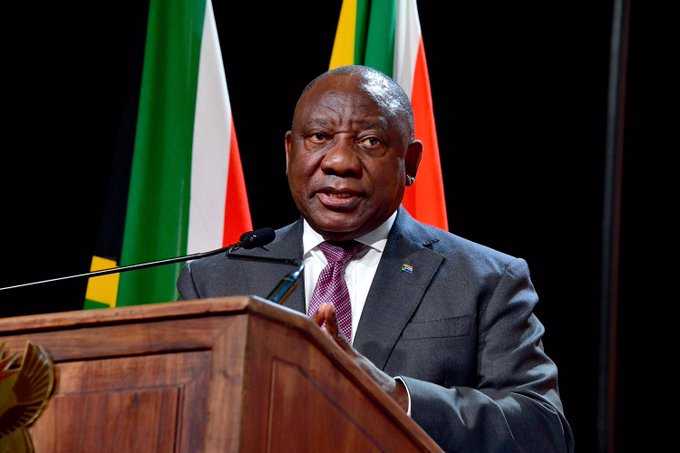
President Cyril Ramaphosa says the story of 30 years of democracy contained in the 30-Year Review Report of South Africa’s Democracy is an honest and critical appraisal that will be a valuable instrument for transformation, progress, and growth.
The report reflects on the political, social, and economic journey of transformation of South Africa since 1994 at the advent of democracy, to derive lessons and make recommendations for the country’s development agenda.
Ramaphosa provided the keynote address at the launch and noted that on this day, 8 May 1996, the Constitutional Assembly adopted the new democratic Constitution.
“The Constitution that was adopted on that day gave legal form to the vision contained in the Freedom Charter and continues to guide both the functioning and the direction of our democracy. While this 30-Year Review is about the journey South Africa has traversed since the advent of democracy, it is also a reflection on progress towards the aspirations of the Freedom Charter and our democratic Constitution, “he said.
Ramaphosa said the vision of a free South Africa has inspired and guided the struggle of people for many decades and for many generations — a vision that lies at the heart of the Freedom Charter.
“While this 30-Year Review is about the journey South Africa has traversed since the advent of democracy, it is also a reflection on progress towards the aspirations of the Freedom Charter and our democratic Constitution. This Review is undertaken as a tribute to all those who fought for our freedom, and for all South Africans who have worked together to build and enrich our democracy,” he said.
Strides made
Ramaphosa said South Africa is a vastly different place due to successive democratic administrations having implemented progressive policies and programmes to uplift the material condition of all South Africans, particularly society’s most vulnerable.
“These policies have included the provision of basic services, housing, education, health care, and social support,” he said.
Ramaphosa said there is an established unitary, democratic state, institutions to uphold democracy and promote accountability, an independent judiciary, a robust civil society, a free media, and a clear separation of powers between the executive, legislative, and judicial branches of government.
“We have advanced transformative policies to change the racial and gender composition of the economy and the workplace. We have implemented laws to protect workers and advance their rights. We have restored land to many who had been dispossessed and have provided emerging farmers with the means to productively use their land,” he said.
Challenges
South Africa today is a valued member of the international fellowship of nations. We pursue a progressive foreign policy rooted in advancing the African Agenda, in social justice and solidarity, and in support of multilateralism. Yet we know that still much more needs to be done.
“We are contending with slow economic growth, high unemployment, poverty, inequality and underdevelopment. What is made clear by this Review Report is that the task of consolidating our democratic gains is not just the responsibility of the state. It is a responsibility that we all share.
Ramaphosa stressed the need to resolve the challenges that are holding back the country’s progress and said efforts to overcome the energy crisis, implement structural reforms to boost economic growth, drive programmes that create more employment, and improve the capacity of the State to deliver services would continue.
“Just as we stood together to overcome COVID-19, just as we have united to confront other crises, we can overcome this period of difficulty in the life of our nation together, “the President said.
He said government was to create a better South Africa, a transformed South Africa, a South Africa that leaves no-one behind.
“The story of 30 years of democracy contained in this report is an honest and critical appraisal. It presents both light and shade, both progress and challenges. It is a vital reference for anyone who wants to understand the last 30 years and for everyone who wants to look into our future.
“It is our hope and expectation that this Review Report will be studied in detail and that its findings will be applied. This 30 Year Review Report is much more than a chronicle of a changing nation.