
By Lehlohonolo Lehana.
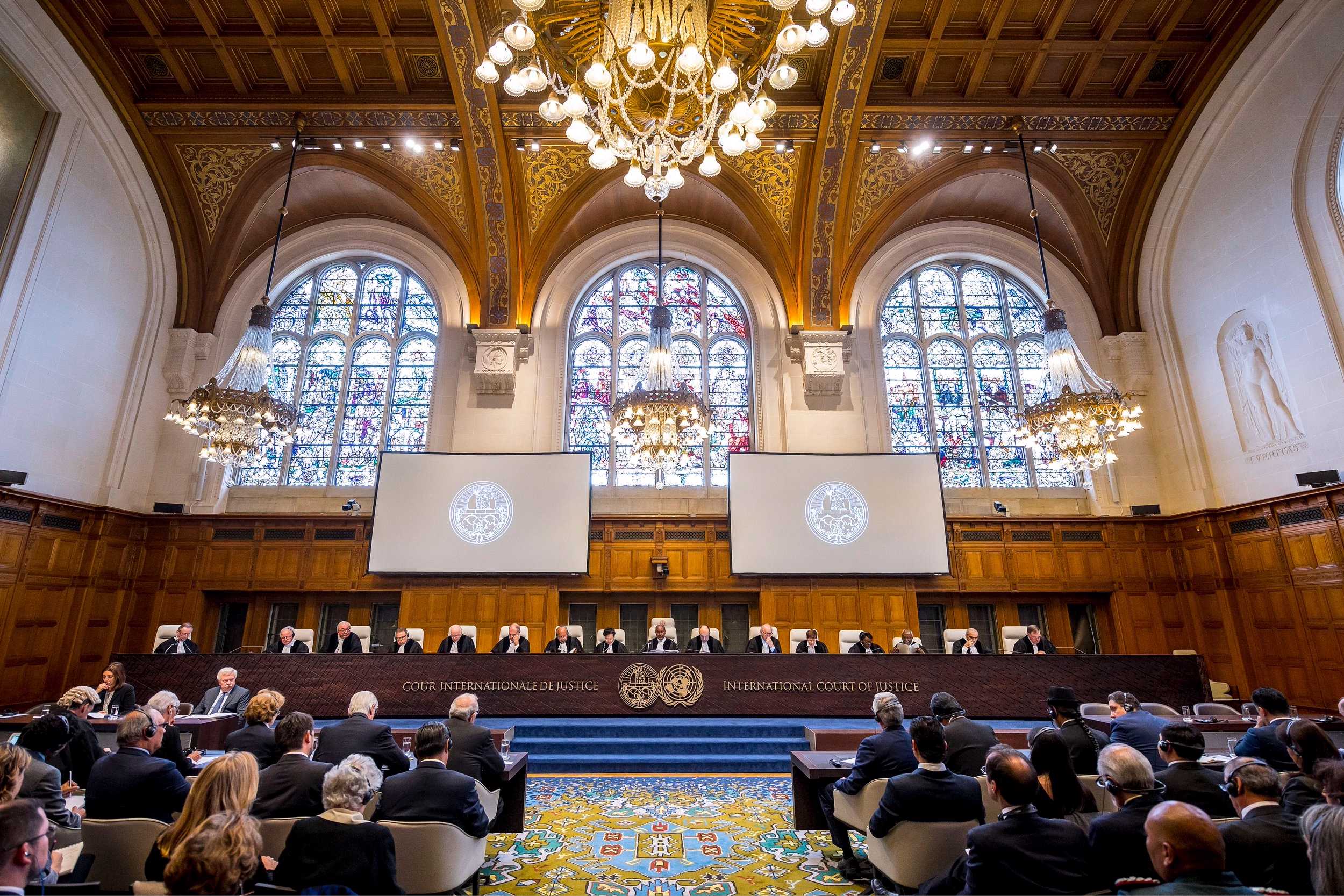
Judges at the top United Nations court ordered Israel to halt its offensive in the southern Gaza city of Rafah and withdraw from the enclave, in a case brought by South Africa accusing Israel of genocide, citing “immense risk” to the Palestinian population.
South Africa last week delivered its arguments before the ICJ in a fresh application as part of its genocide case against Israel.
Pretoria argued that Israel’s latest military’s full-scale assault on the southern city of Rafah, where about 1.5 million Palestinians have sought refuge, is the last step in the destruction of all Gaza’ and that the court must order Israel to halt its military activity in Gaza and to withdraw its forces entirely.
Friday’s decision marked the third time this year the 15-judge panel has issued preliminary orders seeking to rein in the death toll and alleviate humanitarian suffering in Gaza.
The rulings of the ICJ, which rules on disputes between states, are binding but it has no power to enforce them — it has ordered Russia to halt its invasion of Ukraine to no avail, for example.
But a ruling against Israel would increase the international legal pressure after the International Criminal Court’s top prosecutor said Monday he was seeking arrest warrants for top Israeli and Hamas leaders.
Israel, like Russia, is not a signatory to the treaty that created the ICC and does not recognize the court’s authority.
Reading out a ruling by the International Court of Justice or World Court, the body’s president Nawaf Salam said provisional measures ordered by the court in March did not fully address the situation in the besieged Palestinian enclave now, and conditions had been met for a new emergency order.
Israel must “immediately halt its military offensive, and any other action in the Rafah Governorate, which may inflict on the Palestinian group in Gaza conditions of life that could bring about its physical destruction in whole or in part,” Salam said, and called the humanitarian situation in Rafah “disastrous”.
Israel launched its assault on the southern city of Rafah this month, forcing hundreds of thousands of Palestinians to flee a city that had become a refuge to about half of the population’s 2.3 million people.
Rafah, on Gaza’s southern edge, has also been the main route in for aid, and international organisations say the Israeli operation has cut off the enclave and raised the risk of famine.
The ICJ, also known as the World Court, is the highest UN body for hearing disputes between states. Its rulings are final and binding but have been ignored in the past. The court has no enforcement powers.
Minister of International Relations Naledi Pandor said South Africa was “really pleased” that the court had heeded its call and argued that its case “is getting stronger and stronger by the day, that a genocide is underway”.
But she warned that Israel is unlikely to heed the order, arguing it was time for UN members and the Security Council to step up and enforce international law.
“Israel has had impunity for so long that they don’t care what the global community says,” she said.
“So I think the responsibility goes to us a member states of the United Nations and most particularly to the Security Council,” she said.
“It is clear we are all fearful. We are all seeing the horror unfold and something needs to be done and we cannot just rely on those who are the executioners of this ongoing onslaught to be the ones to stop it.”
At least 35,709 people have been killed and 79,990 wounded in Israeli attacks on Gaza since October 7. The death toll in Israel from Hamas’s October 7 attack is 1,139, with dozens still held captive.