
By Lehlohonolo Lehana.
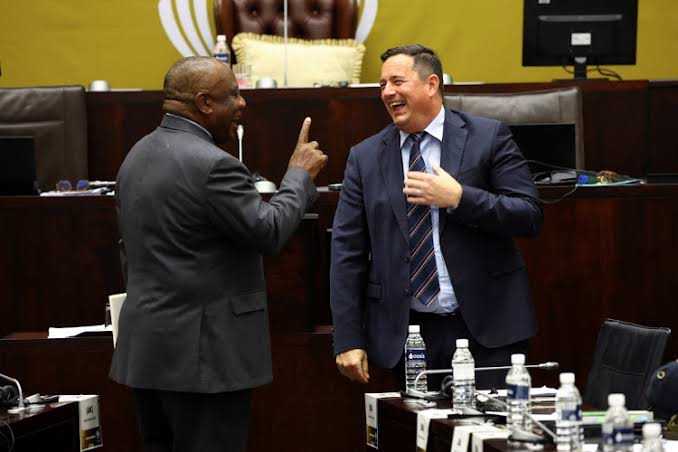
The African National Congress (ANC) has announced the establishment of a historic agreement between 10 South African political parties to form a Government of National Unity (GNU) for the 7th democratic administration.
In the May 29 general elections, the ANC received its worst election result since apartheid ended 30 years ago in South Africa. The ANC garnered 40% of the vote, losing its absolute majority in Parliament.
The GNU is being formulated following the general election in which the ANC lost its absolute majority in Parliament.
Al Jama-ah becomes the 10th and latest political party to join the Government of National Unity.
The move follows hot on the heels of the Freedom Front Plus (FF Plus) joining the coalition on Thursday this week, United Democratic Movement (UDM) on Friday and RISE Mzansi on Saturday.
The government of national unity also consists of the Democratic Alliance (DA), Inkatha Freedom Party (IFP), Patriotic Alliance (PA), the GOOD Party and the Pan Africanist Congress (PAC).
In statement this evening, the ANC said, “following two weeks of intense engagements, 10 of the 18 parties with seats in the National Assembly have signed the Statement of Intent, indicating willingness to corporate to put people of South Africa first.”
“The parties constituting the GNU together secured over 70% of the vote in the 2024 elections, read the statement.”
The ANC futher stated that political parties who wants to join the GNU will be subject to clause of the statement of intent, “which states that the 10 founding members of the GNU, must be consulted.”
However, an ongoing public spate involving the ANC and DA has triggered concern over the strength of the government of unity, and its longevity.
Experts believe the GNU will not collapse. The stakes are simply too high. It is a decision which has been made public to the world, to South Africa. Therefore, there will be so much pressure on the main dealers within this formation, the government of national unity.
“They do not have a choice. They must make it work – there is no other other option. The other option will most possibly be that we have to go back for another election. If this (the GNU) doesn’t work, Parliament and the executive will become unworkable.
President Cyril Ramaphosa is expected to announce his new cabinet in the few days.
Ramaphosa’s presidential predecessors Thabo Mbeki and Jacob Zuma had announced their cabinets, including changes to the portfolios, the day after their inaugurations.
Section 94 of the Constitution ends the terms of ministers and deputy ministers when the new president is sworn in. However, departments continue their work based on the annual performance and strategic plans already submitted to Parliament.
Ramaphosa was duly, re-elected while ANC MP Thoko Didiza was elected National Assembly Speaker and DA MP Annelie Lotriet her deputy on the back of combined DA, IFP and ANC numbers.
Ramaphosa’s GNU Cabinet faces immediate challenges. The ANC is unlikely to let go of defence and international relations – and most if not all economic ministries.
Speculation has been rife that John Steenhuisen or another DA senior official might take up the deputy president position, and Fullview understands that the party has made the demand to the ANC.
The DA has been critical with deputy president Paul Mashatile and the party had since laid criminal complaints against him, which could be their argument to demand the deputy president position.
Several exposés have been written about Mashatile, He also faces allegations of having misled parliament by failing to declare his use of various properties.
The DA wants to occupy strategic positions in Cabinet where they feel they can best serve South Africans.
Our source says DA brings with it enormous experience in governing at a local and provincial level. They would like to focus on some key areas, things like infrastructure, the economy, poverty and how to create jobs.
In the 1994 GNU, required by the interim constitution until at least the final supreme law was in place, the IFP held the ministries of home affairs, correctional services and arts, culture, technology and science. The National Party held tourism, environmental affairs, social development and minerals and energy – the last portfolio held by apartheid’s longest-serving foreign affairs minister, Pik Botha.
Currently, there are 30 ministries and 36 deputy ministries. That’s more than the 28 ministries Ramaphosa had in his 2019 Cabinet which was reduced from 36 ministries by merging several portfolios like mineral resources and energy, higher education and science and technology, and environmental affairs and forestry and fisheries.
In the March 2023 Cabinet reshuffle, Ramaphosa appointed in his Presidency a new electricity minister and made planning, monitoring and evaluation a full ministry.
In the August 2021 reshuffle, the state security ministry was abolished and the function was assigned to the minister in the Presidency, while human settlements and water and sanitation – that merged in 2019 – were again separated.
In the February 2023 State of the Nation Address (Sona), the president had undertaken a reduction of the executive in an echo of his 2019 pledge to restructure the size and shape of government.