
By Lehlohonolo Lehana.
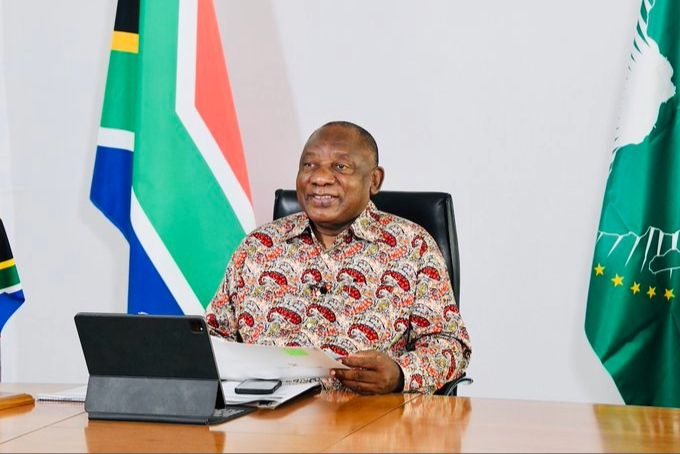
President Cyril Ramaphosa says he has noted the settlement made between Basic Education Minister Siviwe Gwarube and the Solidarity Union on the Basic Education Laws Amendment Act (BELA).
The president warned that the settlement has no bearing on his power to make decisions regarding the commencement of the Act.
The implementation of clauses 4 and 5 was delayed for three months from the signing of the Act to allow for amendments and discussion from various parties within the Government of National Unity (GNU).
Gwarube on Thursday said a dispute that trade union Solidarity had declared at the National Economic Development and Labour Council (Nedlac) about sections 4 and 5 of the Act had been resolved through a bilateral agreement that she would advise Ramaphosa that regulations clarifying the legal import of the sections should be adopted first.
These should, inter alia, define the role of school governing bodies in setting admission and language policy, according to the text of the three-page agreement.
Gwarube, in a separate statement, undertook to impress upon Ramaphosa that every child had a constitutional right to be taught in their mother tongue where possible.
”The parties have reached an understanding of how concerns relating to sections 4 and 5 of the Bela Act may be addressed, “she said.
“This validates my long-held view that dialogue is the best remedy for conflict resolution.”
Gwarube added a disclaimer that the agreement with Solidarity did not “in any way serve as a substitute for the consultations that are currently under way” on the Act between coalition partners in the cabinet clearing house.
Presidential spokesperson Vincent Magwenya says the President is bound by the Constitution to determine the date of commencement and for necessary regulations to be finalised without delay.
“The agreement between the Minister and Solidarity has no bearing in law or practical effect on the inclusive multi-party discussions that are underway regarding Sections 4 and 5 of the Act. Furthermore, the agreement bears no influence on the President’s powers to ultimately take a decision regarding the commencement of the Act,” he said.
An education expert says broadening access to education for learners with diverse language backgrounds enhances rather than diminishes opportunities in the best interests of children.
“As part of advancing access to quality education across race and socioeconomic status, schools and universities must consider the broader linguistic needs of the communities in which they are situated.”
The Bela Act seeks to reflect the changing demographics of communities. It is in keeping with the ultimate responsibility of the provincial departments of education to ensure that all children are accommodated in our schools.