
By Schalk Burger.
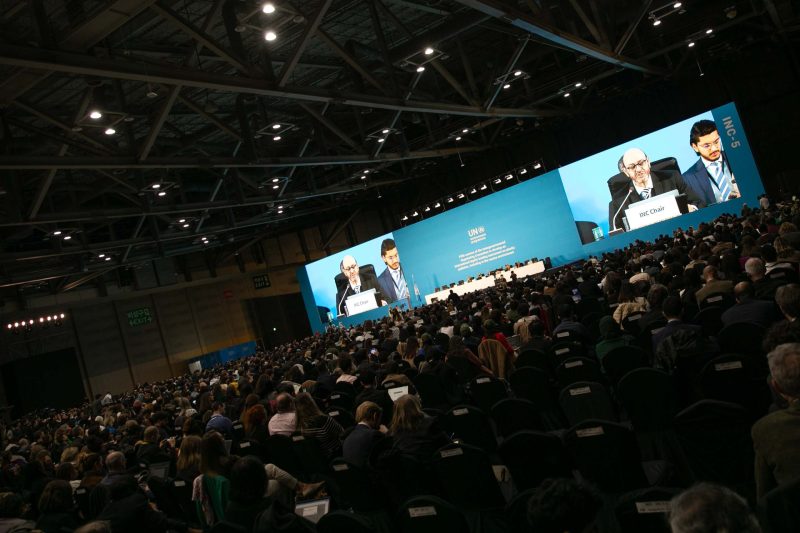
Delegates gather for the closing plenary of the INC-5 talks in Busan, South Korea on December 1, 2024. Photo: IISD/ENB – Kiara Worth).
The fifth session of the Intergovernmental Negotiating Committee (INC5) for a Global Plastics Treaty ended without a treaty, and member States have agreed to meet again for what could be the final negotiation meeting to land a deal, says environmental organisation Greenpeace.
Member States continue to dance around the negotiations, disregarding the dire consequences of plastic pollution on human health and the environment. We came to Busan to get a treaty to protect fenceline communities who bear a disproportionate burden of plastics pollution stemming from constant exposure and intake of plastics,” says Greenpeace Africa Pan-African Plastic Project lead Hellen Kahaso Dena.
However, more than 100 member States, representing billions of people, rejected a toothless deal that would have accomplished nothing, and stood before the world committing to an ambitious treaty, says Greenpeace Global Plastics Treaty Negotiations Delegation head and Greenpeace USA Global Plastics Campaign lead Graham Forbes.
For the next meeting, the assignment for member States is clear, namely that the ambitious majority must break through fossil fuel influence and the obstruction of a few to deliver an effective agreement with binding global targets and measures to reduce plastic production.
Member States must fight for protections against dangerous chemicals, bans on single-use plastics, reuse targets and an equitable financing plan. They must use their power to ensure the INC process is inclusive and just, and prioritise access for the communities most affected by plastic pollution,” he says.
Despite 126 member States supporting the African group of negotiators putting up a strong case for a dedicated standalone finance mechanism, the final chair’s text completely ignored it. The incorporation of this financial mechanism is critical for developing nations to implement this treaty once it is agreed, says Dena.
We hope to see more transparency, commitment and political goodwill in the subsequent negotiations.
“Ambitious countries need to up their game, step up with courage and deliver a treaty that cuts plastic production to alleviate our communities from the detrimental impacts of plastics, “she says.
The world stands at a historic crossroads. The opportunity to secure an impactful plastics treaty that protects health, biodiversity and climate remains within reach, said Forbes.
Strong political headwinds make this more challenging, but the lesson from INC5 is clear, namely that ambitious countries must not allow the fossil fuel and petrochemical industries, backed by a small minority of countries, to prevent the will of the vast majority. A strong agreement that protects people and the planet is our only option,” he says.