
By Lehlohonolo Lehana.
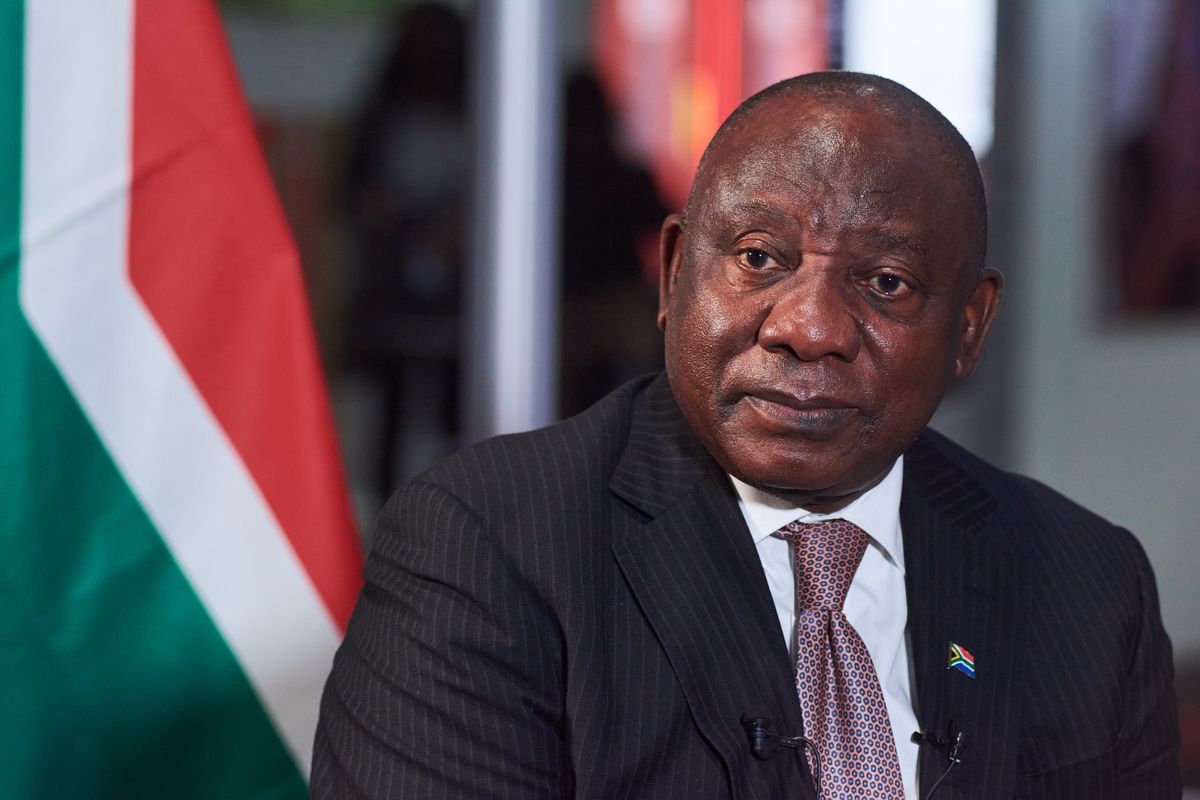
South Africa assumes its year-long presidency of the Group of 20 (G20) from December 1. President Cyril Ramaphosa officially launched the rotational presidency, taking over from Brazil, on Tuesday in Cape Town.
During the recent G20 Rio Leaders’ Summit in Brazil, Ramaphosa officially accepted South Africa’s responsibility for the G20 Presidency for 2025. This will be the first time an African economy leads the G20 for a rotational, one-year term.
Brazil held the G20 Presidency during 2024 and South Africa will at the end of its term hand over the G20 Presidency to the United States of America.
The G20 is a forum of the largest economies in the world who meet regularly to discuss the most pressing issues facing the global economy.
Under its G20 Presidency, South Africa seeks to provide strategic direction in establishing a more equitable, representative and fit-for-purpose international order, in-line with the main multilateral processes under the United Nations.
During the launch, Ramaphosa expressed confidence in South Africa’s ability to present “the most impressive G20”, stating that under the country’s leadership, the intergovernmental forum will seek to advance sustainable solutions to tackle high structural deficits, liquidity challenges and extend debt relief to developing economies.
He pointed out that Finance Minister Enoch Godongwana and International Relations and Cooperation Minister Ronald Lamola will lead the country’s G20 process.
“I know for sure through the very capable excursion of task of principally the three departments in government, – the Presidency, Department of International Relations and Cooperation and National Treasury – we will be able to present a most impressive G20. As we have gone around the other G20s, we have learnt a great deal and they have gone there with their eyes wide open, to see what they can learn as they know that this is a great moment for South Africa,” Ramaphosa said.
Ramaphosa announced that South Africa would use the G20 to bring the development priorities of the African continent and the Global South more firmly onto the forum’s agenda.
He said South Africa would build on the work of the most recent G20 Presidencies of Brazil in 2024, India in 2023 and Indonesia in 2022.
Ramaphosa pointed out that a key obstacle to inclusive growth in developing economies, including many in Africa, was an unsustainable level of debt, which he said limited their ability to invest in infrastructure, healthcare, education and other development needs.
He added that South Africa would also seek to ensure that sovereign credit ratings were fair and transparent and it aimed to address high-risk premiums for developing economies.
He said South Africa’s G20 Presidency took place at a moment in which the world was facing severe challenges, where the outlook for global economic growth remained subdued, and as many economies carried the burden of unsustainable levels of debt.
He also noted worsening weather associated with climate change, and geopolitical instability, conflict and war, which he said were causing further hardship and suffering.
“This is all happening at a time of great technological change, which presents both opportunities and risks. While the challenges we face are common, their causes and consequences are unevenly distributed across and between countries,” Ramaphosa explained.
He highlighted that in working together with G20 members, and building partnerships across society, South Africa would seek to harness global will and capabilities to confront these challenges.
“We all seek to achieve more rapid, inclusive and economic growth. We all seek a more just and equal world, and a world in which poverty and hunger are eradicated. We all seek to avert the worst effects of climate change and to preserve our planet for future generations,” he stated.
He noted the disparities in wealth and development within and between countries, which he said were “unjust and unsustainable”.
By promoting equality, we strive to ensure fair treatment and equal opportunities for all individuals and nations. We aim to break down divisions of economic status, gender, race, geography or any other characteristic,” he stated.
To ensure that the G20 remained focused, Ramaphosa said South Africa would not create any new working groups or permanent structures, however it would build on previous presidencies and provide momentum to existing structures and processes.
He said the country will reflect on the impact of the G20 over the last 20 years and position it to enhance its impact over the next 20-year cycle.
“We will balance an ambitious developmental agenda against the need to achieve sufficient consensus on key issues. It is important for South Africa that our G20 Presidency is inclusive,” he added.