
By Lehlohonolo Lehana.
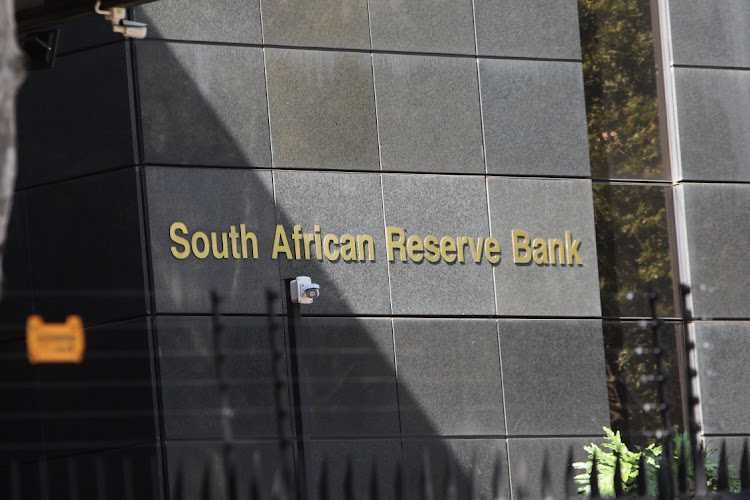
The South African Reserve Bank’s (SARB) Monetary Policy Committee (MPC) kept interest rates on hold at 8.25% in its first meeting of the year, having left the benchmark rate unchanged at a 14-year high for the past nine months.
This was in line with economists’ expectations.
The bank’s decision was unanimous and falls in line with market consensus.
Since the current interest rate hiking cycle started in November 2021, the MPC has hiked the repo rate ten times by a cumulative 475 basis points.
This has brought the repo rate to a decade-high of 8.25% as the SARB has attempted to bring South Africa’s high, sticky inflation down and within its target band of 3% to 6%.
Their efforts seem to have borne fruit, as inflation has moderated to within this band and is now close to the mid-point of the target (4.5%), as July’s inflation print showed CPI standing at 4.7%.
However, after slowing slightly in the following months, inflation began to climb again in October, reaching 5.9%.
Inflation fell again slightly in November, but SARB Governor Kganyago has warned that one reading does not provide sufficient reason for the MPC to cut interest rates.
Kganyago has repeatedly said the MPC would remain data-dependent in all future decisions.
He said that at the current repurchase rate level, the policy is restrictive, consistent with the inflation outlook and the need to address rising inflation expectations.
“Serious upside risks to the inflation trajectory from global and domestic sources are evident, and the economic outlook is highly uncertain,” he said.
“While our baseline inflation forecast is of continued gradual moderation in global and domestic inflation, the risks to the outlook are still assessed to the upside.Better than expected global growth last year and ongoing geo-political tensions this year serve to keep global oil markets tight,” he said.
Local fuel price inflation is expected to be low, averaging below 1% in 2024. Food price inflation is revised slightly higher for 2024, to 5.7%, but remains broadly unchanged over the forecast period.
Core inflation was 4.9% in 2023. The core inflation forecast for 2024 and 2025 is little changed at 4.6%, and 4.5% in 2026.
Services inflation in 2023 was 4.2%. The forecast for 2024 services price inflation remains unchanged at 4.8%.
Speaking on South Africans struggling with money and being in recession in terms of their ability to spend, Kganyago said this was one of the key reasons for its policy moves.
“Disposable income is weak, in real terms – this means adjusted for inflation. So inflation is eating people’s disposable income and restricting their ability to spend. So if people are to have (disposable income) in the future, you’ve got to rein in inflation, “he said.
“Failure to rein in inflation means you are eroding the purchasing power of (households).”
The governor previously noted that interest rates won’t be cut until the inflation rate is back in the middle of its target range (3% to 6%) sustainably. Kganyago specified a few prints of low inflation do not make a trend.
He reiterated that the SARB is a “flexible inflation targetter”, and there is not yet a discernable trend that inflation is returning to the bank’s target.
“Unless inflation gets there in a sustainable manner – don’t expect us to recalibrate policy,” he said.
The SARB sees fourth quarter gross domestic product fourth quarter expanding by 0.4%, an improvement on the 0.2% contraction in the third quarter.
Watch Live in the video below:
Video Courtesy of SARB.