
By Ntando Thukwana and Janice Kew.
South Africa is going to need to find R7.5 billion to ensure the nation’s longstanding HIV programmes don’t grind to a halt after President Donald Trump’s decision to suspend US foreign aid and funding to Pretoria because of its new land-expropriation law.
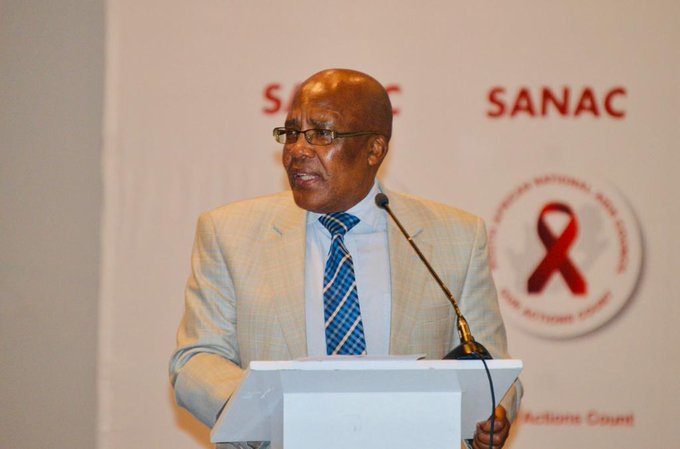
In addition to the R4.6 billion needed for staffing, the authorities will also require R2.9 billion to cover operational costs, Health Minister Aaron Motsoaledi told lawmakers in Cape Town on Wednesday.
For more than two decades, US funds from the President’s Emergency Plan for Aids Relief, known as Pepfar, have saved millions of lives across Africa. The disruption to funding hits critical areas like surveillance, research, communication and data collection.
About 7.8 million South Africans, or almost 13% of the population, live with the virus that causes Aids — the world’s biggest HIV epidemic. Almost a fifth of the funding for the country’s HIV/Aids programme comes from Pepfar, which provides support for 27 of South Africa’s 52 health districts.
While much progress has been made in turning the corner in fighting the HIV epidemic, getting people back onto treatment after a break in services often isn’t easy, and without it, they’re at risk of becoming infectious again.
Almost 230 babies in South Africa are expected to be born with HIV each day if there are no aid services, according to The Andelson Office of Public Policy. Babies infected at birth face a higher risk of death as well as a future involving lifelong treatment with anti-retroviral drugs. Without such treatment, the disease is generally fatal.
“Taking the foot off the pedal on surveillance, research, communication and data collection harms the global community almost more than individuals in individual countries, “said Linda-Gail Bekker, chief executive officer of the Desmond Tutu Health Foundation in Cape Town.
In addition, without a strong HIV programme, the risk of spread of other infectious diseases climbs.
“Infectious diseases often track together, so the first co-infection that I worry a great deal about is tuberculosis,” said Bekker. “It’s an airborne condition. It has no borders.”