
By Lehlohonolo Lehana.
State owned power utility Eskom has welcomed the National Energy Regulator of South Africa’s (Nersa) approval of an 18.65% electricity tariff increase.
Eskom also apologised for the severe extent of load shedding the country was facing, which is currently at stage 6 until further notice.
“The impact on individuals and businesses is understood. The minimising of load shedding is the highest priority for Eskom, and continuous focus at all levels in the organisation is being given,” it said.
Eskom said it appreciates that the decision made by Nersa was a tough one and recognised the pressures it would place on consumers. However, it said that the increase would allow a further migration to a “price level that reflects the efficient cost of producing electricity”.
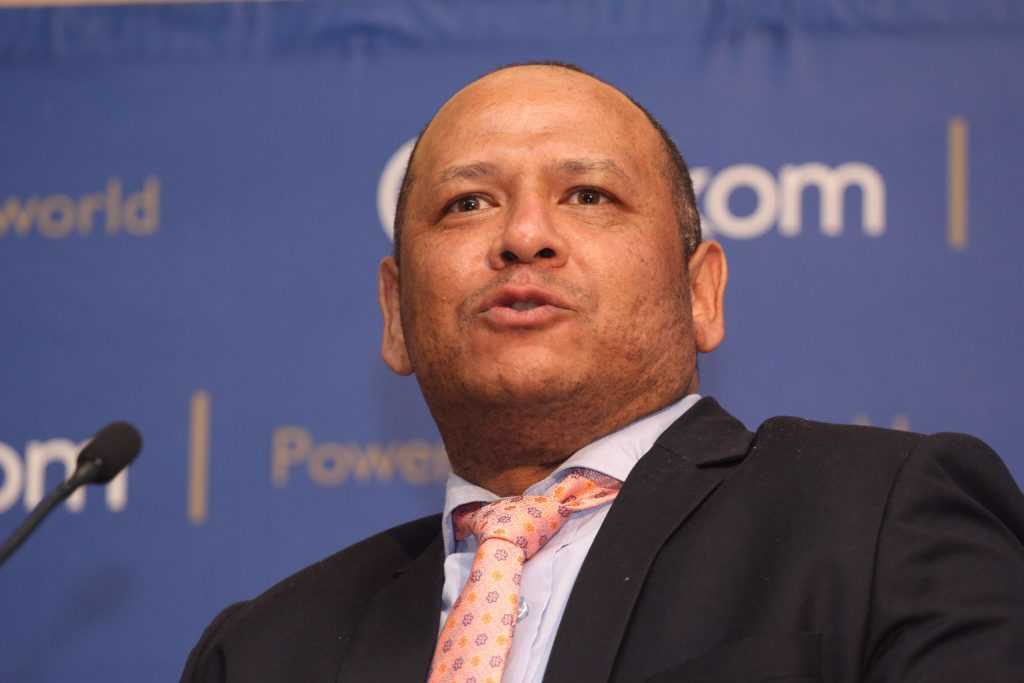
“This decision will positively contribute from a financial and sustainability point of view,” said Calib Cassim, Eskom’s Chief Financial Officer.
The High Court of South Africa, in July 2022, ordered Nersa to decide on Eskom’s Multi-Year Price Determination application for financial years 2024 and 2025.
The regulator was granted an extension until 12 January 2023 to decide.
Nersa granted an 18.65% increase for direct customers from 1 April 2023, with a further 12.74% increase coming in 2024. This is a recovery of R319 billion and R352 billion from customers, respectively.
The increases are conditional, however, with Nersa requiring Eskom to improve energy availability to 65% and to reduce its reliance on open-cycle gas turbines to 6% of load.
Eskom said that it is in alignment with these goals, adding that every effort needs to be made to meet them.
“The shortage in capacity due to both Eskom’s performance and the delays in the Independent Power Producers projects needs to be addressed,” the group said.
The 18.65% granted is far removed from Eskom’s application for a 32% hike. This is in line with previous applications where the power utility made big demand and was granted minuscule price hikes.
These previous determinations were challenged by Eskom in court, resulting in Nersa being ordered to review its methodologies.
This time around, Eskom said that it would carefully assess the reasoning behind the determination.
“It is noted that Nersa has reconsidered capital-related costs when compared to the previous decision. This significantly contributes to allowing for Eskom to recover costs related to debt commitments,” it said.
“Eskom awaits the reasons for the decision for the determination made by Nersa that will provide further insights on how the revenue determinations for FY2024 and FY2025 were derived. It is hoped that Nersa has taken the direction given by the courts in previous judgements on related matters and that these have been correctly addressed.
Meanwhile energy minister Gwede Mantashe claims the power crisis can be tackled within just six to 12 months.
“Eskom must do introspection: do we have the capacity to deal with the crisis? If not can we go out and look for that capacity… it will take us six to 12 months to solve this issue if we pay attention to that,” the minister of Mineral Resources an Energy said in an interview with eNCA on Friday.
Mantashe’s comments come just as the ANC, at its 55th National Conference, resolved to move certain state-owned entities back into their relevant portfolios. This would see Eskom moved out of Pravin Gordhan’s Department of Public Enterprises and into Mantashe’s department.
Mantashe has been openly critical of Eskom management and last month went so far to accuse the utility CEO and his team of “actively agitating for the overthrow of the state” in their failure to arrest load shedding. Eskom CEO Andre De Ruyter has since tendered his resignation.
“In Eskom, we have 48 000MW connected to the grid but Eskom at best can give us 26 000MW. There’s 22 000MW that is idling but connected, it is not decommissioned,” Mantashe said.
“And if there was a focus on servicing and maintaining those megawatts, we wouldn’t have load shedding.”
Mantashe said the rollout of government’s renewables programme would then complement Eskom’s generation capacity in the medium to long term, noting he is a “big believer” in a mixture of technologies because he knows the shortcomings of renewables.
“But in the immediate, we need our coal power station to generate optimally and to give us energy,” he said.