
By Lehlohonolo Lehana.
The National Energy Crisis Committee (Necom) announced a series of interventions aimed at solving the country’s worsening power crisis.
Through the Presidency, NECOM on Saturday released a six-month update on progress in the implementation of the Energy Action Plan.
Among these are Eskom’s programme to buy power from companies with available generation capacity through a standard offer.
“The first contracts are expected to be signed in the coming weeks,” the Presidency said in a statement.
Another intervention contained in the document will see government departments cutting red tape and streamlining regulatory processes for energy projects. This will include reducing the timeframe for environmental authorisations and registration, while negotiations are underway to secure a potential 1 000 MW from neighbouring countries starting this year.
“The declining energy availability factor of Eskom’s fleet reflects the cumulative impact of historical underinvestment in maintenance and assets, exacerbated by flaws in the design of new power stations in the last decade,” the NECOM said.
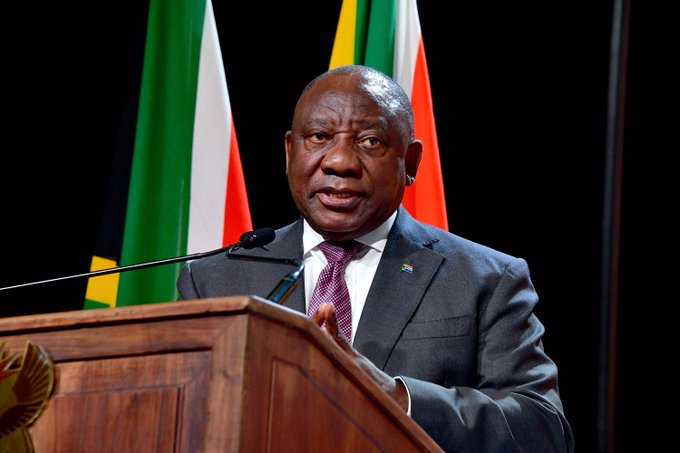
To respond to the severe impact of load shedding on households, small businesses and the economy as a whole, President Cyril Ramaphosa announced measures in 2022 to improve the performance of existing power stations and add new generation capacity.
The NECOM, a body run by the President’s Office, was established to coordinate government’s response and ensure swift implementation of the plan.
Ramaphosa convened a special meeting over load shedding as Eskom implemented extended Stage 6 load shedding. He cancelled his travel plans to Davos, Switzerland, in order to deal with the crisis.
According to the Presidency, Ramaphosa has also engaged with a wide range of stakeholders and leaders to ensure a collective response to this national challenge.
Steps taken to follow through on the commitments announced by the President include:
– Schedule 2 of the Electricity Regulation Act has been amended to remove the licensing requirement for generation projects, which will significantly accelerate private investment.
– Since the licensing threshold was first raised to 100 MW, the pipeline of private sector projects has grown to more than 100 projects with over 9 000 MW of capacity. The first of these large-scale projects is expected to connect to the grid by the end of this year.
– The NECOM has instructed departments to cut red tape and streamline regulatory processes for energy projects, including reducing the timeframe for environmental authorisations to 57 days from over 100 days. Reduce the registration process from four months to three weeks and ensure that grid connection approvals are provided within six months.
– Project agreements for 19 projects from Bid Window 5 and six projects from Bid Window 6 of the renewable energy programme, representing 2 800 MW of new capacity. These projects will soon proceed to construction.
– A new ministerial determination has been published for 14 771 MW of new generation capacity from wind, solar and battery storage to accelerate further bid windows.
– An additional 300 MW has been imported through the Southern African Power Pool, and negotiations are underway to secure a potential 1 000 MW from neighbouring countries starting this year.
– Eskom has developed and launched a programme to purchase power from companies with available generation capacity through a standard offer. The first contracts are expected to be signed in the coming weeks.
– A team of independent experts has been established to work closely with Eskom to diagnose the problems at poorly performing power stations and take action to improve plant performance.
Ramaphosa’s plan had three main objectives: fixing Eskom and improving the performance of existing power stations, accelerating private investment in generation capacity and accelerating new generation capacity.
Regarding objective one, the presidency said: “Eskom has increased outage funding for the current financial year from R8.2bn to R9.5bn.” Procurement has also been addressed.
“Weekly meetings are being held between Eskom and the National Treasury to enable more agile procurement. Exemptions have been provided from local content designations for equipment such as transformers and insulators, to enable expedited procurement.
“The utility is recruiting skilled personnel, including former senior Eskom plant managers and engineers from the private sector.”
Eighteen skilled specialists have been brought back into Eskom to date, including three appointments of former Eskom employees at the level of power station manager for Kendal, Koeberg and Medupi. More than 1,000 people have offered their skills through Eskom’s crowdsourcing platform.
According to the presidency, the “short-term objective of the Energy Action Plan is to reduce the severity and frequency of load-shedding through immediate measures to improve the performance of Eskom’s existing power stations and stabilise the energy system”.
The long-term objective is to end load-shedding altogether and achieve energy security by adding as much new generation capacity to the grid as possible, as quickly as possible.”
According to the update, there has been progress in Eskom’s fightback against criminality.
“Several law-enforcement and security agencies are working together to address sabotage, theft and fraud at Eskom. A total of 67 cases are on the court roll and three have been finalised with a conviction. Arrests have been made for theft and sabotage at Camden, Matla and other power stations.”
To accelerate private investment in generation capacity, the government has taken several steps.
“Since the licensing threshold was raised to 100MW in October 2021, the pipeline of private sector projects has grown to more than 100, with more than 9,000MW of new capacity. Schedule 2 has now been amended to remove the licensing requirement for generation projects of any size. Work is under way to develop an “omnibus bill” that will incorporate the required legislative amendments (where processes cannot be waived or streamlined under existing legislation).”
Presidency added that further updates on the energy action plan will be provided more regularly from this point.
Read the full NECOM update Energy Action Plan:Energy Action Plan.