
By Cebelihle Mthethwa.
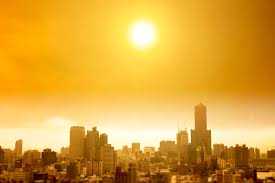
Summer heat wave in the city. Image: iStock.
Farmworker Dave Verster experienced the sweltering temperatures that resulted in heat strokes claiming five lives in Kakamas, Northern Cape.
But while the heat was excessive, he claimed rolling blackouts exacerbated the situation.
Said Verster: “The high temperatures were all the way to Springbok, and right up to Upington. But the real issue is not water, it’s load shedding, because without electricity we just can’t pump water.”
On Friday, the Department of Employment and Labour and the Northern Cape Department of Agriculture, Environmental Affairs, Rural development and Land Reform had said that seven farmworkers died in Kakamas from suspected heat stroke.
However, the provincial department’s spokesperson, Zandisile Luphahla said on Sunday that doctors have confirmed that five people died, while two others were on ventilators.
“We’re told that one is out [of hospital] and the other one is still fighting for their life,” Luphahla added.
According to Verster, the average heat from last Sunday started at about 40 degrees and steadily increased.
“It’s sad because there was no electricity during those crucial hours when we were working. We were struggling to breathe,” he said.
Siyabonga Mpati, from the South African Weather Service in Bloemfontein, said that the last heatwave advisory issued was until Wednesday, 18 January.
“As things stand, for the coming seven days, no city or town meets the criteria for heatwave conditions,” he said.
“For the past week or so, the majority of heatwave conditions were experienced over the ZF Mgcawu and Pixley ka Seme District municipalities. The town with the potential of meeting the heatwave conditions is Augrabies Falls (Kai !Garib local municipality) in the next two days [Sunday and Monday].”
Mpati added that temperatures for the Northern Cape during the coming week were expected to be hot (32-36°C) to very hot (37-40°C).