
By Lehlohonolo Lehana.
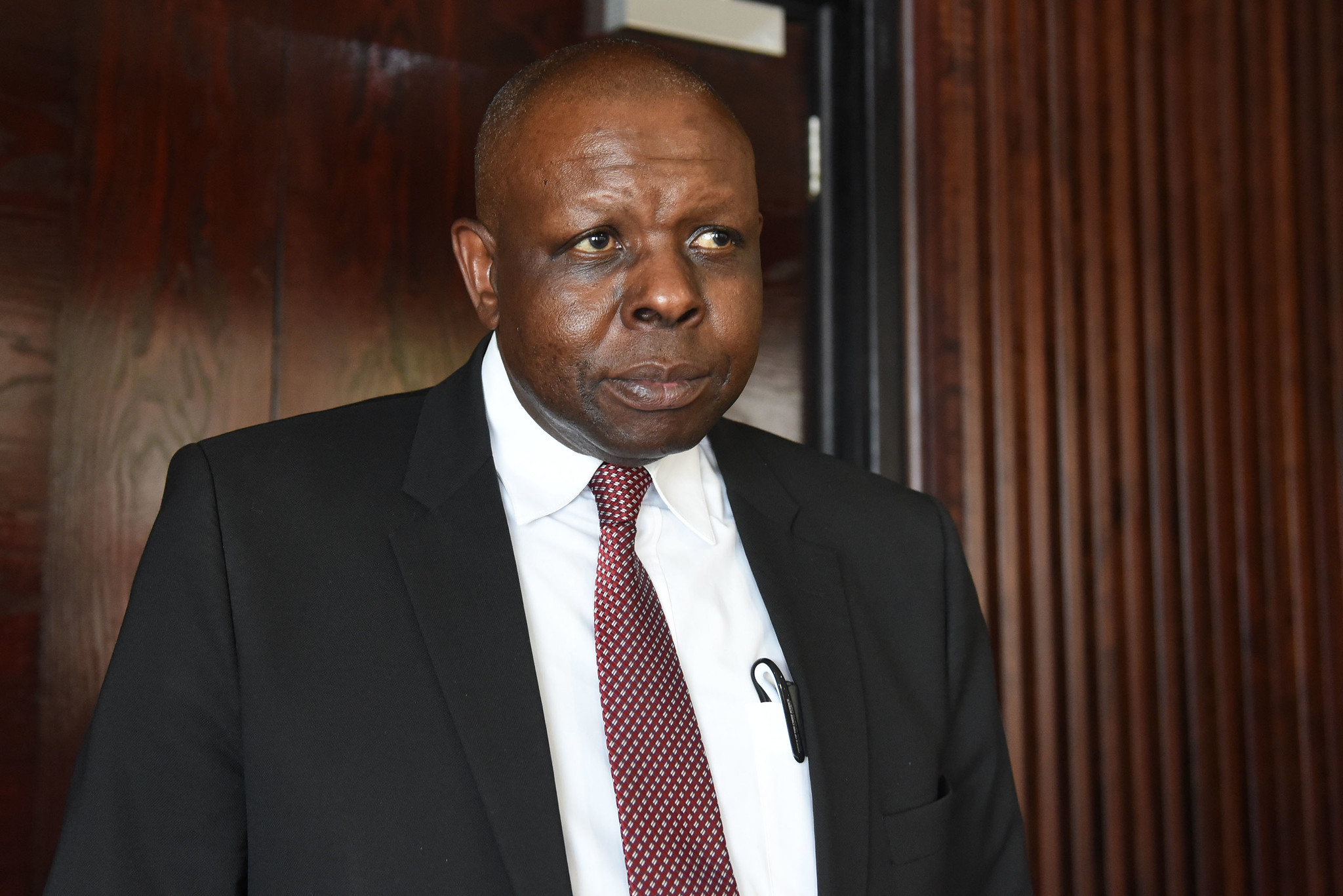
The matter dealing with impeached Judge John Hlophe being barred from sitting on the Judicial Service Commission (JSC), is back in the Western Cape High Court.
The Democratic Alliance (DA), Freedom Under Law and Corruption Watch argued in separate applications that the impeachment of the former judge president makes him unsuitable to sit on the body that interviews candidates for the bench.
For his part, Hlophe argued to the contrary, that his judicial knowledge is an advantage and this case is politically motivated.
The applicants want the court to review the National Assembly’s decision and for the National Assembly to be ordered to take it afresh.
The MK Party’s Hlophe was one of six National Assembly parliamentarians designated by the House last year to serve on the JSC.
However, the applicants in this matter were successful in blocking him from sitting on the JSC’s October session, saying the misconduct findings against him by the same body made him unsuitable for the job.
The DA, Freedom Under Law and Corruption Watch want the court to rule that he can not be designated to the body.
During the proceedings, Advocate Wim Trengove, arguing for Freedom Under Law on Tuesday, said the NA was duty-bound to exercise discretion in appointing a fit and proper person to the key body.
Instead, it had simply rubber-stamped the nominations.
“Attorneys get paid by the page, advocates by the hour,” said Trengove, adding that this was “a simple case not to be confused by all the papers and arguments”.
The NA had committed a material error of law in that it had failed to properly exercise its discretion in terms of Section 178(1)(h) of the Constitution, alternatively that the NA did not recognise that it had discretion at all.
Section 165 (4) of the Constitution, he noted, stated that organs of the state had to protect and assist the courts to ensure their effectiveness, impartiality and independence.
He argued that Hlophe’s appointment should be set aside and that this would create a vacancy that could be referred back the the NA. He said an appropriate order by the court would be to declare Hlophe’s appointment unlawful and irrational and for a fit and proper person to be selected.
Advocate Thabani Masuku, for Hlophe, made lengthy arguments about the NA’s simple constitutional obligation to accept nominations from political parties to the JSC at face value. Its focus and obligations were narrow, he added.
The fact that Hlophe had been impeached and removed from office should not prejudice his potential candidacy for the JSC, he argued.
If the members of the NA wanted to take the splinter out of Hlophe’s eye they should look at the planks in their own eyes, went his line of argument.
“What exactly is required to be a member of the NA? What exactly makes them a ‘fit and proper’ people to decide?” he asked, appearing to deflect focus from his client on to those who wish to condemn Hlophe’s stain of impeachment.
“What were the requirements of an MP to be a member of the JSC beyond just being a member of the NA?” he asked.
The NA’s duty remained “static”, he said, adding “it was not about an individual but the institution of the NA”. If the court ruled against Hlophe, opined Masuku, his client was not being treated as an equal in the law, like other nominees. These were “collateral sanctions” he faced.
“There would have to be a separate procedure of law that excludes judges who have been impeached,” he said, adding that this would be unjust.
The hearing continues on Wednesday.