
By Lehlohonolo Lehana.
South Africa has confirmed that it has been formally informed that the US has withdrawn for the Just Energy Transition Partnership (JETP), to which it had initially pledged more than $1.5-billion of grant and commercial funding.
JETP, which consists of 10 donor nations, was first unveiled at the U.N. climate talks in Glasgow, Scotland in 2021.
South Africa, Indonesia, Vietnam and Senegal were subsequently announced as the first beneficiaries of loans, financial guarantees and grants to move away from coal.
Fullview learnt that the withdrawal was communicated on February 28 by the US Embassy, citing the executive orders issued by President Donald Trump on January 10 and February 7.
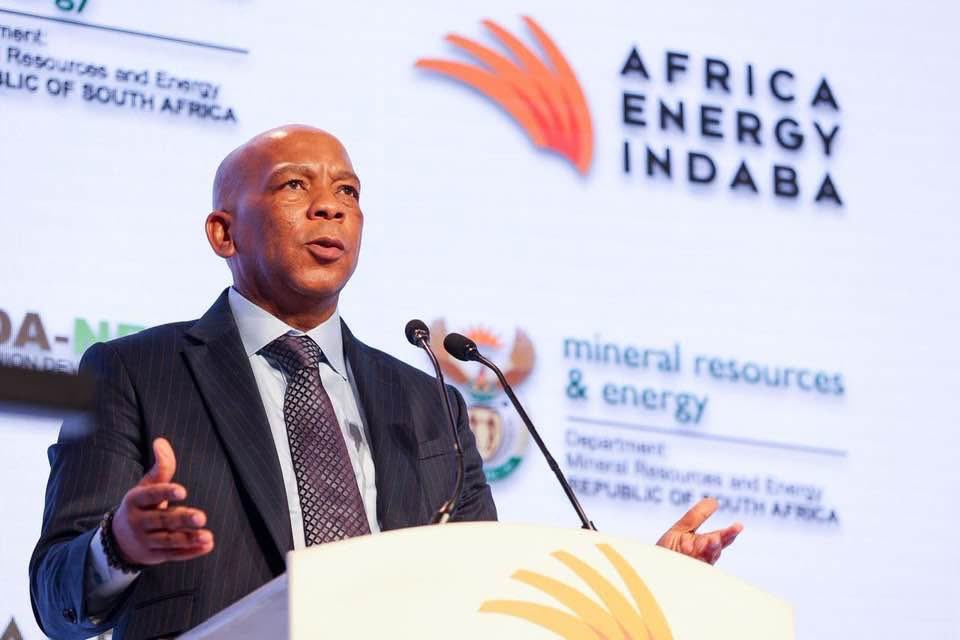
The Trump administration’s withdrawal from the Paris climate accord signals reduced energy-transition financing, Minister of energy and electricty Kgosientsho Ramokgopa told a conference in Cape Town.
“We’re seeing that the US has taken a stance, we respect that stance — so we’re all on our own and I think that’s a big wake-up call,” he said.”
US pledges in support of the JET Investment Plan (JET-IP) that was subsequently developed by South Africa comprised $56-million in grant funds and $1-billion in potential commercial investments by the US International Development Finance Corporation (DFC).
No concessional loans were offered by the USA to South Africa.
South Africa’s JET-IP had since attracted additional international partners, some of which have made pledges as part of the IPG, while others made bilateral commitments.
With America’s withdrawal, pledges to South Africa have been reduced from $13.8-billion to $12.8-billion.
Meanwhile the new insights from PwC South Africa’s recently published ‘Net Zero Economy Index 2022: South African viewpoint’ show that South Africa reduced its carbon intensity by a significant 4.6% during the year.
This included a decline in coal (-0.8%) and gas (-3.0%) usage while energy from wind (+16.7%) and hydroelectricity (+100.9%) increased significantly. Coal accounted for 71.0% of the local fuel mix in 2021, down from 71.9% in the previous year.