
By Lehlohonolo Lehana.
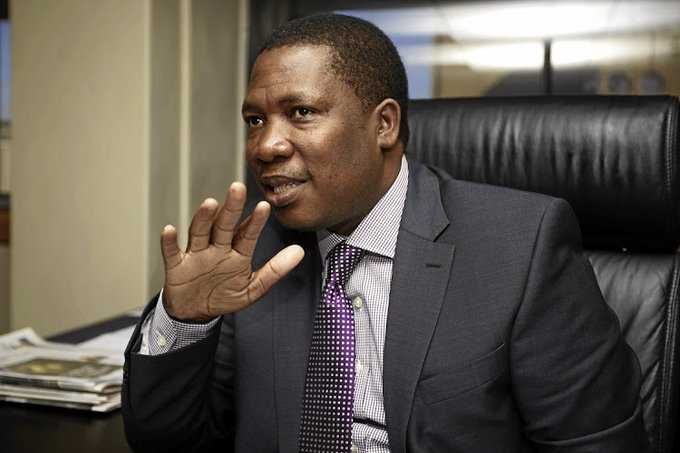
Gauteng Premier Panyaza Lesufi says the switching off of the controversial e-toll project, which has been a headache for Gauteng residents for more than a decade is one step closer to finalisation.
Lesufi announced during his state of the province address that an outline of plans to finally see the scrapping of e-tolls would be announced ‘soon’.
The system was initially meant to be scrapped in December 2022, but the province missed the deadline, citing that key components of a memorandum of understanding (MOU) between the national and provincial governments still needed to be finalised.
Lesufi provided the latest update saying the matters is being probed with the finance and transport ministries deal with key matters related to debt repayment, money collected from paying customers and funds not collected from non-paying customers.
‘We are on the verge of switching off the gantries,’ Lesufi said during his SOPA address.
The e-toll roads in Gauteng make up 1% of Sanral’s national network. The Gauteng road network is in desperate need of sprucing up, which will be costly. According to Sanral, 85% of Gauteng’s roads are beyond their design life cycle and need significant maintenance investments.
The premier announced his priorities as being:
- To accelerate Gauteng’s economic recovery and reconstruction;
- To declare crime, corruption, lawlessness and vandalism as the enemy that must be mercilessly defeated;
- To drastically change the living conditions of the people in the 26 townships of the province, more than 700 informal settlements and six provincially owned hostels;
- A commitment to strengthening the capacity of the state to deliver quality services to the people and a commitment to improve and capacitate government communications so that the government can communicate better with its residents; and
- Improving the health and wellness of communities.
Crime
The premier said that, to tackle crime, his administration would be spending over R700 million in the next few months on several projects.
He said about 400 new cars would be handed to the province’s law enforcement agencies, while 180 drones would be added to fight crime in areas unreachable by the police.
To loud applause from the ANC caucus at Johannesburg City Hall, Lesufi said another plan was to issue “electronic panic buttons” to citizens, which they could use to alert SAPS when a crime occurred.
The ANC Gauteng provincial leader said the devices would be linked to police control centres in each community.
“We will start to connect suburbs, townships, business districts, schools and other public places with high tech, face and car recognition closed-circuit television (CCTV) cameras.
“We will arm our residents with e-Panic buttons that will be linked to our law enforcement agencies, CCTVs and our new state of the art Integrated Command Centre.
“We will unveil two new helicopters at the beginning of the next financial year and add four additional helicopters within the 2023/2024 budget cycle,” Lesufi said.
The private security industry has pledged to add theirs as well to the pool of helicopters for patrolling.
“To ensure that our police are not sacrificial lambs in the battles with criminals, we are at an advanced stage to procure 180 state of the art drones that will infiltrate areas that are difficult to patrol and police. These drones are equipped with technology that can capture the direction of a bullet and where they come from,” the Premier said.
“The almost 10000 private security companies have agreed to combine their resources with ours under a joint command structure so that we can fight crime together in our province,” Lesufi said.
He said to tackle crime further, the provincial government would change legislation to allow additional features to be added to registered licence plates.
Energy Crisis
Lesufi has announced that Gauteng will release R1.2 billion towards the energy crisis alongside various other initiatives aimed at mitigating load shedding.
Other considerations include the installation of smart meters for heavy electricity consumers, with the aim of maintaining responsible electricity use.
He said that in a few weeks, the province would appoint six developers who would commence with the construction of an 800MW solar farm in Merafong City Municipality. The province is also set to advertise a call for proposed alternative supplies of energy.
Lesfui said that a handful of entities, including commercial banks and other financial institutions, have already made mention of future partnerships.
According to Lesufi, the provincial government also plans to engage with the City of Johannesburg to allow for the use of City Power and the City of Tshwane for a partnership to expand existing energy infrastructure and generate more power.
On top of that, government buildings across the province can expect to be upgraded with the installation of rooftop solar being prioritised, especially in hospitals and schools.
Although various plans were stated, little detail regarding a set timeline was provided.
Lesufi did, however, make mention of one specific date, 1 April, which is set to mark the rollout of rooftop solar for hospitals and, in partnership with municipalities, smart meter installations at homes.
Little detail regarding the metering system and how energy use will be tracked was given; however, the City of Joburg and the City of Tshwane have both previously expressed their intent to make smart metering the norm, with the latter planning on moving all custormers to prepaid meters.
Regarding municipalities, Lesufi said that the provincial government is looking specifically into intervening with the City of Ekhurleni’s electricity debt.
Gauteng is not alone in its shift toward being more energy independent; the Western Cape, during its State of the Province Address, also outlined various initiatives to tackle the energy crisis, including R1.1 billion in investment and a massive push for backup generator procurement.
An era of disasters
Lesufi has also cited as a concern was Khutsong, a township on the West Rand with a number of sinkholes which are a danger to residents.
The sinkholes are so bad that the province is about to declare a State of Disaster.
“If we do not act, this community will be swallowed by sinkholes. I want to take this opportunity to thank Mzamo Bogatsu, a young man who risked his life to save an old man from the sinkhole at Ward 8, Khutsong.
Watch Live in the video below:
Video Coutersy of SABC.