
By Lehlohonolo Lehana.
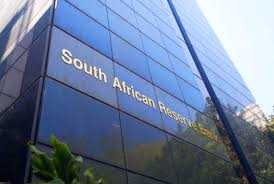
Rashad Cassim, the deputy governor of the South African Reserve Bank (SARB) says South Africa is currently experiencing the lowest growth episode in its modern history.
Speaking at a recent central banking conference in Cape Town, the deputy governor said that the past few years have been remarkable for the country’s economy but for all the wrong reasons.
“Domestically, we are experiencing the lowest growth episode in modern South African history, marked most recently by the widespread failure of basic infrastructure – especially electricity.”
“Externally, we have been buffeted by a series of extraordinary shocks: the Covid-19 pandemic, the war in Ukraine, and a global inflation surge,” he said.
Cassim said that the central bank is expecting growth rates of 0.3%, 0.7% and 1.0% over the next three years – not a good outlook at all, he added.
“These are disastrously low. Given population growth rates of around 1.2% annually, the implication is that living standards will continue to fall, as they have done on average since 2014,” he said.
Stats SA data revealed that load shedding has had a significant impact on the South African economy, with a quarterly seasonally adjusted contraction of 1.3% in Q4 2022.
This figure was three times worse than the market consensus, which predicted a contraction of 0.4% for the period.
This has raised concerns about a potential recession in South Africa due to persistent high-stage load shedding, with experts predicting another quarter of decline in Q1 2023.
Cassim said that growth forecasts remain low in light of supply-side dysfunction in the economy as well as the sustained rolling blackouts.
“We know electricity shortages have intensified; we expect to have 250 days of load-shedding this year, from 157 days last year and 48 days in 2021.”
This is a worse outlook than what the Reserve Bank had at its Monetary Policy Committee (MPC) meeting in January, where it anticipated 200 days of load shedding in 2023. It was on this basis that the SARB cut its growth outlook for 2023 to a paltry 0.3%.
“On top of that, the freight rail system has, for the most part, not been functioning optimally, removing another pillar of the economy’s productive potential. There are many other constraints in the economy that also suppress potential growth.”
Cassim said it is best that the bank’s forecast team face the facts squarely and mark down projections.
Another battle South Africa faces is that of inflation. As it stands, headline inflation is sitting at 6.9%, with core inflation at 4.9%.