
By Lehlohonolo Lehana.
South African Reserve Bank (SARB) paused its rate-cutting cycle on Thursday, as risks stemming from U.S. global trade war and the country’s deadlocked national budget overshadowed its success keeping inflation low.
The widely expected decision was split between the committee members, with two members favouring a 25 basis point cut, and four preferring the decision to hold.
At its last meeting, the vote to cut rates by 25 basis points was also not unanimous. Four members voted for the cut, while two voted for rates to remain unchanged.
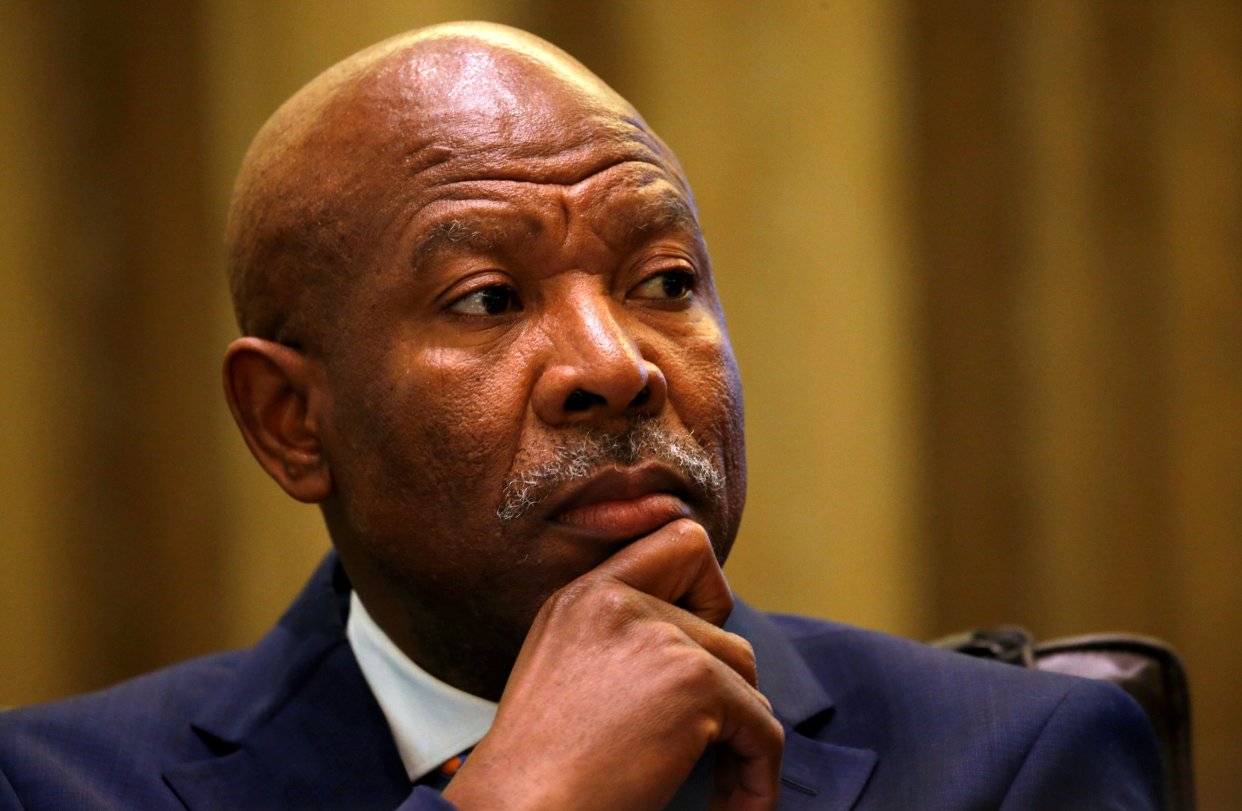
The central bank kept the repo rate unchanged at 7.5 percent due to inflation remaining within the target range, the central bank governor Lesetja Kganyago announced.
The prime interest rate stays at 11%.
“For several quarters we have enjoyed rising confidence in South Africa, with a smaller country risk premium and lower bond yields. However, the global economy is not on a stable footing and there are also domestic uncertainties, which put these favourable trends at risk. This calls for a cautious policy approach,” said Kganyago.
Economists expected the central bank to hold interest rates, with a few anticipated another 25 basis point cut.
This follows three consecutive 25 basis point cuts in the rate since September 2024.
While South Africa’s headline inflation is well within the SARB’s target range of 3% to 6%, and comfortably below the mid-point target of 4.5%, markets are wracked with uncertainty.
This is due to not only the impact of US President Donald Trump’s trade war but also the potential impact of Finance Minister Enoch Godongwana’s 0.5 percentage point VAT hike coming in May.
“We continue to see low inflation for goods, which is likely to be temporary. Services inflation is somewhat higher, but still below the 4.5% target midpoint,” Kganyago said.
He cautioned that inflation expectations are close to the midpoint, but for now inflation “appears to be contained”.
“The overall result of these changes is a marginally lower inflation outlook, with headline now projected at 3.6% this year and 4.5% next year.”
Kganyago attributed this to the better fuel-price projections, which also reflects a more “benign path for administered prices, given the lower electricity tariffs announced by Nersa [National Energy Regulator of South Africa] in February”.
“These factors offset pressure from the proposed VAT increases, which we think will add about 0.2 percentage points to headline inflation.”
Kganyago said risks to this projection are both on the upside and downside, “with the balance of risks in the medium term skewed to the upside”.
Although the economy expanded by 0.6% in the fourth quarter of 2024, Kganyago said the overall growth picture “was disappointing, with other sectors showing weakness”.
Overall growth in 2024 was 0.6%, marginally below the bank’s expectations and below that of 2023.
The bank revised its 2025 economic growth forecast slightly to 1.7%.
“We attribute lower growth partly to subdued demand, and partly to lingering supply-side fragilities,” he said.
Frank Blackmore, Lead Economist at KPMG South Africa said, although obviously the growth recently in South Africa has surprised or disappointed on the downside and this has led to a slight downward adjustment to the Reserve Bank forecast for this year to 1.7%.
At the same time, inflation has edged slightly higher from the lows but is remaining constant towards the downside of the forecast. Expectations remain close to the midpoint of range, in other words 4.5%!
And even the Reserve Bank expectation for 2025 is still below midpoint target range, sitting at 3.6% and they have decided to keep interest rates constant at 7.5%. The reason provided was that the monetary policy set over the medium to longer term for the next year or two and towards the latter stages of the forecast there’s a lot of uncertainty and risks to the upside prevail.
So, although the bank sees inflation remaining in the 3% range for the 1st 3/4 of this year, by the fourth quarter that has moved up to the 4% range and potentially higher from that point onwards and therefore with the amount of uncertainty both in global markets as well as the local market, they’ve decided to keep rates unchanged for this meeting.
Brina Biggs, Senior Manager at Budget Insurance said, the ripple of today’s decisions, is tomorrow’s wave and next years flood. A pertinent thought regarding today’s decision to hold interest rates by the MPC which does not come as a surprise to the market with global uncertainty as well as the wait on the Budget Speech finalisations in parliament next month.
We are seeing signals for disinflation with the softer oil prices and stable Rand, as well as the steady and consecutive 3,2% inflationary rate with a struggling economy, unfortunately the uncertainty of Trump and the USA ties will outweigh any decision until the outlook looks more stable.”
Data released by (Stats SA) on Wednesday revealed that retail trade sales, soared by 7.0% year-on-year, this consumer confidence may start being more muted with the projected VAT increase outlined in the budget combined with no adjustment for bracket creep on income tax, households still need to guard how they budget away expensive days, despite the slide in inflation and interest rates, there is no guarantee for further relief with persistent global pressures, so make sure you plan for next years flood.
Watch Live in the video below:
Video Courtesy of SARB.