
By Lehlohonolo Lehana.
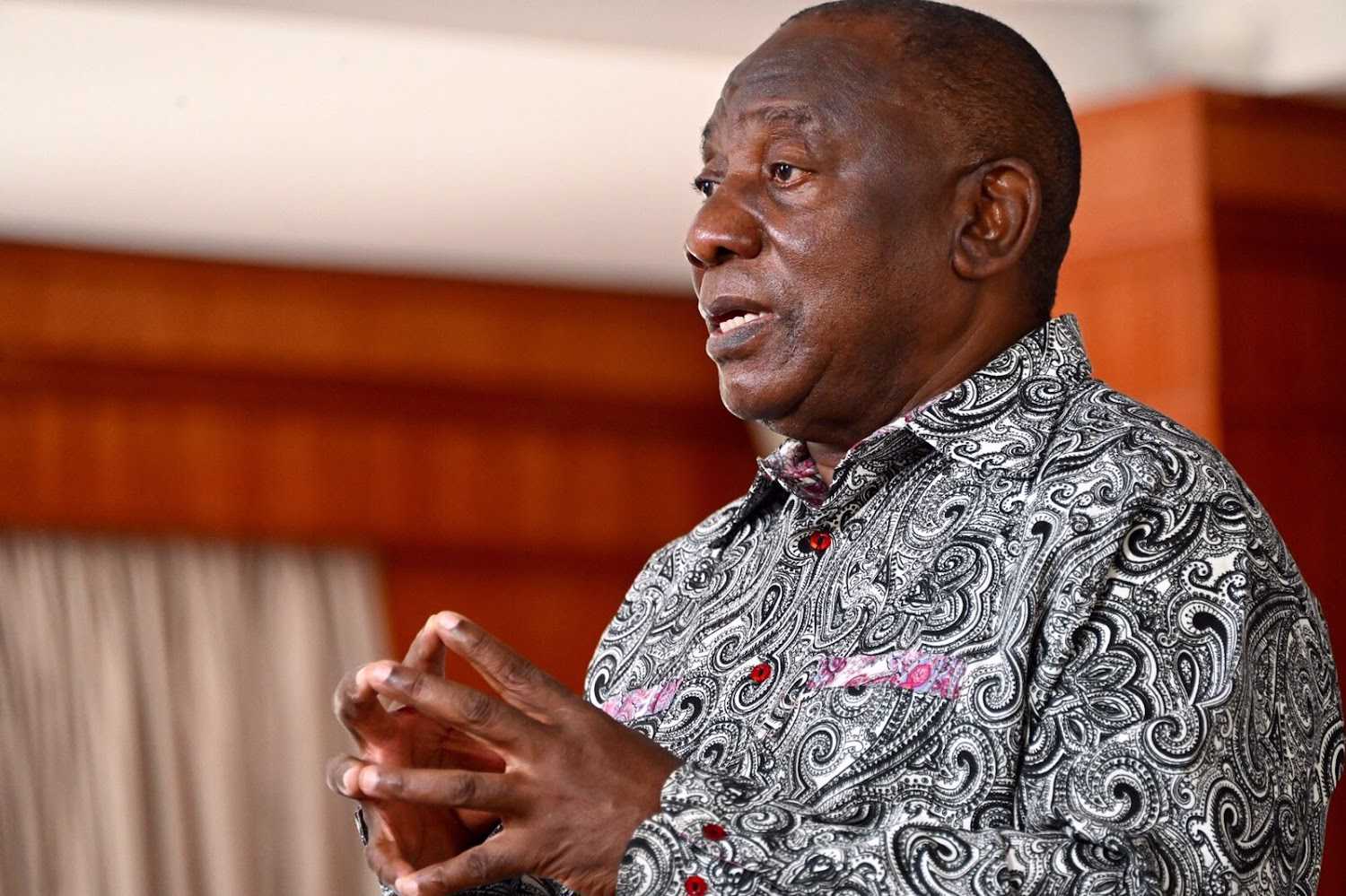
President Cyril Ramaphosa in his weekly letter to the public says, while protesters have the right to protest, they cannot infringe on the rights of others.
The EFF is leading countrywide protests on Monday to demand an end to load shedding and for the president to immediately tender his resignation.
“One person’s right to protest should in no way infringe on any other person’s right to life and dignity. It should not impede their freedom of movement and association, or their right to engage in their trade or profession without hindrance,” he said.
“The Constitution is clear that the state must ‘respect, protect, promote and fulfil’ all the freedoms contained in the Bill of Rights. Therefore, just as the state has a duty to uphold the right to peaceful protest, it has a responsibility to prevent any attempt to violate any of the other rights in the Constitution.”
“We should be clear that the right to protest does not give anyone the right to harass, intimidate or threaten anyone else. It does not give anyone the right to damage property or cause harm to any person.
“One hundred years ago, in May 1923, the first bill of rights in South Africa’s history was adopted by the African National Congress. It had no legal standing at the time, but it clearly expressed the desire for the equal rights of all people to be recognised and guaranteed.
“After many decades of bitter struggle, these freedoms were enshrined in the Bill of Rights of our democratic Constitution. Therefore, as we gather tomorrow to celebrate Human Rights Day, we should recall that the rights we enjoy today are the result of great sacrifices. Many people were imprisoned, many were driven into exile and many lost their lives so that our basic human rights are protected and upheld.
The president said that in fulfilment of its constitutional responsibility to protect the rights of all people, the government will have measures in place to ensure that everyone who wants to go to work, travel for leisure and conduct business can do so in a safe and secure environment.
“These measures include the deployment of our security personnel across the country to ensure that law is observed.”
While the right to protest is protected, certain acts are prohibited. These include:
- Shutting down schools, retail stores, businesses, trade and public roads
- Instigating, calling for and organising the blocking of roads
- Participating in or inciting others to participate in illegal and unlawful conduct
- Participating in or inciting others to participate in violence
It is currently unknown exactly where the protests will occur; however, the police have earmarked a handful of locations across Gauteng, such as political hubs, universities and business districts.
Businesses have indicated that they will remain open today.
Meanwhile the CEO of Business Leadership South Africa (BLSA), Busi Mavuso, said that calls for a national shutdown are ‘massively counterproductive’ to the effort being put in to get the economy back on track and bringing an end to load shedding.
“Threats to businesses, many of which are struggling to overcome the challenges they already face from a weak economy and energy insecurity, add to the already negative business sentiment,” Mavuso said.
Threats hurry foreign investors out of the country and make domestic investors reconsider putting their money back into the country. They also make employees, customers, and key supplies stay away from the business, she said.
“None of that solves any of our problems,” Mavuso said. “While those calling for a shutdown claim to care about developing our country, their actions have the opposite effect.”
The CEO said that the calls for a national shutdown are a political tactic that clashes with South Africa’s democratic dispensation. She added that organised labour has been hijacked for political purposes – undermining legitimate motives that workers may actually have.
The strikes follow recent political scandals surrounding Ramaphosa and an unreported theft at his Phala Phala farm, where foreign currency – allegedly stashed in his couch – was stolen.
South African citizens across the country have also faced rolling blackouts every day this year, with the embattled power utility Eskom struggling to keep the lights on.
Businesses at large, not wishing for a repeat of the 2021 July riots in KwaZulu Natal and parts of Gauteng, are anxious about the protests.
To counter these anxieties, security forces, including the SAPS, private security and even the army, have been placed on high alert to respond to any acts of violence and criminality that may occur.
deployed the South African National Defence Force (SANDF) between 17 March to 17 April. Roughly 3,000 army members have been deployed in accordance with the country’s Constitution.
These security forces have already dispersed crowds and cleared up blockages of roads and highways, removing burnings tyres, rocks and other rubble intended to shut down travel. However, incidents of protesters throwing rocks at vehicles and closing roads are still being reported.
Over 24,000 tyres have been found and impounded by the SAPS, including the vehicles that have been transporting them.