
By Alex Mitchley.
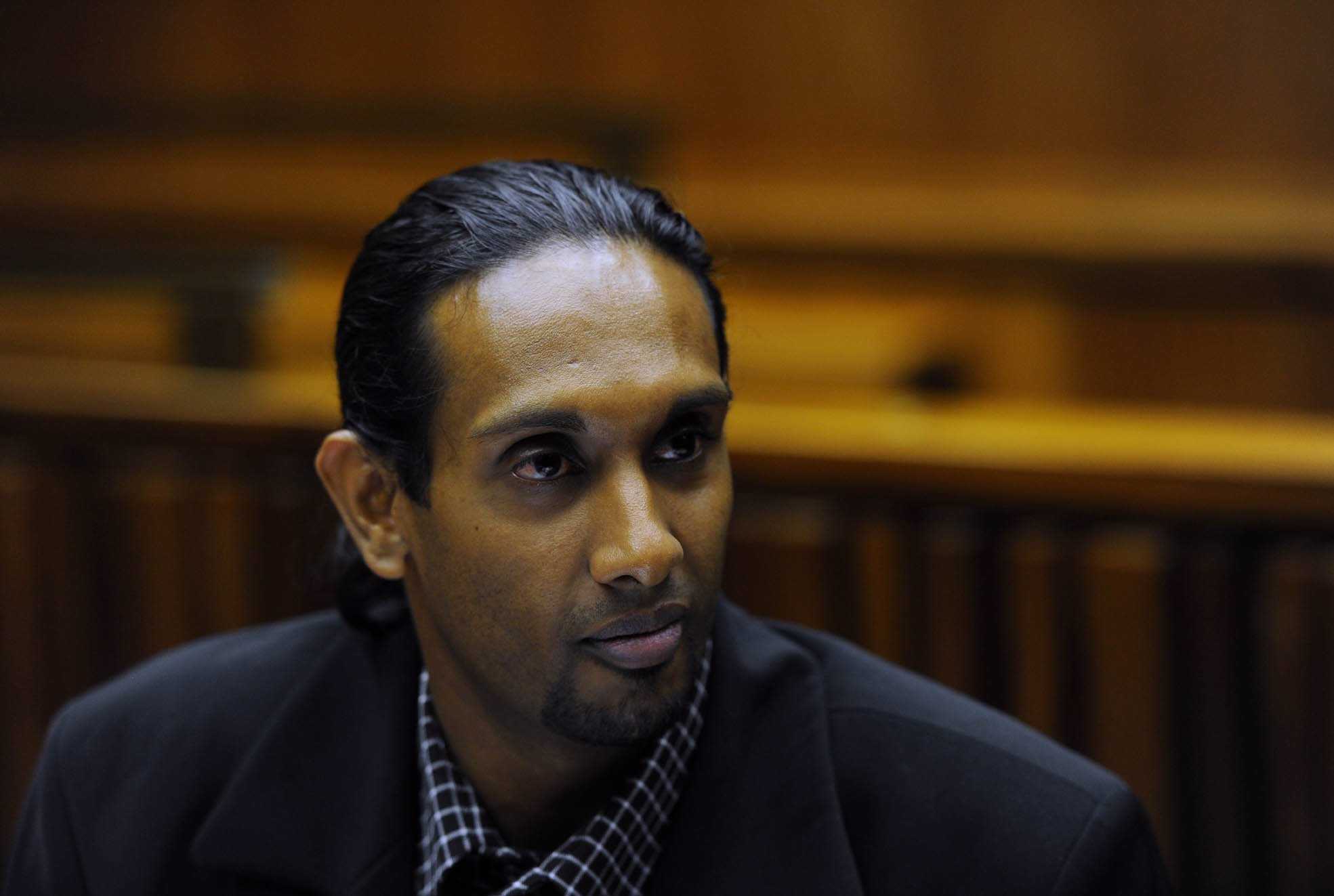
Convicted murderer Donovan Moodley has failed in his attempt to have his parole hearing interdicted after the relief he sought in an urgent application before the Gauteng High Court in Johannesburg was refused.
In the application, Moodley sought to interdict and restrain the respondents, including the Minister of Justice and parole board, from proceeding with the hearing, pending the determination of whether they were in contempt of court.
Moodley abducted Leigh Matthews from Bond University, Sandton, in 2004 and held her captive while demanding ransom money from her family. After receiving R50 000 from Leigh’s father, Rob Matthews, Moodley shot her three times instead of letting her go.
In 2005, he pleaded guilty to murder, kidnapping and extortion. Moodley was sentenced to life imprisonment for murder, 15 years for kidnapping, and 10 years for extortion.
He has been eligible for parole since 2018.
But he was denied parole in January last year. He approached the Gauteng High Court in Johannesburg to challenge the decision, claiming that the board did not consider his parole eligibility fairly and objectively.
Judge Stuart Wilson said it was impossible to establish the veracity of Moodley’s allegations because the minutes of the hearing were “incoherent”.
Wilson set aside the decision to deny Moodley parole and ordered that he be given another parole hearing before 31 March 2023.
On 22 March, less than two weeks away from the scheduled hearing on 29 March, Moodley filed his urgent application before the same judge.
In the application, he argued that he had not been provided with all the material that would be placed before the parole board and that the respondents should be held in contempt of court because the High Court ordered that he should be provided with the documents two weeks before the parole hearing.
In his judgment on Friday, Wilson noted that none of the respondents filed any notice to oppose Moodley’s urgent application.
Moodley complained about not being provided with several different documents and that a new social worker’s report had not been completed as per the court order.
Wilson said Moodley was mistaken because his order only stated that any reports or other preparatory steps necessary to hold the parole hearing by 31 March 2023 should be completed by 28 February 2023.
“The fact that a new social worker’s report was not completed by 28 February 2023 can mean only that reliance will be placed on the existing report, which was placed before the parole board at the hearing I set aside, and which has already been provided to Mr Moodley,” Wilson said.
Moodley further argued that he had not been given access to submissions made by the Matthews family and the South African Police Service.
Wilson said there was no indication that the Matthews family or police had produced written submissions for the new parole hearing or that such material would be presented.
“If they had, I expect that Moodley would have been given that material. If written submissions from either the Matthews family or the SAPS later emerge and the parole board is asked to consider that material, then it will be for the parole board to decide how to deal with the material in light of my order.”
“In that event, it will be incumbent upon the parole board to deal with the material openly and fairly. Moodley will obviously have to be given a reasonable opportunity to consider and respond to it, by means of a postponement, if necessary.”
Moodley also alleged that he was not given specific directives and regulations pertaining to the parole process. He did not mention whether he had requested the documents as he had been given copies of the applicable legislation and parole board manual.
“The mere failure to provide these documents two weeks in advance of hearing does not, however, mean that the respondents are in contempt of the 15 December 2022 order, as Mr Moodley claims,” Wilson said.
“The documents Mr Moodley requires, and to which he is entitled, were not specifically referred to in my order.”
The court refused Moodley’s application for the interdict and to hold the respondents in contempt, but ordered that he be given material he referred to in one section of his affidavit.