
By Lehlohonolo Lehana.
The Chairperson of the South African National AIDS Council (SANAC), Deputy President Paul Mashatile, has expressed concern that South Africa still has one of the highest TB burdens globally.
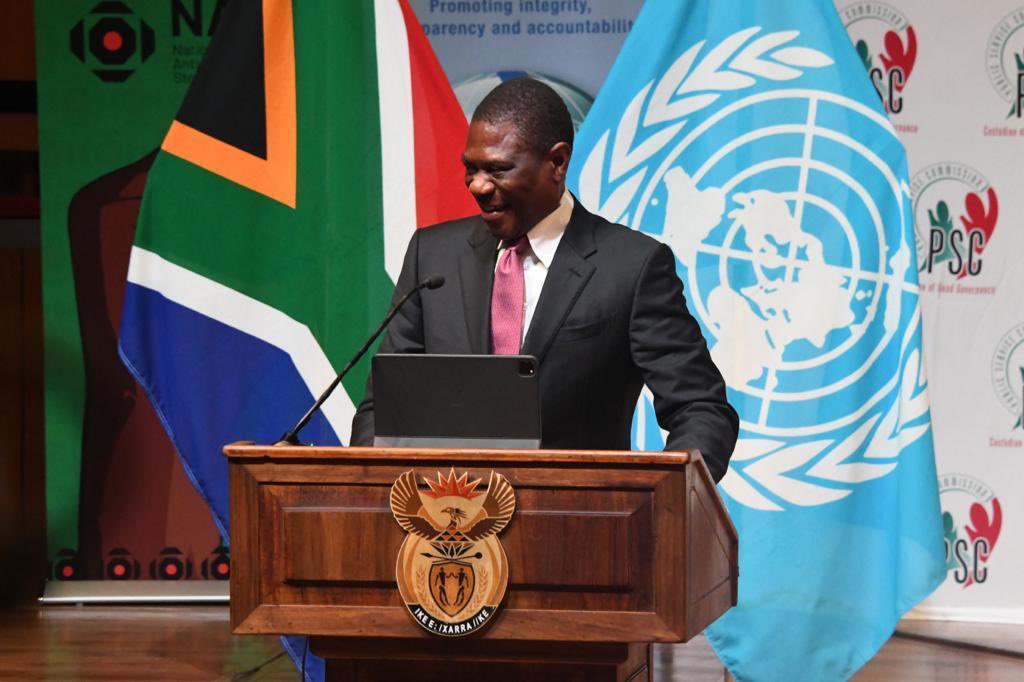
Mashatile delivered the keynote address at the national World TB Day commemorative event, and launch of the National End TB Campaign at Ugu Sports & Leisure Centre, Gamalakhe Township, Ugu District, KwaZulu-Natal.
World TB Day is commemorated each year on March 24, to build public awareness about the global epidemic of tuberculosis and profile efforts to eliminate the disease. This day is also designated to highlight the devastating health, social and economic impact of TB.
South Africa remains amongst countries hardest hit by TB, which has remained the leading cause of death claiming around an estimated 56 000 lives a year, more than half (54%) of which are people living with HIV.
This year’s official country theme for World TB Day is ‘Yes! You and I Can End TB’– Commit, Invest, Deliver, a clarion call for leaders to champion TB efforts in their respective constituencies, as well as to encourage individual action from all South Africans to contribute to the national effort against TB.
The significance of this year’s commemoration will be marked by the launch of the National End TB campaign designed to substantially reduce TB incidence and mortality in South Africa by 2035. This campaign will be implemented in phases, starting with a focus on Case Finding and Linkage to care in the year 2025/2026.
The campaign also aims to diagnose 250,000 new TB cases in 2025/26 through targeted testing of 5 million people. This will be achieved by implementing Accelerated Targeted Universal TB Testing (TUTT) to reach people living with HIV and household contacts of confirmed TB cases.
Mashatile was joined by the Minister of Health, Dr Aaron Motsoaledi; Premier of KwaZulu-Natal, Thamsanqa Ntuli; SANAC Civil Society Chairperson, Mr Solly Nduku; Chairperson of the SANAC Private Sector Forum, Ms Mpumi Zikalala; SANAC CEO, Dr Thembi Xulu, as well as representatives from development partners inclusive of the United Nations Agencies, USA Government Agencies, research entities, civil society movements and the private sector.
Mashatile noted that South Africa is among the 30 countries accounting for 87% of the global TB burden, highlighting that TB is preventable and curable, even for those living with HIV.
The Deputy President has since called for urgent action to combat this infectious disease, which claims the lives of thousands of citizens each year.
South Africa commemorated World TB Day on Monday, focusing on the critical need to end TB in the country and across the globe.
“Today, we join the global community to commemorate World TB Day. We unite as a nation with a shared purpose to end tuberculosis,” said the Deputy President.
In 2023 alone, around 270 000 South Africans were diagnosed with TB, with 56 000 deaths, equating to 153 deaths every day.
The Deputy President told the attendees that this day should serve as a reminder of the ongoing stigma and discrimination faced by those living with HIV and TB.
Two years ago, he said, SANAC initiated the development of Human Rights Charters aimed at protecting the rights of key populations affected by TB and HIV.
While progress has been made, Mashatile noted that some provinces are still yet to launch their charters, emphasising the need to address stigma actively.
“TB is not merely a medical issue; it is a human rights issue. Every person, regardless of their background, deserves access to life-saving treatment,” the Deputy President stressed.
He said about 58 000 people with TB in South Africa remain undiagnosed.
“These are our mothers, fathers, brothers, and sisters – people who deserve care and dignity. We must reach them.”
He told the community that government was committed to maximising efforts to combat TB through four key objectives. These include raising awareness, promoting access to care, advocating for research and innovation and strengthening partnerships.
Through these initiatives, the Deputy President said government hopes to foster improved treatment success, link diagnosed patients to necessary care and reduce stigma and discrimination within communities.
The Deputy President believes that collective action and commitment are imperative in the fight against this preventable and treatable disease.