
By Lehlohonolo Lehana.
President Cyril Ramaphosa has told logistics group Transnet that it must arrest its declining performance and start contributing meaningfully to economic growth.
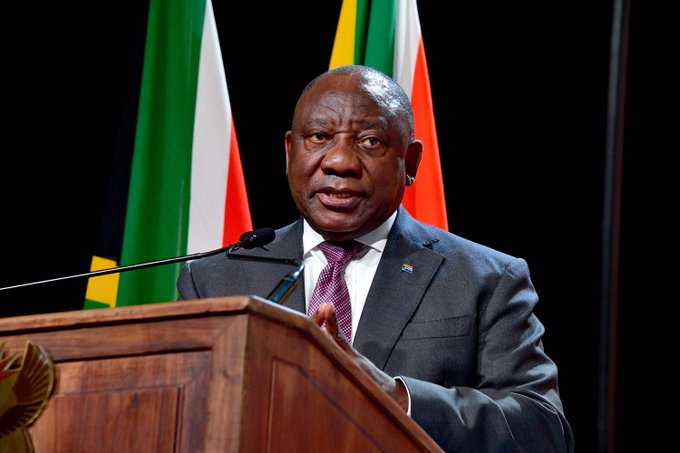
Ramaphosa said, “Transnet must quickly embark on a clear path to take us out of this crisis and ensure that the operation of our railways and ports contributes to the growth of our economy.
He met with the members of the Transnet board and the executive management team at the Union Buildings in Pretoria on Tuesday to discuss the challenges facing the country’s logistics system, including the declining performance of the freight rail network.
During the State of the Nation Address, Ramaphosa announced that government would develop a roadmap for Transnet to provide clarity on the steps that need to be taken to address the crisis and outline a path for reform.
This includes ensuring that sufficient rolling stock is available to increase the volume of goods transported by rail; upgrading infrastructure in rail and ports; addressing security challenges; and implementing reforms to enable private sector investment.
“There is work underway between the various departments to finalise this roadmap, coordinated by Operation Vulindlela, and I would like this process to be completed as quickly as possible. We must remain focused on structural reforms to improve the efficiency and competitiveness of the transport sector in the long term.
“One of these reforms is to enable third party access to the freight rail network by private rail operators, while the network itself remains in the ownership of the state,” the President said.
He noted the progress that has been made to establish a separate Infrastructure Manager within Transnet Freight Rail by October this year as a crucial step towards creating a level playing field for public and private operators.
The President said that strong collaboration with the private sector, organised labour and other social partners is vital to improving logistics performance.
He referred to the strong willingness shown by members of the Minerals Council and others to invest in rolling stock and other equipment, to contribute skills and resources and to pursue opportunities for collaboration.
These collaborative efforts are essential to formulating workable solutions that will form part of a collective national effort to fix the country’s transport system.
“Despite the crisis facing Transnet we must acknowledge the important progress that has been made in reversing the damage that was inflicted during state capture and recognise that there are many dedicated and hard-working people in the company that are committed to restoring Transnet to its potential.
“Transnet must quickly embark on a clear path to take us out of this crisis and ensure that the operation of our railways and ports contributes to the growth of our economy,” said Ramaphosa.
Government has set out a clear policy direction for the freight transport sector in the White Paper on National Rail Policy and in legislation such as the National Ports Act and the Economic Regulation of Transport Bill that is currently before Parliament.
Meanwhile Public Enterprises Minister Pravin Gordhan announced that he would travel to China next month to address the problems caused by a state-owned Chinese rail firm.
The State Capture Inquiry found that China Railway Rolling Stock Corporation paid billions in kickbacks to Gupta associates and was unfairly favoured in a R54 billion deal to supply Transnet with locomotives.
In July last year, its local subsidiary CRCC E-Loco failed in a court bid to have SARS return money taken from its accounts.
SARS froze the company’s accounts after finding that the company overstated the price of its locomotives sold to Transnet as part of its involvement in state capture, and that the company had a tax debt of more than R3.6 billion.
In apparent retaliation, CRRC – the world’s biggest rail equipment manufacturer – has refused to deliver locomotives and spare parts to Transnet.
This has severely throttled South Africa’s rail performance, with many locomotives out of service on key rail corridors for the export of coal, chrome and manganese.