
By Lehlohonolo Lehana.
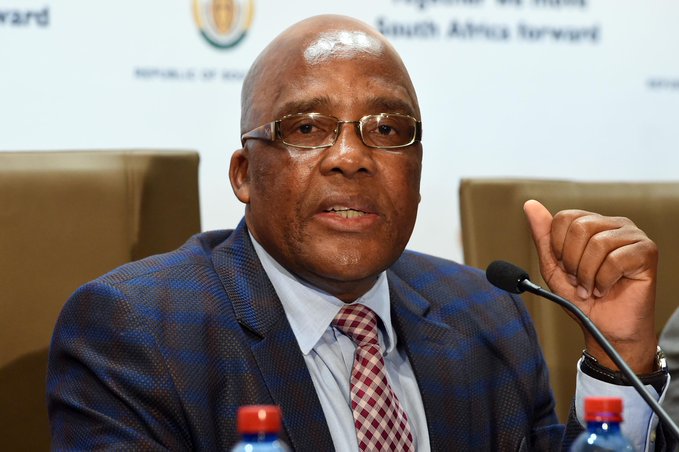
Health Minister Dr Aaron Motsoaledi placed a strong emphasis on accelerating progress towards universal health coverage during his address to the G20 Health Working Group.
Motsoaledi delivered the keynote address at the opening of the second meeting of the Group of Twenty (G20) Health Working Group on Wednesday.
The meeting took place at the Capital Zimbali Resort in Ballito, KwaZulu-Natal, and will last for three days.
The theme of the meeting will be “Accelerating Health Equity, Solidarity, and Universal Coverage”.
Motsoaledi was joined by Deputy Health Minister Dr Joe Phaahla, KwaZulu-Natal Premier Thami Ntuli, and KwaZulu-Natal Health MEC Nomagugu Simelane.
Wednesday’s meeting was the second time the G20 Health Working Group has convened since South Africa’s G20 presidency activities kicked off, with the first meeting held in late January.
The mandate of the working group is to improve global health by addressing health challenges, building resilient systems and promoting equitable access to services.
A strong primary healthcare system is the cornerstone of universal health coverage, according to Motsoaledi, since it is at this level that prevention meets early intervention, communities are empowered and the social determinants of health are addressed.
“We must invest in accessible, affordable and comprehensive primary healthcare for all,” he said.
“However, our ambitions are threatened by harsh realities of global economic constraints… This is particularly acute in the Global South, where many nations are burdened by unsustainable debt servicing. These debt repayments are effectively cannibalising vital health budgets, leaving millions without access to essential health services.
“We must acknowledge that spending on health is not a cost, but an investment.”
Motsoaledi laid out various steps for improving health outcomes, including:
Increasing domestic resource mobilisation by advocating for greater allocations of national budgets to health;Debt relief and restructuring, as “for many nations, debt relief is not a luxury but a necessity”; Strengthening global health partnerships and exploring innovative financing mechanisms to bridge the funding gap; and Increasing efficiency and transparency when it comes to spending on health.
Motsoaledi’s comments on increasing national budget allocations for health come at a time when South Africa is exiting two years of severe budget constraints in the health sector, with significant staff losses and strained services at state facilities.
In his 2025 Budget speech, delivered on 12 March, Finance Minister Enoch Godongwana acknowledged the need to cover funding shortfalls in the public health system.
The overall health budget increased from R277-billion in 2024/25 to R298.8-billion in 2025/26, and Godongwana announced that R28.9-billion had been added to the health budget, mainly to keep about 9,300 healthcare workers in the country’s hospitals and clinics.
At the G20 Health Working Group meeting, Motsoaledi told assembled dignitaries that South Africa was “actively pursuing a transformative strategy” to achieve universal health coverage through its National Health Insurance (NHI) system.
“The NHI is designed to provide financial protection for all, ensuring that access to quality healthcare is not dependent on one’s ability to pay. It will also assist in the efficient utilisation of available resources by pulling funds and strategically purchasing services,” he said.
“The NHI is a concrete demonstration of our commitment to leaving no one behind, fostering equity and strengthening our health resilience.”
Motsoaledi went on to talk about the importance of addressing the growing burden of noncommunicable diseases, particularly in low- and middle-income countries.
“We must accelerate efforts for prevention and control, focusing on multilateral approaches. Specifically, we must be doing the following: alleviate financial burden, restrict unhealthy food marketing, finance emergency health services and accelerate cervical cancer elimination,” he said.