
By Lehlohonolo Lehana.
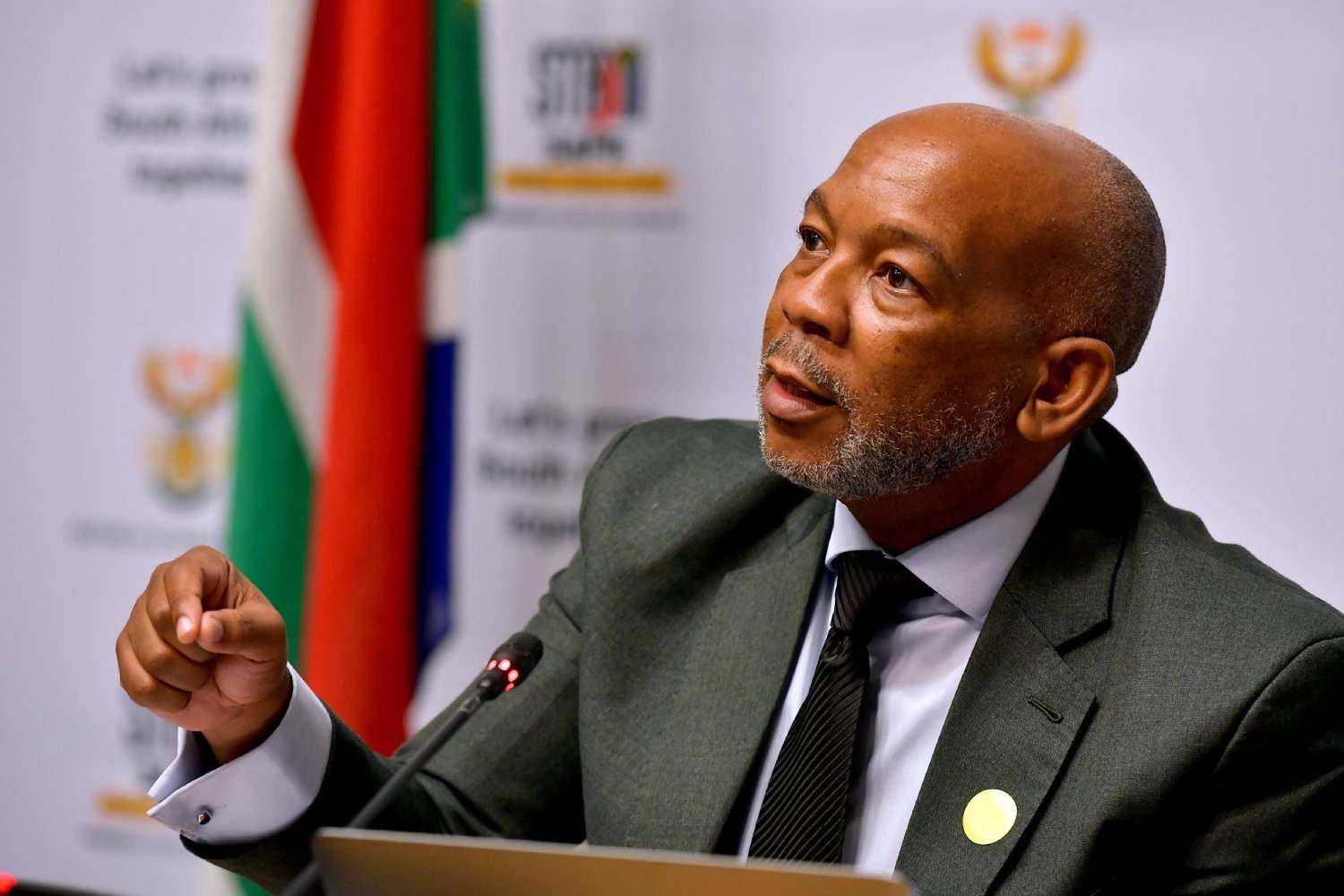
Minister in the Presidency for Electricity, Dr Kgosientsho Ramokgopa, says the withdrawal of the National State of Disaster on Electricity will have no impact on his work.
Ramokgopa said he would continue with his job unhindered as the Public Finance Management Act (PFMA) gives him room to tackle load-shedding head-on.
“PFMA instruction note 20 just makes provisions on emergency, urgency and sole provider and I have chosen to use a simple example. Some of the big components in the power stations that can’t be bought off the shelves, turbines [which] are produced by a few OEMs in the world. So if you have turbine X produced by supplier 1 and there’s a component that is missing or damaged in that turbine, you are not going to go to other OEMs — you’re going to go to the one that manufactured and buy from that person,” Ramokgopa said.
Speaking at a media briefing on Wednesday, Ramokgopa said the Infrastructure Development Act also gave the government space to procure new energy generation capacity outside the state of disaster.
Government formally withdrew the State of Disaster and its regulations on Wednesday.
“[The State of Disaster and the Electricity Ministry] were meant to help us accelerate our efforts to deliver, in accordance with the Energy Action Plan. The Minister of Electricity continues to execute and prosecute those responsibilities as determined by the President,” Ramokgopa said.
He assured South Africans that the withdrawal of the National State of Disaster will not stop government’s plans to procure new electricity generation – particularly from renewable energy sources.
Minister of Cooperative Governance and Traditional Affairs (Cogta) Thembi Nkadimeng said that the national state of disaster is no longer needed because enough has been done to get the government ready to deal with the energy crisis.
Nkadimeng said that since the state of disaster was declared on 9 February 2023, the government has adopted a “wide range” of mitigation efforts, including the Energy Action Plan (EAP) and appointing a new minister of electricity to deal with matters relating to the crisis.
Ramokgopa also noted that some of the bigger measures – such as Eskom being granted an exemption to speed up the Kusile Power Station’s return to service – were done outside of the Disaster Management Act, again raising the question of why the state of disaster was needed at all.
The ministers could not though provide relevant or detailed examples of how the state of disaster was used to mitigate load shedding.
Defending the state of disaster, deputy Cogta minister Parks Tau said that the measure was declared at a time when load shedding stages were escalating, and periods of outages were becoming longer.
A decision was made to declare a state of disaster to deal with the crisis, he said.
However, he stressed that the state of disaster was under constant review. Given that there is now a dedicated ministry to focus on the prevailing crisis, and mitigation efforts can be executed without “extraordinary” measures in place, there is no longer a need for the state of disaster, he said.