
By Lehlohonolo Lehana.
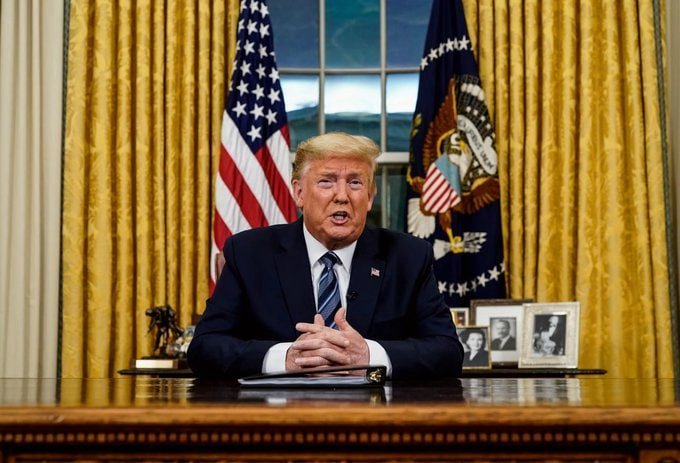
In a shock move, US President Donald Trump has announced tariffs of 30% on all South African exports to his country.
Trump was speaking at the White House Rose Garden, where he announced reciprocal tariffs.
Trump has dubbed 2 April 2025 as “Liberation Day,” while the White House labelled his address “Make America Wealthy Again.”
Global leaders have been girding for the announcement, with few details so far released.
This was Trump’s first address from the Rose Garden during his second term. The venue is typically reserved for high-profile events.
South Africa will face tariffs of 30% and Trump mentioned twice that “some bad things are going on in South Africa…”
Markets had been on edge all week waiting for the tariff structure to be announced, with the rand weakening significantly on their reveal.
The announcement compounded local issues, with markets already reacting negatively to a hotly contested budget vote that showed a gaping division within the Government of National Unity (GNU).
Markets are now doubly anxious about the future of the GNU after the business-friendly Democratic Alliance (DA) broke from the Afican National Congress (ANC) in the vote to pass the budget, raising serious questions about its position in the coalition.
The rand had already given up around 1.3% against the dollar around the vote, about 30 cents.
However, this was pushed to R18.96/$ after Trump’s announcement, tanking almost 2.3% by 23h00.
Spot gold, meanwhile, advanced as the tariffs boosted haven demand.
The metal has climbed 19% this year, extending a ferocious run in 2024, as investors seek safety amid concerns over the global economy and world order.
Gold rose as much as 1% to $3,143.39 an ounce in late trading on Wednesday.
Copper edged lower when Trump made the announcement as traders were concerned levies may hurt demand and drag down economic growth.
Data indicates that South Africa’s average applied tariff rate across all US products imported into the country was about 7.11% as of 2020. This discrepancy raises questions about the specific calculations or data sources used by the US administration to determine the 30% tariff rate.
Given this tariff rate is relatively low, certain US products may face higher tariffs. For example, South Africa has imposed tariffs of up to 62% on specific poultry products. Beyond tariffs, non-tariff barriers such as quotas, import permits, and technical standards may also have been factored into the final 30% trade tariff rate imposed by the Trump administration.
South Africa’s government has expressed concern over these tariffs, and economists have warned that the tariffs could destabilise South Africa’s economy, potentially reducing economic growth by up to 0.3 percentage points. This concern arises from the potential impact on key industries and overall economic performance.
Other tariffs announced include 20% for the European Union, 24% for Japan, 26% for India and 34% for China.
Auto tariffs of 25% will apply to cars, light trucks, engines, transmissions, lithium-ion batteries, tyres, shock absorbers and even spark plug wires.
South Africa previously benefited from duty-free access under the African Growth and Opportunity Act (AGOA) and provided certain African countries with preferential access to the US market.
South Africa’s exports of parts and vehicles to the United States are estimated at more than $2bn.
South Africa’s Trade Minister Parks Tau has stated that the country is seeking a meeting with US authorities to discuss the potential impact of tariffs, particularly on its automotive and textile sectors.