
By Lehlohonolo Lehana.
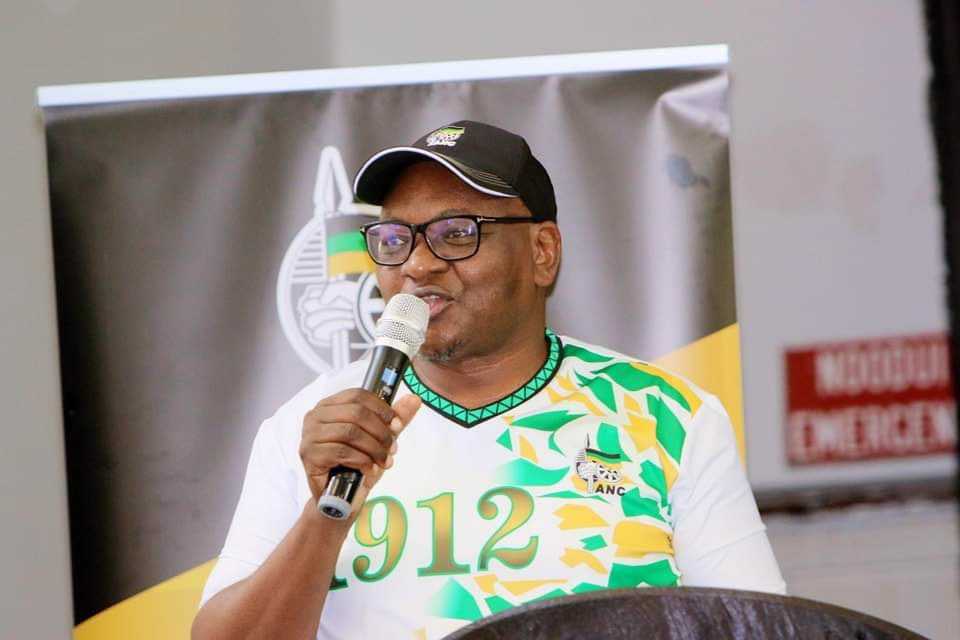
The African National Congress (ANC) head of political education, David Makhura, outlined a strategic framework on coalitions that the party will take in the 2024 national elections.
The decision to look into viable coalition models was taken at the ANC’s 55th national conference, at Nasrec last year.
Makhura said, the party was not necessarily planning for a coalition. He said it may still get more than 50% of the vote in next year’s elections and there is no need to pre-empt what happens at the polls.
The matter has been up for discussion at the party’s national executive committee (NEC) meeting taking place in Boksburg at the weekend.
“When we deal with coalitions, we must have a national approach and engage uniformly. We must also agree that we don’t tamper with the administration work in municipalities, said Makhura.
Briefing the media on the discussion document, Makhura said several proposals had been tabled.
They include a proposal that the party that received the highest number of votes lead the executive.
“We want to be part of coalitions that observe the rule of law and respect procedures of how officials are elected,” said Makhura.
He was quick to add he was not referring to Gauteng coalitions which have proved to be the most unstable.
Makhura said there was no evidence of collusion between his party and other smaller parties, and any one with such evidence should take it to law enforcement officials.
He revealed part of the consideration by the ANC was to possibly introduce the collective executive system across the 80 hung councils in the country.
The collective executive system, as stated in Section 12 of the Municipal Structures Act, allows for the scrapping of the mayoral executive system and takes powers away from a mayor and allows a new committee to run proceedings.
“Among key challenges we’re facing in the country is that we have unstable and dysfunctional coalitions impacting hugely on service delivery in municipalities,” he said.
“We’ve seen much more stability in municipalities run by the collective executive system over the mayoral system. This means parties will be represented proportionally according to the seats they got in council.
“We only have trouble where [there’s] a mayoral executive system. We’re thinking of introducing an executive system in all hung councils,” added Makhura.
Executive mayoral systems operate where a council elects a mayor, and the mayor has the executive power to appoint other members to the executive committee. Makhura said this is a “winner takes all” system.
When there is a hung council, the parties come together and get 50%-plus-one, agreeing on who will be the mayor. The other roles they split amongst themselves, according to whatever agreement they have.
Makhura said this isn’t the most democratic approach, as parties who may have received a significant number of votes may not be represented in the executive.
The other system – the Collective Executive System – resolves this.
In this system, parties are represented in the executive in proportion to the electoral outcomes – ie, the number of votes they got. This is more democratic, Makhura said, and is based on the will of the people.
Any party that has received substantial support will be represented,” he said.
The ANC argues that the collective system is more stable and more reliable. “The municipalities under the mayoral system are where the problems are,” he said.
Major metros are currently run under the mayoral executive system, including the City of Cape Town, the City of Johannesburg and the City of Tshwane, among others. The City of Joburg and City of Tshwane in particular have played host to months, if not years, of instability due to the constant bickering, betrayals and infighting among coalition parties.
The ANC has been working closely with the EFF in the past few months in an attempt to unseat the DA from power in Gauteng municipalities.
The ANC- EFF marriage has succeeded in removing DA mayors in Ekurhuleni and Joburg.
The latest municipality they have managed to take from the DA is Mogale City. On Thursday the DA’s Tyrone Gray was toppled through a motion of no confidence. The EFF and ANC voted for his removal with 43 votes while the DA and its minority coalition partners could only garner 34.