
By Lehlohonolo Lehana.
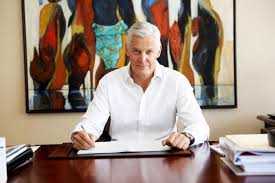
Former Eskom CEO André de Ruyter refused to name the minister and senior politician who were allegedly been involved in corruption at the utility.
De Ruyter appeared before parliament’s standing committee on public accounts (Scopa) to answer questions about the allegations he has made about the corruption at Eskom, particularly during an eNCA television interview in February, in which he said a minister and senior politician were involved.
He told committee members that they may have to engage with law enforcement authorities on the sources he’s relied on and the details of the allegations.
“In regard to the nature of the alleged criminal and unlawful activities, the sources that I have relied on to inform law enforcement and intelligence agencies have legitimate reasons to fear for their safety. I am therefore not able to divulge their identities.”
De Ruyter says the unlawful activities he highlighted are under investigation and are sensitive and complex.
“As these investigations are currently ongoing and having regard to the public nature of the proceedings at Scopa, I would not wish to be seen to be defeating the ends of justice by divulging information that may compromise the successful arrest and prosecution of individuals implicated in these activities.”
When asked by ANC MP Bheki Hadebe to name the high-ranking official who was involved in corruption at Eskom after he spoke about allowing people to eat a little over the $8.5 billion for the Just Energy Transition funding by the international community, he said he was not at liberty to do so for legal reasons.
He said he had, nonetheless, complied with Section 34 of Precca by reporting criminal activities to relevant authorities.
“I raised this matter with the highest law enforcement officer in the country, the SAPS national commissioner Fannie Masemola. I raised it twice. I fully complied fully with the officers appointed by the national commissioner. In general, section 34 of Precca was complied with by means of my direct communication with senior police officers, including the national commissioner,” said De Ruyter.
De Ruyter also said the involvement of senior politicians and other people at Eskom showed that they had no regard for corruption.
Scopa contested that the minister in question’s response – and their stance on the alleged high-level politician’s involvement in corruption, where “it was inevitable that it would come out anyway” – suggests that this was referring to known corruption, where nothing was done.
“South Africans deserve to know which minister, who has taken an oath to protect the resources of the country, uttered these words,” the committee said.
However, as is the case with the identity of the high-level politician involved, De Ruyter said he would not mention names due to the security risks involved, including possible legal action, civil or otherwise.
The former executive repeated that he disclosed all his findings to the shareholder representative, Public Enterprises Minister Pravin Gordhan and National Security Advisor Dr Sydney Mufamadi. He also stressed that he fulfilled his legal mandate to report crime and corruption by approaching the highest authorities.
Meanwhile Democratic Alliance leader John Steenhuisen has stated publicly that the senior/high-ranking politician De Ruyter mentioned in the eNCA interview was then deputy president David Mabuza. Mabuza has denied the claims, calling Steenhuisen a “political charlatan desperate for attention”.
Watch Live in the video below:
Video Courtesy of Parliament.