
By Lehlohonolo Lehana.
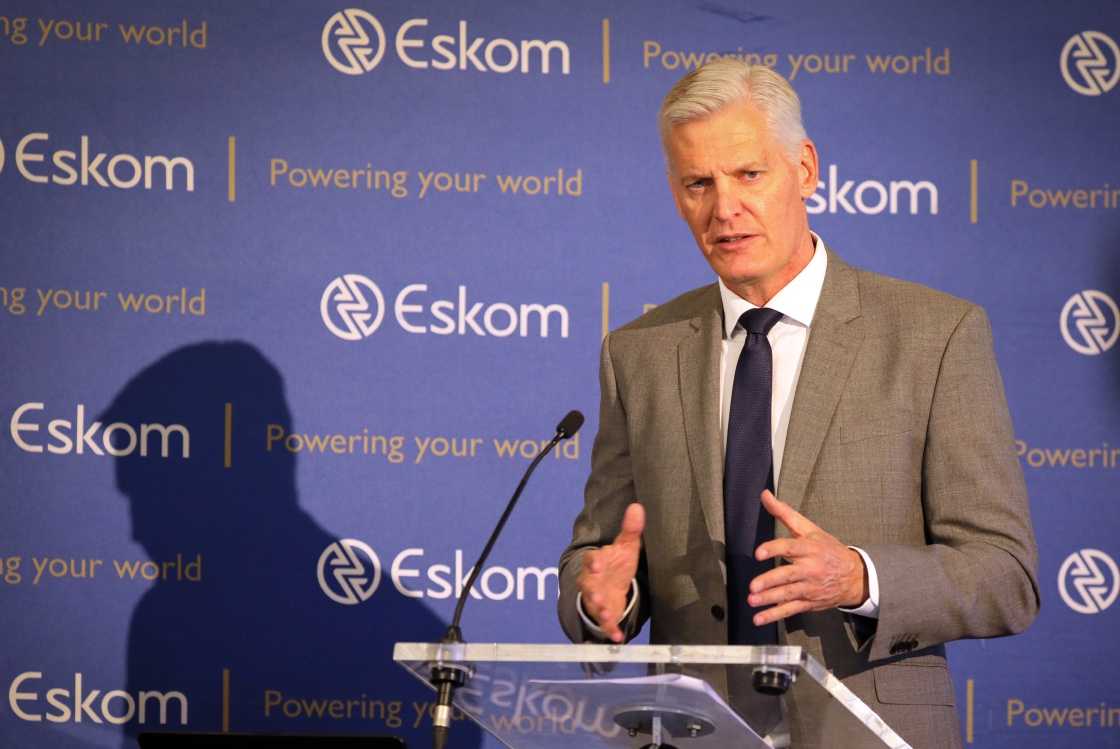
Former Eskom CEO André de Ruyter remains under pressure to tell about the potentially illegal and privately funded covert surveillance operation that took place at the state owned power utility.
According to City Press, government institutions, including parliament, the State Security Agency (SSA) and the Public Enterprise’s department, want to know how Eskom secured the services of unvetted operatives who had unrestricted access to sensitive information – all while they were kept in the dark.
George Fivaz Forensic & Risk were selected by de Ruyter to conduct the private investigation instead of four specialist companies that were chosen by Eskom. Two of the companies confirmed to the paper that de Ruyter has never given work to any of the four companies.
It is believed that de Ruyter circumvented SSA protocols essential to initiate an operation of that scale, with the former Eskom CEO ducking mandatory vetting processes throughout his tenure.
Standing Committee on Public Accounts (Scopa) member Sakhumzi Moyo previously said that the investigation was a risk to Eskom as the former CEO was also not properly vetted by the SSA.
Speaking at Scopa earlier this week, de Ruyter confirmed that Business Leadership South Africa (BLSA) CEO and former Eskom board member Busisiwe Mavuso knew of the investigation.
Mavuso confirmed that BLSA paid R18 million for the investigation by George Fivaz Forensic & Risk.
Although parliament wants to question the SSA regarding the potentially illegal operation, Khumbudzo Ntshavheni, the minister in the presidency responsible for state security, said that SSA did not know about the investigation.
“The involvement of the SSA with Eskom matters has always been, and continues to be, with the Cabinet-appointed Eskom task team, which deals with a variety of issues around the turnaround and repositioning of the power utility, “Ntshavheni said.
“The SSA is therefore not in a position to comment on operatives or anybody else who has allegedly carried out investigations or any other covert work at Eskom.
“The SSA is equally not in a position to comment on any reports or findings by private individuals about the state of affairs at Eskom, as we have not been party to these in the first place.”
Importantly, to date, the Scopa meeting is the only step Parliament has taken to get to the bottom of this latest twist in Eskom corruption. In mid-March the ANC used its numbers in the House to vote down a proposed parliamentary probe into cartel organized crime at Eskom, describing De Ruyter’s claims as “childish” and “unsubstantiated”.
It comes amid persistent Stage 6 rolling power cuts that leave South Africans up to 10 hours a day without electricity. And it takes place against mashed-up factional politicking from within the ANC that has shredded policy, and budgetary certainty with plans to burn diesel to keep the lights on while extending the lifespan of ageing, breakdown-prone coal power stations.
Parliament right now is dealing with the draft legislation to effect Eskom’s R254-billion debt bailout that the 2023 budget allocated over the next three years. This followed the 2019 Budget provision of a R59-billion bailout alongside annual instalments of R23-billion each over 10 years. In 2015 Eskom the R60-billion Eskom got as a loan in 2008 was converted into equity, which does not have to be repaid.
From De Ruyter’s prepared submission to Scopa, a level of frustration seems to emerge. Controls to curb corruption, fraud and cartel organised crime at state power utility Eskom failed largely because of active resistance and circumvention of controls — and an “active campaign of sabotage”.
Measures to tighten controls like barcoding, inventory checks, outsourcing procurement were “actively resisted and circumvented, necessitating ongoing time-consuming micromanagement to ensure implementation took place”, said De Ruyter in his statement to MPs.