
By Lehlohonolo Lehana.
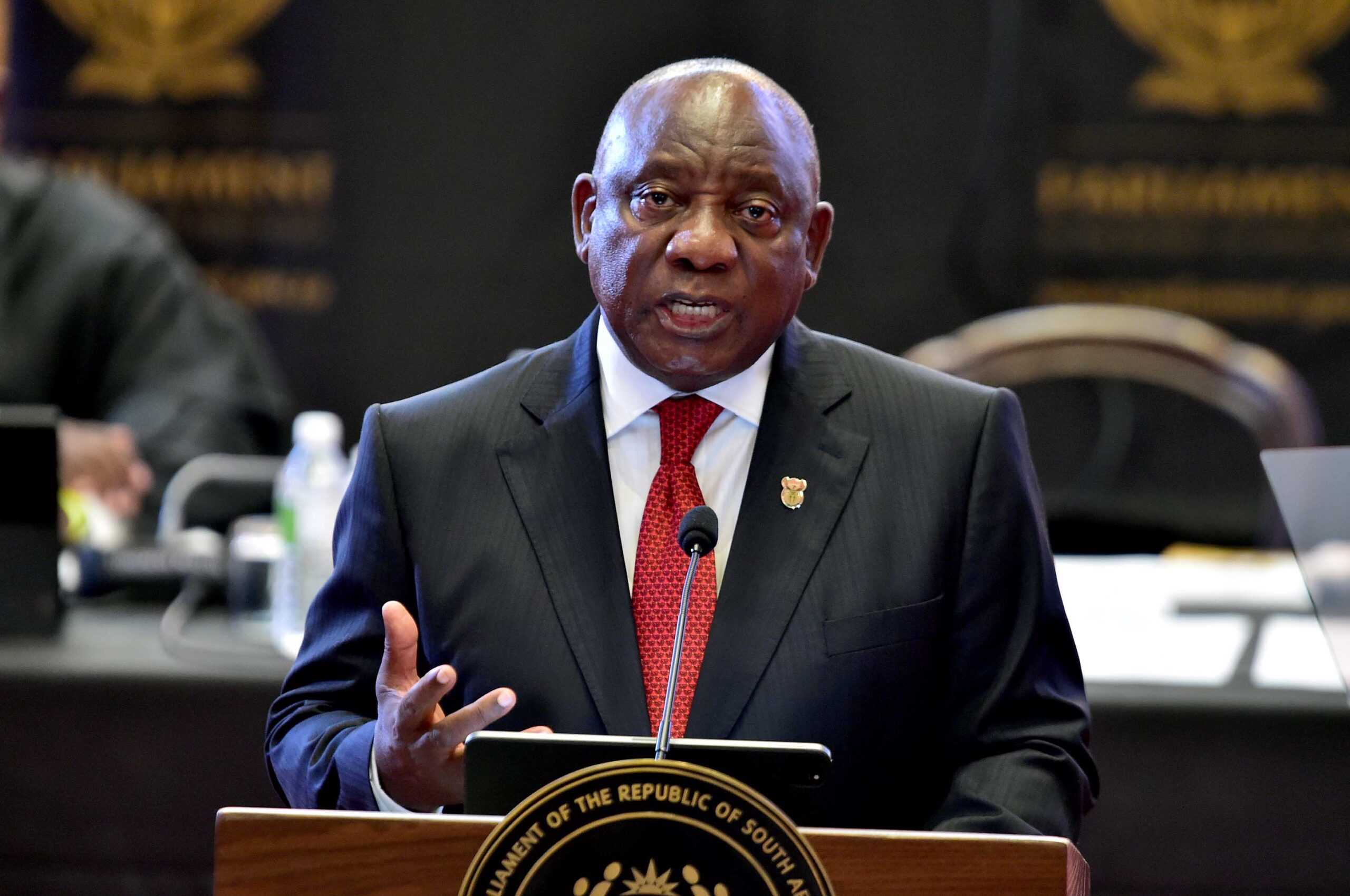
President Cyril Ramaphosa says the extent of corruption at Eskom was well-known in the public domain, he had never been presented with concrete information against members of his Cabinet.
During the Q&A session, Democratic Alliance (DA) leader John Steenhuisen quizzed the president about allegations by former Eskom CEO Andre de Ruyter that politicians were involved in criminality and wrongdoing at the embattled power utility.
Steenhuisen argued that it was known that the ANC was responsible for corruption at Eskom.
“Mr president why have you not made any effort to identify who these Cabinet ministers are and hold them accountable?” he asked.
Ramaphosa said it was easy to make allegations against any person.
“But where’s the evidence to back that up?” he responded.
He insisted that those with full knowledge of any corruption or criminal activity needed to approach the law enforcement agencies.
“I cannot possibly be able to act on the basis of whims, innuendo and stories that are bandied around. I need to deal with real evidence.”
The president said he had no authority to arrest or investigate people.
“Even if I wanted to do that and have those dictatorial ambitions, the rule of law and the Constitution of this country would never allow me to do that.
“In the end, it has to be done through due process of the law, it has to be done through the institutions that were put in place because if the president starts investigating his own ministers, then it basically means that we don’t need for the police or criminal investigators. We cannot run a banana republic in South Africa over things like that, we cannot… that we will never do,” the president continued.
Ramaphosa said there was significant progress made by the authorities, Eskom and other government departments to address crime and corruption.
The president also said the power grid would collapse if government implemented the recent high court judgment which orders government to exempt healthcare facilities from load shedding.
Ramaphosa told the National Assembly on Thursday that investments to increase the country’s generation capacity were taking shape and should provide some relief.
He said Electricity Minister Kgosientsho Ramokgopa had his work cut out for him as he tried to resolve the crisis.
“And it’s not being done in an arrogant way, in a way where we’re trying to second guess the court. It is actually being done to ensure we save the grid because otherwise it would collapse, if we were to implement that judgment in full.”
He added that locating the electricity ministry in the presidency would not diminish his accountability to Parliament, and that Parliament should come up with its own mechanisms.
Meanwhile Eskom has confirmed that a new national standards document proposes providing load-shedding schedules up to Stage 16.
The power utility said this is to ensure that should load-shedding beyond Stage 8 become necessary, it is done in an orderly fashion.
“The NRS048-9 Revision 2 describes load-shedding stages up to Stage 8 and obligates all network operators (distributors and municipalities) to develop, publish and implement these schedules when instructed to do so by the System Operator, “it said.
The Eskom System Operator is responsible for ensuring the stability of South Africa’s power grid and sets the level of load-shedding needed to do so.
“Beyond Stage 8, the System Operator will instruct each province to reduce by a fixed [megawatt] amount. This will be split between the Eskom Distribution network owner and the municipal network owners in each province,” stated Eskom.
Watch Live in the video below:
Video Courtesy of Presidency.