
By Lehlohonolo Lehana.
Democratic Alliance (DA) leader John Steenhuisen has launched a blistering attack on President Cyril Ramaphosa, calling him a “confidence trickster” and a “political swindler”.
Opposition parties on Wednesday focused less on the budget of The Presidency, but on Ramaphosa’s own performance.
Speaking in parliament during Ramaphosa’s budget vote debate, Steehuisen said all the good pledges the president had made during his “new dawn” and “thuma mina” speeches have proven to be a deceitful campaign designed to present him as competent leader when he was not.
He said if we were to chart a course away from the dangerous trajectory this country was on, it would be essential to understand how the country got to its current state.
Steenhuisen told MPs that Ramaphosa’s speeches of 2018 and 2019 left the country feeling angry, betrayed and in despair.
“To be fair, it worked like a charm. Millions of South Africans put their faith in Ramaphosa. However, four years later, the president has broken every single one of the promises he made in his inaugural speech. In fact, he lately seems barely interested in the job. Like someone who quietly quit a long time ago,” he said.
The DA leader said under Ramaphosa’s leadership, violent crime has increased, load-shedding worsened, and the economy was refusing to grow, with the value of the rand dropping by 40% since his election in 2019.
Steenhuisen added that instead of rooting out corruption and improving accountability in government, Ramaphosa stuffed dollars in furniture at his Phala Phala farm.
The Economic Freedom Fighters (EFF) has called for an inquiry into Ramaphosa and the Phala Phala scandal, saying that the matter can’t just disappear.
The call followed Ramaphosa’s indication that there was no basis to continue with challenging the Section 89 panel’s report since Parliament rejected its adoption.
EFF deputy president Floyd Shivambu said the Phala Phala farm scandal wasn’t going anywhere.
“Let us get a proper inquiry. Let us deal with it and let us confront it. We can’t hide it under the sofa forever… Also, you are not going to be president forever.”
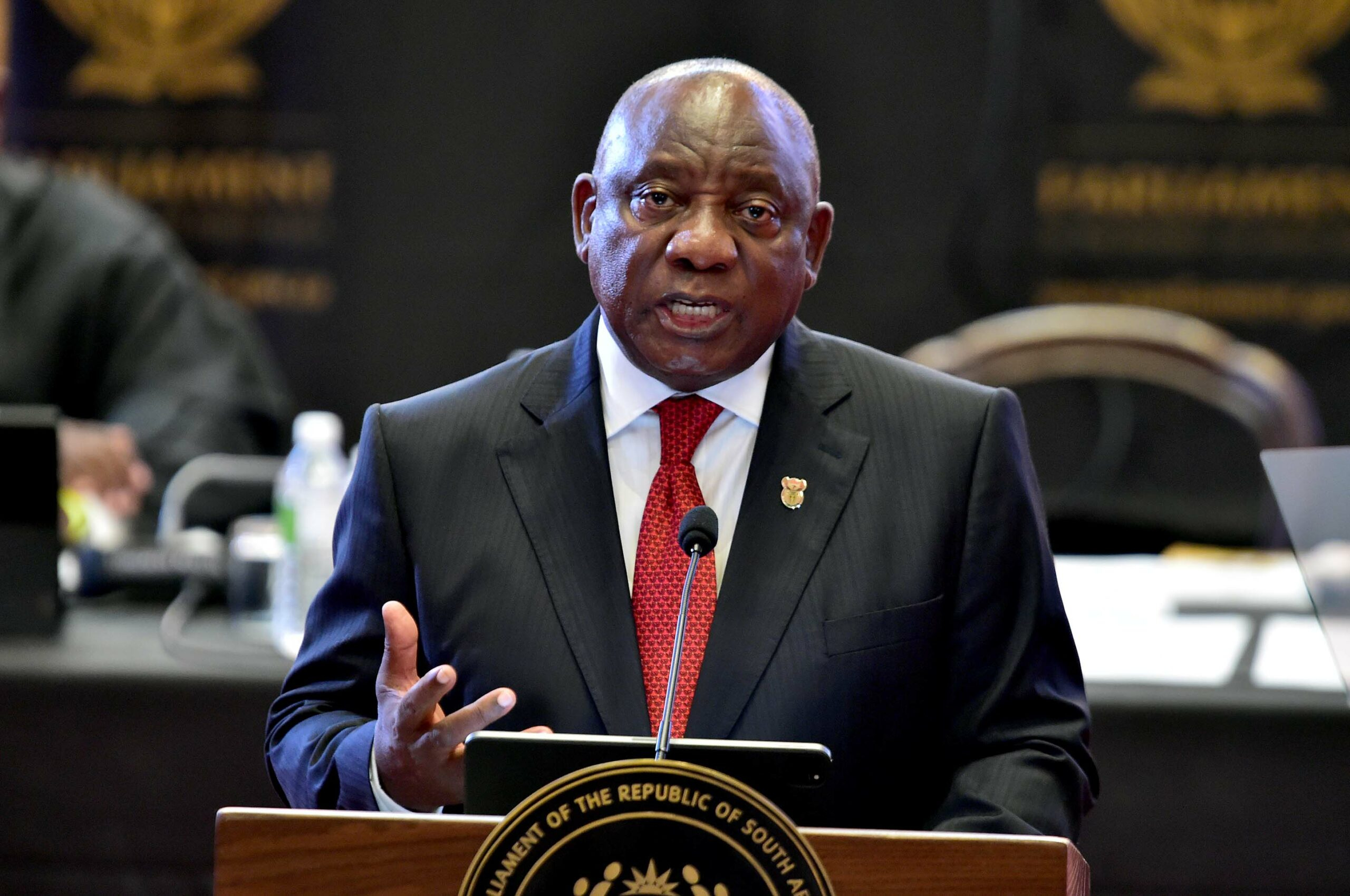
In reply to the debate on the presidency’s budget vote, Ramaphosa said his detractors, chief among them Steenhuisen, had distorted “both the South African reality and the actions of this administration” during Wednesday’s debate.
Ramaphosa says although South Africa is facing an electricity crisis that appears unrelenting, government is making progress in resolving the challenge.
He told the National Assembly that the anger and frustration the public felt about the electricity crisis was understandable.
“We have been forthright about the challenges the country faces. The anger and frustration that South Africans feel in the face of sustained load shedding is understandable. At times like this, the electricity crisis appears unrelenting, as if there is no end in sight.
“Yet, if one considers the work that is being done and the progress that is being made – as outlined yesterday by Electricity Minister Kgosientsho Ramokgopa – it is clear that we have solid ground for hope.
“While we have been honest and forthright about the difficult months ahead, we are confident that the measures now in place, including the massive new investment in electricity generation capacity, will enable us to end load shedding and achieve energy security,” he said.
Operation Vulindlela
Turning to matters of cooperative governance, Ramaphosa said The Presidency is driving collaboration between different government departments, State-owned enterprises (SEOs) and public entities through programmes such as Operation Vulindlela.
“The latest quarterly progress on the work of Operation Vulindlela was released earlier this week. It shows that we are moving ahead with reforms that will have a profound effect on the capabilities of our economy into the future,” he said.
The President emphasised that all spheres of government must work together to better the lives of South Africans.
“Cooperative governance is a key tenet of the Constitution, and obliges all organs of State to cooperate with one another, consult on matters of common interest and coordinate their actions and legislation. This is not optional, not for national government, or for provinces and municipalities,” he said.
This cooperation, the President said, is evidenced in the strengthening and implementation of the District Development Model (DDM) geared at placing the municipal district “at the centre of an integrated approach to development across the three spheres of government”.
“The [DDM] should assist in addressing some of the problems at local level and better use the powers, capacity and resources of national and provincial governments to ensure effective service delivery,” he said.
Facing challenges
Ramaphosa emphasised that South Africa has faced some of its most pressing challenges since the sixth administration, which he leads, took office in 2019.
“Before this administration was a year into its term, a devastating pandemic swept across the world, causing the loss of more than six million lives across the globe and more than 100 000 in our own country. The COVID-19 pandemic triggered what the OECD described as one of the worst job crises since the Great Depression. By some estimates, more than 225 million jobs were lost worldwide, including a substantial number in our own country.
“Besides the pandemic, we experienced deadly civil unrest in July 2021 that cost over 300 lives and the loss of an estimated R50 billion to the economy. International instability is fuelling higher fuel and food prices, increasing the cost of living for millions of South Africans. On top of all this, we are in the grip of an energy crisis that is many years in the making, the seeds of which were planted more than two decades ago, “he said.
However, Ramaphosa insisted that these challenges provide a context and perspective to the work that government has undertook.
“I state all this not to explain away any of the unresolved challenges we face as a country. I state them because perspective is, as always, critical. Despite the effects of all of these developments, we have been working with determination to fulfil the electoral mandate given to this administration in 2019,” he said.
The President acknowledged the “weaknesses in many parts of the State”.
“We are prepared to own up to our shortcomings and work to correct them; but what we are not prepared to do is to give up. We are not prepared to surrender to pessimism and doubt. We are moving forward with rebuilding, with reform, with recovery and with fundamental social and economic change.
“These are difficult and painful times. But we will overcome our challenges and we will emerge a better, stronger and more united nation,” Ramaphosa said.
Watch Live in the video below:
Video Courtesy of Presidency.