
By Lehlohonolo Lehana.
The South African Police Service (SAPS) has identified a high-ranking Eskom executive that they believe could be central to the sabotage plaguing the power utility’s power stations.
The City Press reports that high-level discussions have taken place between security cluster ministers over serious allegations against the executive.
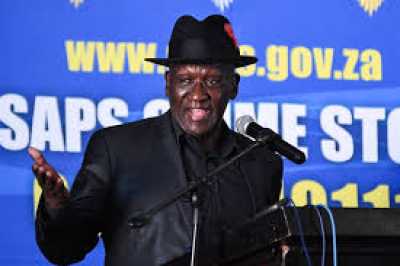
Police minister Bheki Cele, had previously told the Standing Committee on Public Accounts (Scopa) that the individual was a person of interest.
“I was told after my meeting with Scopa — where I said that the executive was a person of interest to the police — that the same individual was a person of interest to the police, and that interest has grown,” Cele said.
WhatsApp messages obtained by the police and the State Security Agency (SSA) are being investigated and potentially expose the suspected Eskom executive’s modus operandi in sabotaging power-generating units at targeted stations.
The allegations extend beyond just the unnamed executive and involve a forensic auditor, Eskom engineers, unemployed artisans, and families of those involved, the paper said.
In the messages obtained by the publication, the executive and co-conspirator openly discuss strategies to sabotage several power stations while showing further evidence that they have been successful in the past.
The modus operandi follows similar lines to those found guilty of sabotage in the past: conspirators would actively damage power stations, requiring various services tied to the parties involved, who then score contracts.
In this case, however, a top executive is accused of using their influence to generate the work needed for the contracts.
The publication said that a spokesperson of the SSA and Cele acknowledged the interest in the executive and noted that high-level investigations are ongoing – and that various stakeholders have been informed, including President Cyril Ramaphosa.
In January, power station managers said that theft and sabotage were the main reasons for Eskom’s problems and the high stages of load shedding being experienced by South Africans.
Sabotage is believed to be taking place for political reasons, or by disgruntled employees that had missed out on opportunities.
The power utility had also previously stated that some acts of sabotage were done by contractors to ensure they were given more work.