
By Lehlohonolo Lehana.
Higher Education Minister Dr Blade Nzimande has hailed the University of South Africa (UNISA) as the mother of the country’s university system.
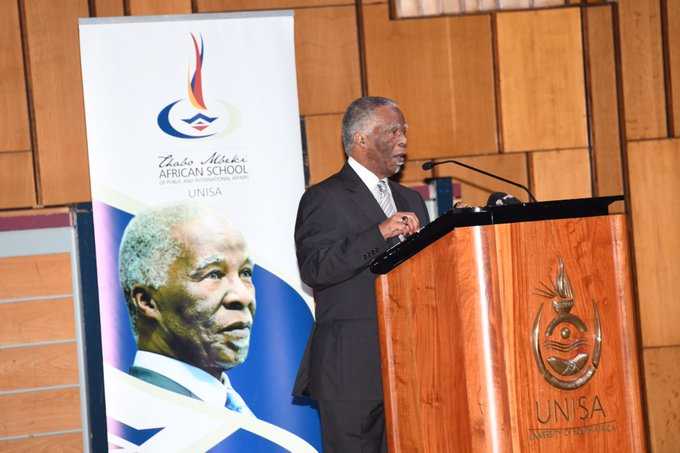
UNISA celebrated its 150th anniversary with the university community through a celebratory event at its Muckleneuck campus in Pretoria.
Unisa used the occasion to reflect on the trailblazing footprints it has left the education in SA and globally since its inception in 1873. Many of our struggle stalwarts who were imprisoned on Robben Island and other prisons are products of Unisa.
It continued to produce quality graduates who go on to successfully lead society in politics, commerce, academia and other fields.
It is the alma mater of many great leaders, amongst whom it proudly lists the founding father of our nation and our first democratic president, Isithwalandwe Nelson Mandela, Archbishop Emeritus Desmond Tutu, and retired Deputy Chief Justice Dikgang Moseneke.
Nzimande said UNISA has played a huge role in the university system in the country as it gave birth to a lot of other universities.
Issues of governance also continue to plague the university, including claims of maladministration and tender corruption.
Nzimande appointed Independent Assessor, Professor Themba Mosia to investigate various issues at UNISA.
Mosia who recently released his report recommended that an administrator be appointed to steer UNISA into the right direction.
The scathing 300-page report found that the Vice-Chancellor Puleng Lenkabula has been flouting procurement procedures for five years.
Nzimande said the issues will not be swept under the carpet.
“I want to say as someone assigned the task of being minister in this respect, we are seeking to address the challenges that are facing Unisa. Not because we want to run Unisa down, it’s because the governance challenges it is facing are the issue of its operating model. We want to address those so that it continues to play the role it is supposed to play in South Africa.”
At the same time the university’s chancellor, former president Thabo Mbeki, warned against the decline of the institution.
“In this context, I hope that many of us have read the relatively short article on Unisa by one of our leaders that I greatly respect, Dr Mosibudi Mangena, former president of Azapo and former minister of science and technology.
“He said: ‘Some of us were alarmed and saddened by stories circulating in various media outlets in recent weeks about alleged wrongdoings at the Unisa’ and he said: ‘Every patriotic South African should be worried about the apparent decline in the prestige of Unisa. But a collapse should induce earthquakes in our heads”.
Deputy President Paul Mashatile has hailed the University of South Africa (Unisa) for transforming into an institution of higher learning that is committed to quality and universal education accessible to all Africans.
Mashatile said the instruction of the Freedom Charter was to ensure the free exchange of ideas, the encouragement of cultural expression, and free, compulsory, universal and equal education for all.
Watch Live in the video below:
Video Courtesy of SABC.