
By Lehlohonolo Lehana.
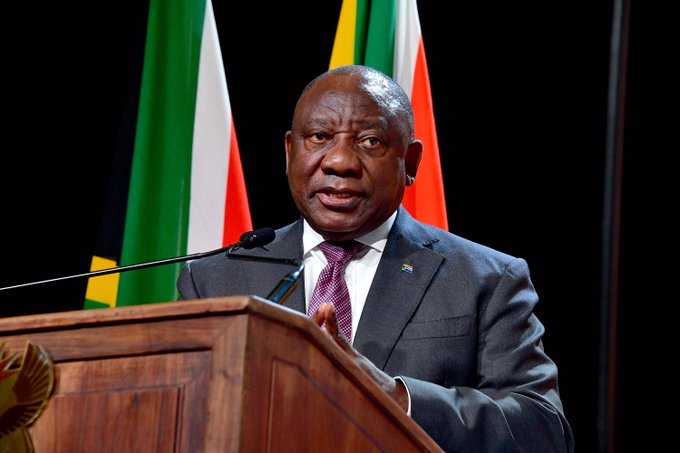
President Cyril Ramaphosa says South Africa’s transition to a low-carbon, climate-resilient economy has great potential to establish and develop new industries.
Ramaphosa said cutting back on the country’s carbon footprint is critical to the health and wellbeing of its citizens, the sustainability of society and ensuring that South African goods and services remain competitive.
He argued that while there are fears that the move towards decarbonisation will result in job losses, BMW’s plans for job retention, reskilling and training on electro-mobility will provide certainty to more than 20 000 employees at the company’s facilities across the country.
Last week, the global auto manufacturer BMW announced that it will be investing some R4.2 billion to equip its Rosslyn Plant in Tshwane to build the next generation BMW X3 hybrid plug in vehicle.
The plug-in hybrid X3 will be exclusively manufactured in South Africa at BMW’s Rosslyn plant in Pretoria from the second half of 2024.
This will be the first locally produced electric vehicle to be produced on South African soil.
Ramaphosa noted that the investment announcement affirms the confidence investors continue to have in the country’s economy and says it also gives effect to the principle of the country’s transition to low carbon energy.
He emphasised that government, civil society, business and labour must work together to ramp up production of these vehicles to secure the future of the auto manufacturing in the country in the face of decarbonisation.
“We will soon be finalising a strategy to support the transition to electric vehicle manufacturing that is affordable and effective. It is key that South Africa keeps up with other countries, including on the continent, that are incentivising the manufacture and uptake of electric vehicles as the world moves towards decarbonisation,” the President said on Monday in his weekly newsletter.
The EU, for example, has decided to ban the sale of new petrol and diesel-powered motor vehicles from 2035. This has significant implications for SA, since Europe accounts for about 60% of our motor vehicle exports,” he said.
It is important for SA to keep up with other countries that are incentivising the manufacture and uptake of electric vehicles as the world moves towards decarbonisation, he said.
Ramaphosa reiterated government’s stance that despite uncertainty around decarbonisation and how this will be translated in just and equitable manner, it is an opportunity to “grow and diversify our economy and create employment”.
“The decarbonisation of our society can be used to drive growth, improve industrial competitiveness, create jobs and harness the potential of innovation.
“Whether it is in the auto industry, energy or other economic sectors, we are confident that our country is taking the necessary steps towards a low-carbon future that leaves no-one behind, “Ramaphosa said.